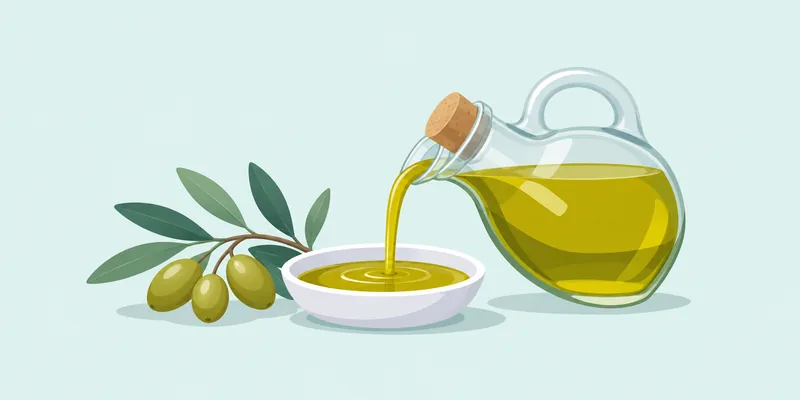
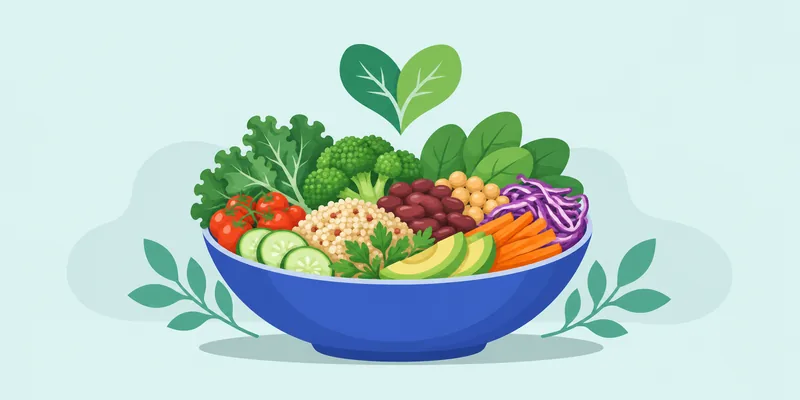
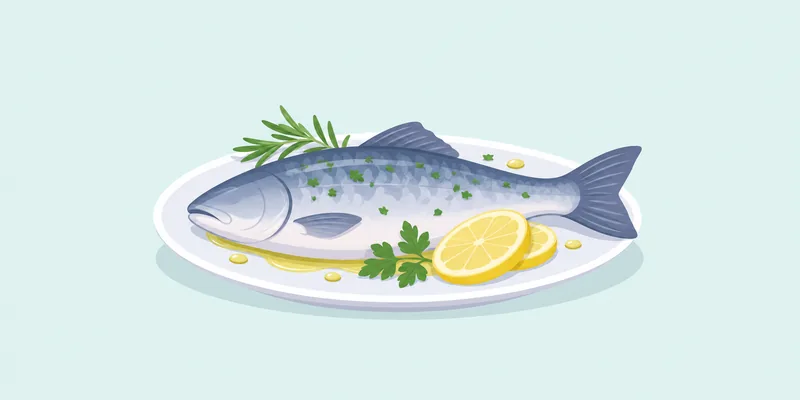
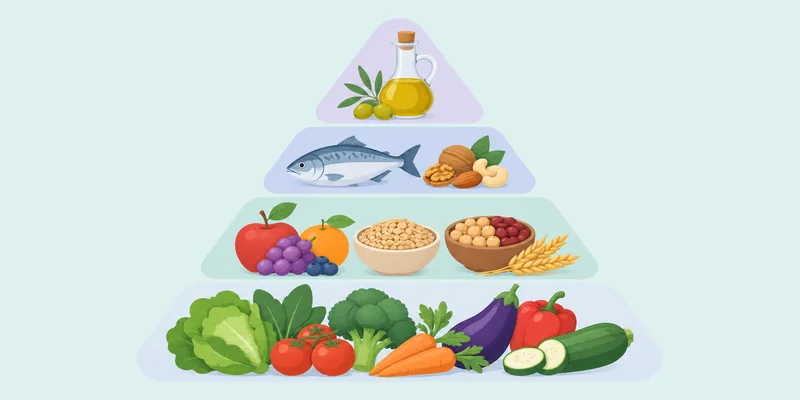
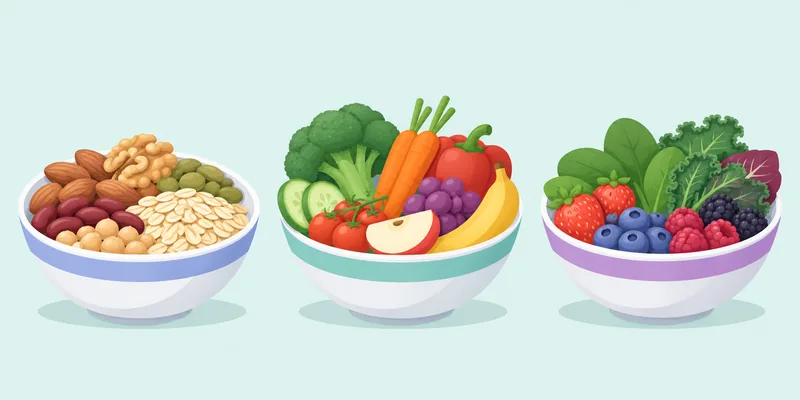
The traditional Mediterranean diet is an eating pattern built around vegetables, fruit, legumes, whole grains, nuts, fish and extra virgin olive oil as the main fat, with limited red meat, butter and sweets. Within the group, it is described as the diet with the strongest evidence for preventing heart attacks and strokes, because it is the only dietary pattern backed by several large, long-running randomized trials with hard outcomes12. Louis Nervegna says he cannot rule out that other diets might work even better, but none has comparable proof1.
Three trials do most of the work: the Lyon Diet Heart Study (heart attack survivors), PREDIMED (people at high risk but without cardiovascular disease) and CORDIOPREV (people with established coronary disease). Together with a fourth trial from India, a 2024 meta-analysis found large reductions in major cardiovascular events3. Several of the trials also showed regression of plaque on imaging, not just fewer events45.
This summary explains what the diet is, walks through each trial, and then covers the caveats: control diets, the strength of the claims, wine, and the difference between trial results and observational findings. It is an educational summary of the group's discussions. For personal decisions, the group's admins repeatedly suggest talking with your own doctor.
What the traditional Mediterranean diet is
Louis traces the modern version to Ancel Keys. His 1975 book, How to Eat Well and Stay Well the Mediterranean Way, simply copied what people traditionally ate in parts of the Mediterranean where life expectancy was high and heart disease rates were low10. The core recommendations, as summarized in the group, are1011:
- An abundance of plant foods: vegetables, fruit, whole grains, legumes, nuts and seeds.
- Extra virgin olive oil as the main fat, replacing butter.
- Small amounts of dairy, mostly cheese and yogurt.
- Red meat sparingly, with poultry preferred.
- Regular fish and seafood, including fatty fish.
- Legumes as a protein source; whole-grain or minimally processed bread.
- Herbs and spices rather than salt; fresh fruit for dessert.
- Wine in moderation, usually with meals, and an active, social lifestyle.
Louis stresses that Keys never urged a low-fat diet. His own diet was reportedly 30-40% fat, nearly all unsaturated, from olive oil, nuts, fatty fish and yogurt, with the emphasis on replacing saturated fat with unsaturated fat12. The Harvard Nutrition Source page that Louis quoted describes the pattern similarly: high intake of olive oil, nuts, vegetables, fruits and mainly whole grain cereals, moderate fish and poultry, low dairy, red meat, processed meat and sweets, and wine in moderation with meals. It adds that there is no single exact Mediterranean diet13.
A point raised by Valter Longo, shared by Louis, is that the true Mediterranean diet "hardly exists anymore," even in Italy, because refined and processed foods have displaced it. Louis adds that what many people in the Mediterranean eat today is not the traditional diet14. This matters when reading observational comparisons, and it is why the group distinguishes the traditional pattern from a generic "Mediterranean-style" label.
What the evidence shows
The pooled picture: a 2024 meta-analysis
A May 2024 meta-analysis in Current Problems in Cardiology, summarized by Louis, pooled the four long randomized trials of a traditional Mediterranean diet: the Lyon Diet Heart Study, the Indo-Mediterranean Diet Heart Study, PREDIMED and CORDIOPREV. It included 10,054 participants with an average age of 57 and follow-up of 2 to 7 years3. Compared with control diets similar to the American Heart Association (AHA) recommendations of the time:
Show data
| Odds ratio (log scale) | 95% CI | |
|---|---|---|
| *Major adverse cardiovascular events (MACE) | 0.52 | 0.32–0.84 |
| Heart attack | 0.62 | 0.41–0.92 |
| Stroke | 0.63 | 0.48–0.87 |
| Cardiovascular death | 0.54 | 0.31–0.94 |
| All-cause mortality | 0.77 | 0.51–1.15 |
| Revascularization | 0.74 | 0.30–1.27 |
All figures are from the quoted meta-analysis3. Two cautions apply. First, the MACE result had high heterogeneity (I-squared 87%), meaning the individual trials differed a lot in their results3. Second, the pooled analysis did not find a significant effect on all-cause mortality, although the Lyon trial on its own did (see below)315. Louis presents the four trials as the top of the evidence hierarchy because randomized trials can establish causality316.
Lyon Diet Heart Study
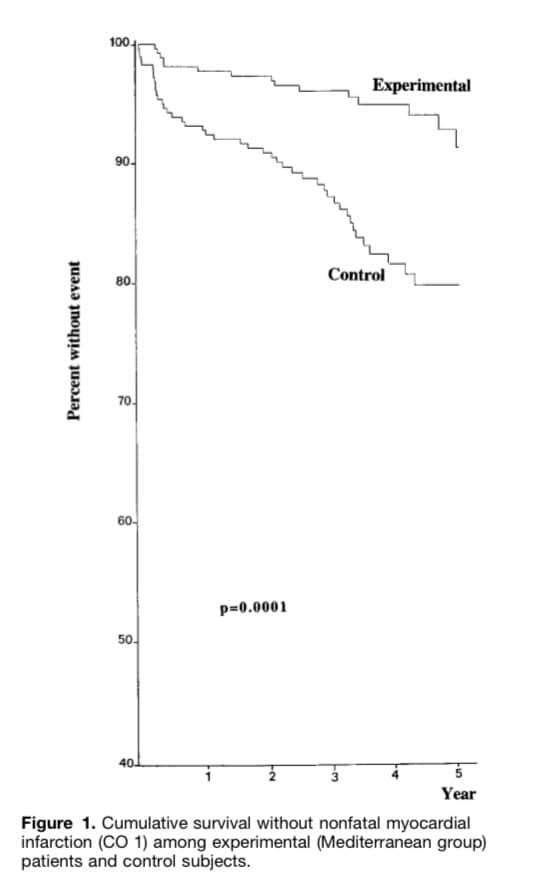
The Lyon Diet Heart Study ran from 1988 to 1992. More than 600 people who had already had a heart attack were randomly assigned to an AHA diet or a traditional Mediterranean-style diet615. After a mean follow-up of 27 months6:
- Cardiac deaths: 16 in the control group versus 3 in the Mediterranean group.
- Non-fatal heart attacks: 17 versus 5.
- Combined risk ratio for those two endpoints: 0.27 (95% CI 0.12-0.59).
- Overall deaths: 20 versus 8, an adjusted risk ratio of 0.30 (95% CI 0.11-0.82).
Show data
| AHA-style control | Mediterranean | |
|---|---|---|
| Cardiac deaths | 16 | 3 |
| Non-fatal heart attacks | 17 | 5 |
| Deaths from any cause | 20 | 8 |
Louis rounds this to a 73% reduction in heart attacks and cardiovascular death and a 70% reduction in total deaths915. The trial was stopped early for ethical reasons so that everyone on the AHA diet could be encouraged to switch617.
What did the diet look like? Fish and poultry replaced red and processed meat; plant foods were abundant; extra virgin olive oil was the main fat, with regular olive oil and canola oil also allowed; and nearly all cooked food was prepared with these oils. Instead of butter and cream, participants used a non-hydrogenated canola-oil margarine containing the omega-3 fat alpha-linolenic acid. Mild to moderate red wine was encouraged617. It was not a low-fat diet17, and Louis notes that total fat intake was above 30%, mostly unsaturated18.
Louis makes strong comparisons: the largest reduction in total mortality ever reported in a cardiovascular prevention trial, and about twice the benefit of secondary prevention statin trials19. He also says no drug has matched it2021. These comparative claims are his opinion, and the post summaries flag them as such2021. Event counts in Lyon were small, which is reflected in the wide confidence intervals above, and cross-trial comparisons with drugs involve different populations and designs.
PREDIMED
PREDIMED was a Spanish randomized trial of about 7,500 people at high cardiovascular risk but with no prior cardiovascular disease (primary prevention). Participants ate a Mediterranean diet supplemented with extra virgin olive oil, a Mediterranean diet supplemented with nuts, or a control diet resembling AHA advice722. The main composite endpoint (heart attack, stroke or cardiovascular death) fell by 30% with olive oil and 28% with nuts after about 5 years7. The vast majority of participants were also taking statins and other medications, so the benefits were on top of drug treatment7. The full report appeared in the New England Journal of Medicine22. The Harvard Nutrition Source summary Louis quoted gives the follow-up as 4.8 years and says the trial showed major cardiovascular events were reduced among people with diabetes or other risk factors13.
Louis also corrects an AI summary: the control diet was essentially the AHA diet of the time, not a low-fat diet, although it was lower in fat than the Mediterranean arms22.
PREDIMED has produced many secondary findings, which differ in strength:
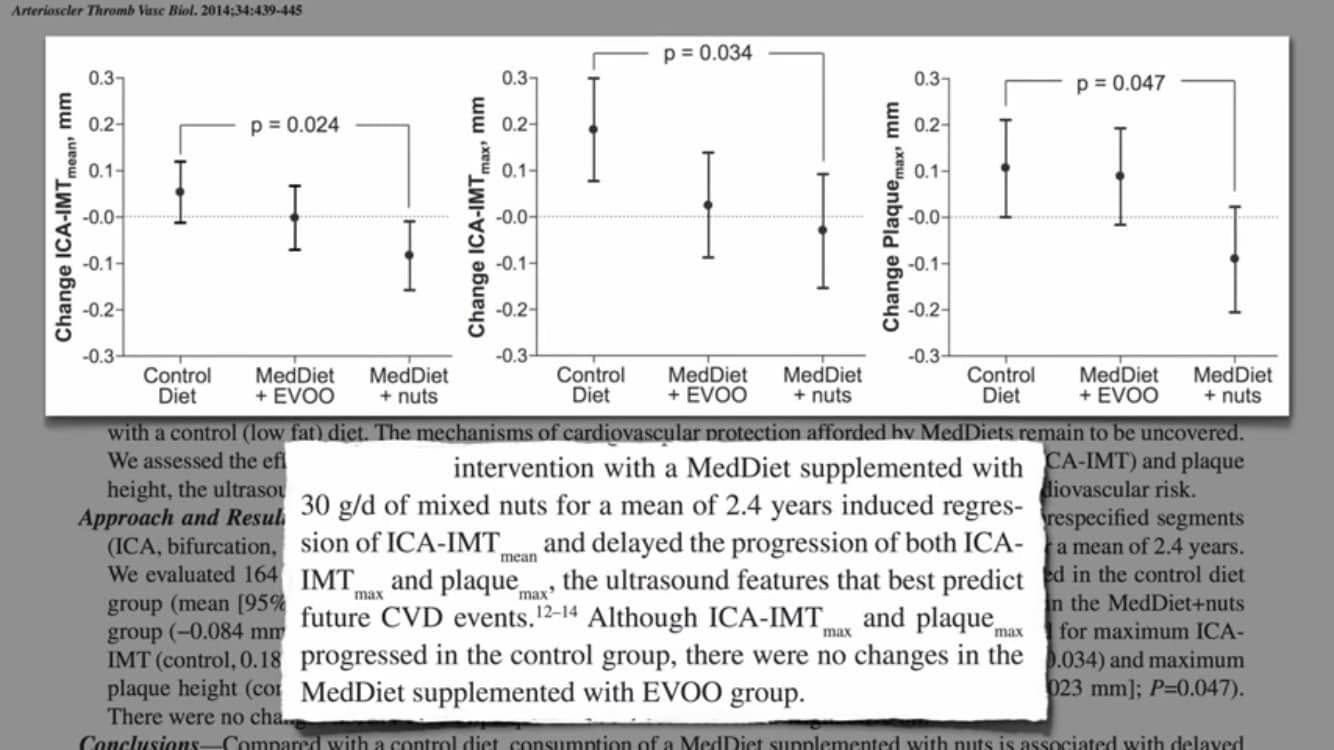
- Plaque regression (randomized comparison). A carotid substudy compared the control diet, Mediterranean plus olive oil, and Mediterranean plus nuts. The nut dose was 30 g/day (15 g walnuts, 7.5 g hazelnuts, 7.5 g almonds). In 164 people with complete data, carotid intima-media thickness progressed by 0.052 mm in the control group but regressed by 0.084 mm with nuts (P=0.024). The nut group also had about 50% lower stroke risk, and Louis cites a 30% MACE reduction for that group23. Note the small sample, and that this post gives 30% for the nut group whereas the headline trial figure cited elsewhere is 28%723.
- Olive oil intake (observational within the trial). Participants with the highest olive oil intake had 48% lower cardiovascular mortality (HR 0.52, 95% CI 0.29-0.93), and each extra 10 g/day (about a tablespoon) of extra virgin olive oil was associated with 10% lower cardiovascular disease risk and 7% lower cardiovascular mortality. All-cause mortality did not reach significance24.
- Nuts and mortality (observational within the trial). People eating nuts more than three times a week had 39% lower all-cause mortality (HR 0.61), with a 63% lower risk among those who were also assigned to the Mediterranean-plus-nuts diet. Louis stresses these are observational analyses of the trial cohort and do not prove causality, unlike the randomized plaque and stroke findings25.
- Diabetes. In the PREDIMED-Reus substudy, diabetes incidence fell by 52% over 4 years with the olive oil or nut diets versus the AHA-style control. A later PREDIMED-Plus analysis found that adding calorie reduction and exercise cut diabetes risk by a further 31% compared with an unrestricted Mediterranean diet726.
- Atrial fibrillation. A video Louis shared says PREDIMED showed lower atrial fibrillation risk with extra virgin olive oil; no effect size was given27.
- Lipoprotein(a). In a PREDIMED-Plus analysis of 348 participants, those with the highest share of extra virgin olive oil had about 22% lower Lp(a) after adjustment, but this was significant only in the non-energy-restricted group. Louis's answer to whether olive oil lowers Lp(a) is "maybe"28.
Show data
| Hazard ratio (log scale) | 95% CI | |
|---|---|---|
| Highest olive oil intake: cardiovascular death | 0.52 | 0.29–0.93 |
| Nuts more than 3 times a week: death from any cause | 0.61 | – |
| Mild-to-moderate wine (urine biomarker) vs none: cardiovascular events | 0.5 | – |
CORDIOPREV
CORDIOPREV (Coronary Diet Intervention With Olive Oil and Cardiovascular Prevention) randomized 1,002 patients with established coronary disease to a Mediterranean diet rich in extra virgin olive oil, fruit, vegetables, whole grains, fish and nuts, or to a low-fat diet rich in complex carbohydrates8. In the 2021 imaging paper:
- Carotid intima-media thickness fell by 0.027 mm at 5 years and 0.031 mm at 7 years on the Mediterranean diet (both P<0.001), while the low-fat diet produced no change8.
- The Mediterranean diet also produced a greater decrease in carotid plaque maximum height830.
- Louis cites roughly 25% lower risk of recurrent major cardiovascular events over 7 years (a composite including heart attack, revascularization, ischemic stroke, peripheral artery disease and cardiovascular death)830.
Importantly, all patients received standard medical care, and the average LDL cholesterol was already below 90 mg/dL on statins. In other words, the diet added benefit on top of good drug treatment8. Video summaries shared in the group say the plaque benefit was greatest in the first five years3132.
The Indo-Mediterranean trial and "seed oils"
The fourth trial in the meta-analysis, the Indo-Mediterranean Diet Heart Study (about 1,000 people), tested a diet using soybean oil rather than olive oil and reported reductions in heart attacks and strokes comparable to the others33. Louis uses this together with Lyon's canola oil to argue that olive oil has the best evidence but is not the only oil with support. Harvard cohort data on canola or soybean oil replacing butter are described as favorable933. He quotes Walter Willett's view that swapping saturated fats for any of these unsaturated oils is the real upgrade33.
Plaque reversal across trials
Louis counts six randomized dietary trials that showed plaque reversal: the Lifestyle Heart Trial (1990, Ornish diet), STARS (1992) and SCRIP (1994) with AHA diets, PREDIMED (2013), CORDIOPREV (2021) and DISCO (2021, DASH-style diet)43435. None used a purely vegan diet. Even Ornish allowed egg whites and non-fat dairy34. Common features were fruit and vegetables, legumes, whole grains, some dairy, nuts, olive oil, fish and some eggs and poultry. All of them limited junk food, refined grains, sugary foods, large amounts of butter, fatty red meat and heavy alcohol434.
A separate post lists major weight loss, a Mediterranean or DASH diet, LDL-lowering drugs, colchicine, exercise and high-dose EPA as the strategies with randomized evidence of plaque regression, and cites the DIRECT-Carotid trial as an example of weight-loss-driven regression36.
Nuances, controversies and misconceptions
Does olive oil damage arteries? (The Esselstyn debate)
Louis argues that Caldwell Esselstyn's published results are case-based observational studies at the bottom of the evidence hierarchy, in patients who were mostly taking statins, with no randomized trial of the diet ever run37. He says the Ornish randomized trial had good results but no better than the large Mediterranean trials, and that Ornish's program now permits nuts and seeds37. He also points out that Ornish's trial used invasive angiography, which has accuracy issues, and that its plaque regression resembled PREDIMED and CORDIOPREV36. On olive oil specifically, Louis says multiple studies show extra virgin olive oil improves flow-mediated dilation, a measure of endothelial function, contrary to Esselstyn's claims38, and that the trials showed plaque regression with olive oil and nuts39. These are Louis's arguments, and he says plainly that a whole-food plant-based diet without oil can be very healthy if done well1637.
Is cooking with olive oil okay?
Louis says yes. In all three of Lyon, PREDIMED and CORDIOPREV, the intervention groups cooked almost all of their food with extra virgin olive oil. His only caution is to stay under the oil's smoke point, and he notes that extra light olive oils have smoke points up to 450F40. He uses olive oil in all his own cooking because it is the only fat tested in several large randomized trials, while acknowledging other fats or no oil might work as well2.
The control diet was not "junk"
Lyon and PREDIMED compared the Mediterranean diet against an AHA-style diet, and CORDIOPREV against a low-fat diet. So the results show it beat reasonable alternatives, not a standard Western diet. Louis suggests results might have been even better against a standard American diet922. He also says there is no good-quality evidence that limiting total fat helps, as long as the fat is mostly unsaturated18.
Wine
Wine is the most contested element. Louis shared a PREDIMED follow-up in which a urinary tartaric acid biomarker tracked wine intake; mild-to-moderate consumption had a hazard ratio of 0.5 for cardiovascular outcomes over 9 years. He describes it as evidence of a possible effect, not proven causation, and notes alcohol is actively debated in cardiology29. A Harvard talk he quoted has Miguel Martinez-Gonzalez saying wine should definitely be removed for people under 35, that the Mediterranean diet may lose up to 23.5% of its protective effect without wine, and that a randomized trial of red wine versus an alcohol-free drink is under way, run by PREDIMED's lead investigator4142. The ESC scientific statement, as summarized by Louis, says about one unit of alcohol per day may contribute to reduced risk43. Louis drinks a glass of red wine several days a week but calls this a personal view, not proof42. Gokhan's guide makes wine optional and tells people with a history of alcohol problems or certain medical conditions to avoid it44.
Anecdotes versus trials
Louis shared a story that 3 of 18 Seven Countries Study scientists who adopted the diet lived to 100, including Keys, who died just short of 101. He calculates the odds by chance at about 1 in 10 billion and calls it a compelling anecdote, not a trial1145. A news story of a man reversing plaque in 16 weeks with six foods drew Louis's comment that randomized trials support plaque reversal with this kind of diet46.
Mediterranean versus other healthy patterns
The European Society of Cardiology scientific statement on diet, as summarized by Louis, says diet is a primary factor in cardiovascular prevention and that the Mediterranean, DASH and vegetarian diets reduce risk, while vegan diets offer no additional benefit. It also says plant-based, minimally processed patterns lower risk and ultra-processed food, red meat, salt, sugar and saturated fat raise it. It also notes low-carbohydrate diets may be beneficial but need long-term confirmation, and that vitamin and mineral supplements have no convincing benefit43. He lists Nurses' Health Study, Health Professionals Follow-up Study and over a dozen other cohorts as supportive long-term observational evidence1.
What this means for you
These points reflect what the group's admins and shared sources say; discuss changes with your doctor, especially if you take medication.
- Fats. Use extra virgin olive oil as the main fat, as the trials did; Gokhan adds a tablespoon of high-polyphenol extra virgin olive oil at lunch and dinner to his own routine247. A UChicago dietitian quoted in the group recommends four tablespoons a day for fatty liver, which is clinic guidance rather than a trial result48.
- Plants. Aim for at least five servings of fruit and vegetables daily, mainly whole grains, and regular legumes; treat white bread, regular pasta and potatoes as occasional "desserts"4449.
- Protein. Fish, poultry, beans and legumes as primary proteins; limit red meat to a few times a month44. Louis favors yogurt over processed whey supplements because yogurt has long-term evidence and was encouraged in the big trials50.
- Nuts. About 30 g a day was the PREDIMED dose23. Gokhan suggests nuts instead of cheese and low-saturated-fat almond fruit bars as snacks4751.
- Limit. Minimize butter, cream, processed foods, sugary drinks, pastries, trans fats and excess salt3444. Gokhan uses no-salt sprouted bread to help his blood pressure51.
- Add lifestyle. The Keys approach includes activity and shared meals11. In PREDIMED-Plus, adding calorie reduction and exercise to the diet further lowered diabetes risk726.
- Resources. Louis recommends the free Harvard book Eat, Drink, and Be Healthy4952, and Gokhan proposed a Mediterranean-inspired HD-OPM food pyramid for the group53.
- Medications still matter. In CORDIOPREV and PREDIMED the diet worked alongside statins and other drugs, not instead of them78. Gokhan also warns that a green juice containing grapefruit juice may interact with statins47.
Frequently asked questions
Which trials show the Mediterranean diet works?
The Lyon Diet Heart Study, the Indo-Mediterranean Diet Heart Study, PREDIMED and CORDIOPREV, which were pooled in a 2024 meta-analysis of 10,054 people3. Lyon and CORDIOPREV studied people with existing disease; PREDIMED studied people at high risk without cardiovascular disease678.
Did it reduce deaths from any cause?
The pooled analysis found fewer cardiovascular deaths (OR 0.54) but no significant change in all-cause mortality3. The Lyon trial alone found 20 deaths in the control group versus 8 in the Mediterranean group6. In PREDIMED, olive oil intake was associated with lower all-cause mortality that did not reach statistical significance24.
Is olive oil the key ingredient?
It is the best-supported fat, but the diet is a package: plants, legumes, nuts, fish and few processed foods234. Lyon also used canola oil, and the Indo-Mediterranean trial used soybean oil33.
Can the diet reverse plaque?
In CORDIOPREV, carotid thickness decreased over 5 and 7 years on the Mediterranean diet but not on the low-fat diet. In PREDIMED, only the nut group showed carotid regression in a substudy823. The group describes these as among six randomized diet trials showing plaque regression4.
Do I need to drink wine?
No. The wine data come largely from observational analyses within PREDIMED, and a randomized trial of red wine is under way. Louis calls the benefit "possible," not proven2941.
Is it just for people in Mediterranean countries?
Louis notes the diet can be adapted to many cuisines and preferences, including low-carb, Mexican and Asian versions52.