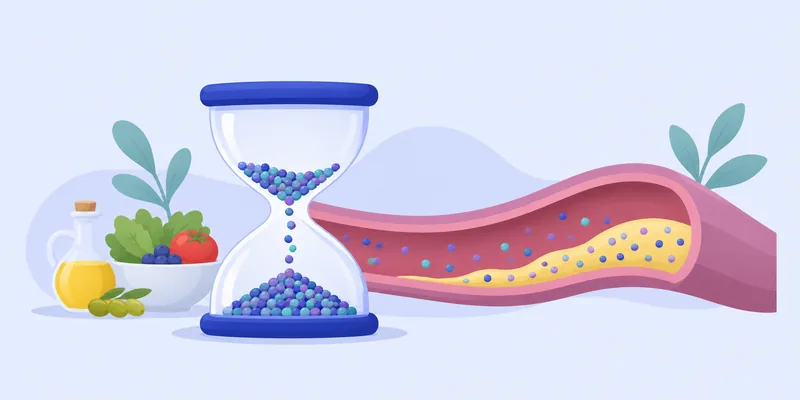
Should a 30-year-old with high LDL cholesterol, or a strong family history of early heart attacks, wait until middle age to start treatment? The short answer from the group's posts is that the timing of LDL lowering matters a great deal, because atherosclerosis (plaque build-up in the arteries) develops over decades and the group's admins see LDL as a cumulative exposure rather than a single number. In their view, "lower, earlier, and for longer" gives the largest lifetime benefit.12
That does not mean everyone in their twenties needs a drug. A 2026 NEJM review shared in the group puts the message as proportionality, not "lower for everyone": treatment should follow absolute cardiovascular risk, with a strong emphasis on lifestyle in lower-risk people, while genetic conditions such as familial hypercholesterolemia justify early and intensive treatment.3 Gokhan and Louis, two of the three admins, say they themselves are betting on very low-dose statins in their 40s to bring their lifetime risk down.4
This article walks through why early timing matters, who is most likely to benefit, what guidelines and risk tools say, and the cautions raised in the group. It is a summary of posts and not medical advice; the admins repeatedly recommend discussing decisions with a good cardiologist or doctor.5
Why timing matters: LDL as "cholesterol-years"
LDL (low-density lipoprotein) is the cholesterol-carrying particle that can enter the artery wall and become trapped, where it triggers inflammation, foam-cell formation and, over decades, plaque. A detailed post by Gokhan argues that risk depends on both how high LDL is and how long it stays high, which is often expressed as "cholesterol-years". It also argues that there is no clear threshold below which LDL is entirely harmless.2
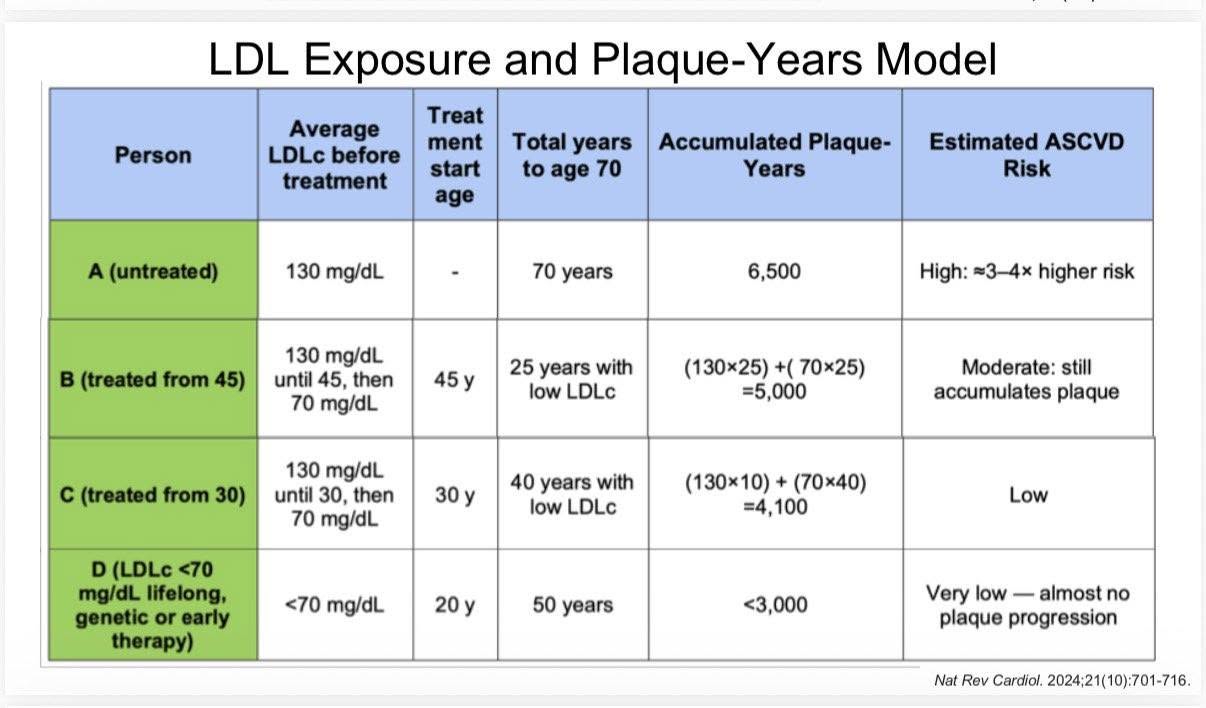
A second post frames the same idea as "plaque-years": every year with elevated LDL adds arterial burden that cannot be erased, so starting at 30 changes the trajectory more than starting at 45, though starting at 45 is still better than never. It even suggests that early intervention may matter more than the strength of the drug.1
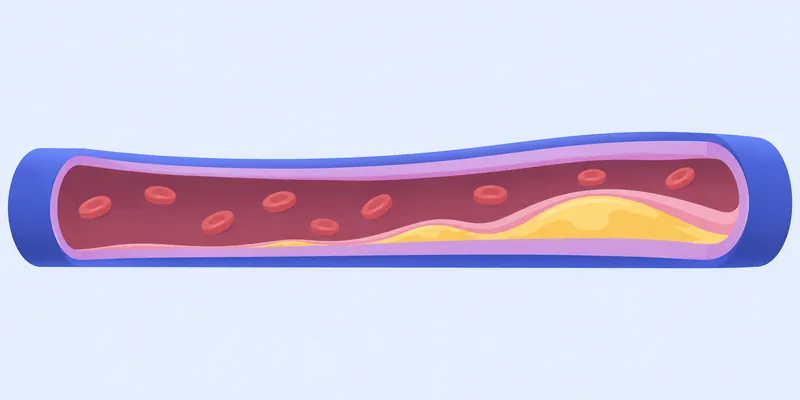
Plaque also starts early. An explainer in the group describes coronary artery disease as a slow process that can begin in childhood or young adulthood with soft plaque, later harden and calcify, and only much later cause narrowing, angina or heart attacks. Many people have no symptoms for most of that time.8
What the REACT study found
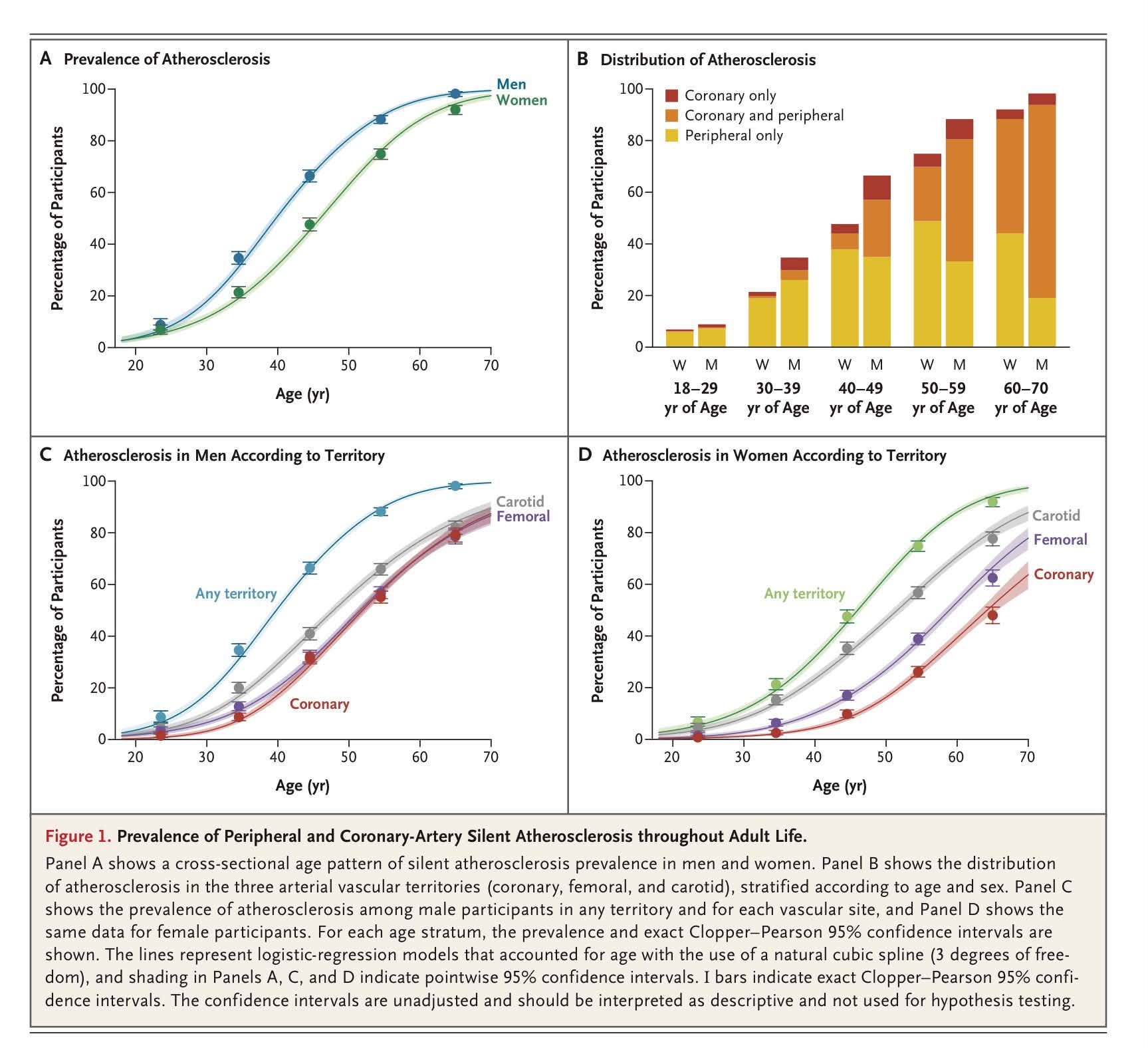
The REACT study, published in NEJM and shared by Louis, imaged 16,808 adults aged 18-70 in Denmark and Spain who had no known cardiovascular disease, using carotid and femoral ultrasound plus coronary CT angiography. Plaque was already present in 8.7% of men and 6.7% of women aged 18-29, rising to 34.6% and 21.3% at ages 30-39, and 57% of all participants had plaque. By age 60-70 only 1.9% of men and 8.1% of women had none.6
Show data
| Men | Women | |
|---|---|---|
| Aged 18–29 | 8.7% | 6.7% |
| Aged 30–39 | 34.6% | 21.3% |
Two points in that post are directly relevant to young adults. First, a zero calcium score often missed early plaque: among people aged 30-39 with plaque on CT angiography, 41.8% of men and 48.4% of women had a calcium score of zero. Second, a high 10-year risk category (SCORE2) had only 1.9% sensitivity for silent atherosclerosis, which the authors read as a reason to keep risk factors favorable throughout life rather than waiting for 10-year risk to become high.6
What the evidence shows
Genetics: a lifetime of lower LDL
Mendelian randomization studies use naturally occurring gene variants as a kind of lifelong randomized trial. Gokhan's summary cites several results:
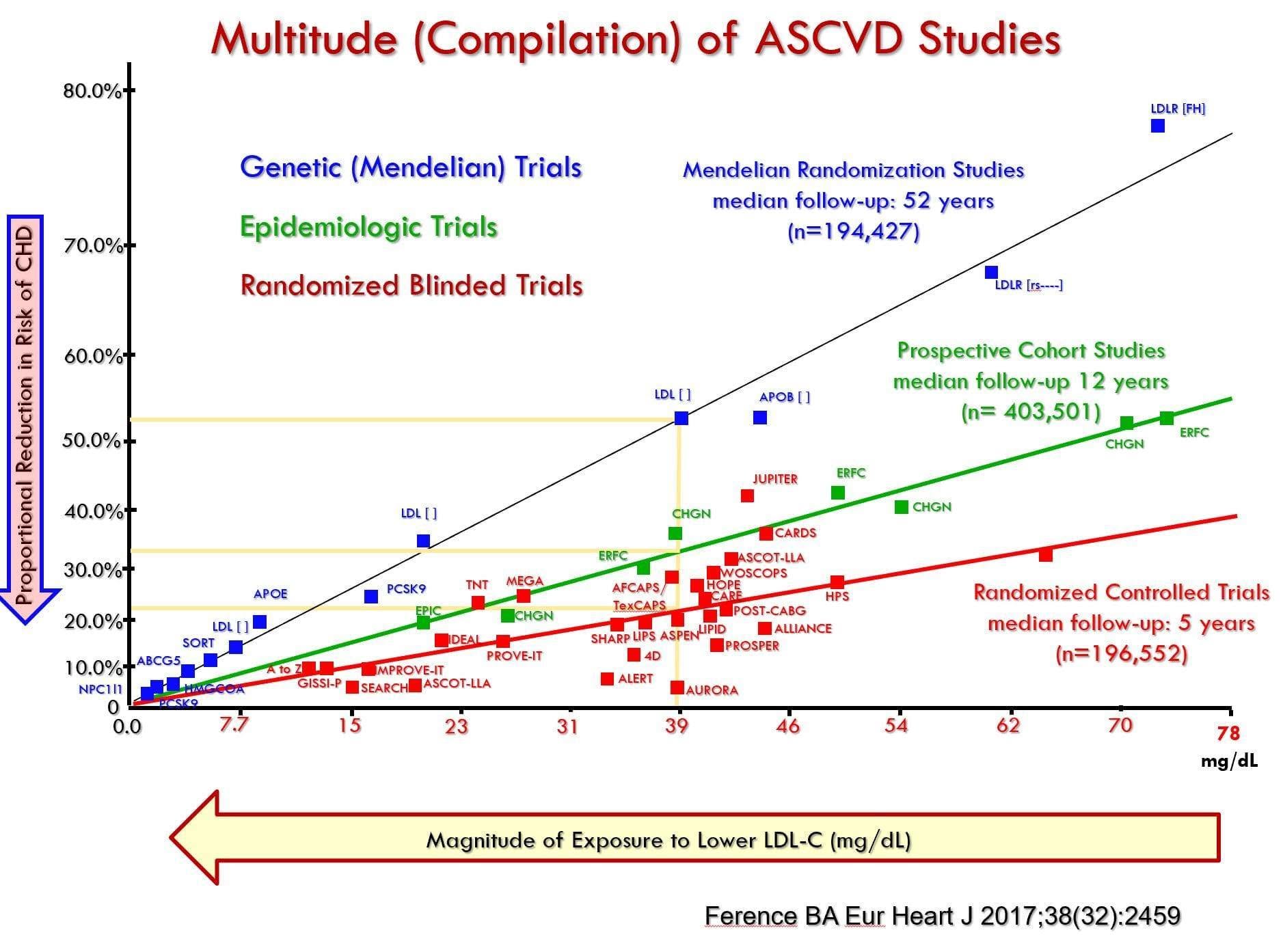
- A lifelong, genetically lower LDL of about 39 mg/dL was linked to roughly 55% lower coronary heart disease risk (Ference et al., 2012), which is about three times the benefit per unit seen in statin trials started in middle age.2
- People with PCSK9 loss-of-function variants, who have 15-28% lower LDL for life, had 47-88% lower coronary risk (Cohen et al., 2006).2
- A chart from a European Atherosclerosis Society consensus statement, discussed by Louis, shows variants acting through different pathways (LDLR, PCSK9, APOB, HMGCR, NPC1L1 and others) with risk changing in proportion to the LDL change, the same linear relationship seen in statin trials.9
- Louis's worked example: if the average American has about a 20% lifetime heart attack risk, a 90% relative reduction from a PCSK9 variant would leave about 2%.9
Cohorts: duration of exposure
Gokhan's post also cites two long-term cohorts. In the Framingham Offspring cohort (Navar-Boggan et al., 2015), people with 11-20 years of hyperlipidemia by age 55 had a 16.5% future coronary risk compared with 4.4% for those with none, and each decade of exposure nearly doubled risk. In CARDIA (Domanski et al., 2020), cumulative LDL exposure from age 18 to 40 predicted events after 40; when both were in the model, the single LDL reading at age 40 lost its predictive power (p=0.42) while the cumulative measure stayed significant.2
Modeling early versus delayed treatment
Gokhan summarized a 2020 Circulation study on the expected 30-year benefits of early versus delayed primary prevention. Starting lipid lowering at age 40-49 in people with high cholesterol could lower 30-year risk from 17% to 6-12%, depending on the model, whereas waiting 10-20 years left a remaining risk of 13-15%. The benefit was greatest with non-HDL cholesterol of 160 mg/dL or higher.7 His note adds that the study did not quantify harms such as higher diabetes risk from statins, and that LDL can also be lowered through diet and exercise.7
Statin trials
Louis shared a graph of 25 statin trials up to 2016 (excluding those shorter than six months or with fewer than 50 events). An LDL reduction of about 75 mg/dL lowered the risk of heart attack or stroke by about 40% on average versus placebo, with larger reductions in the seven primary prevention trials than in secondary prevention trials.10
Gokhan's "longer the lower the better" post uses a chart relating the size and duration of LDL lowering to risk reduction. Reading it for himself, he estimates about 60% lifetime risk reduction from lowering LDL by 70 points for 30 years, and notes that effects beyond about 80 mg/dL of lowering are unknown. This is his own chart-based estimate, not a trial result.4
Why LDL is considered causal
A mechanism overview from the group lists five lines of evidence: oxidized LDL in artery walls, endothelial dysfunction and inflammation, foam-cell formation, genetics (including familial hypercholesterolemia), and consistent benefit from LDL-lowering therapies with no apparent threshold.11 A later post adds cell and human data that even native, unoxidized LDL impairs endothelial function.12 Another argues that nearly all LDL-lowering methods reduce events, and that diet changes such as cutting saturated fat also lower LDL.13
Who is most likely to benefit from starting early
Familial hypercholesterolemia (FH)
FH is an inherited condition that causes lifelong high LDL and a higher risk of heart attack and stroke. A JAMA Patient Page shared by Louis covers when to suspect FH, the role of cholesterol screening and genetic testing, and how early diagnosis supports treatment and family screening.14 The NEJM review in the group says monogenic conditions such as FH cause lifelong LDL elevation and very high cumulative risk, so early and intensive treatment is justified.3
Physical clues exist. Cardiologist Paul Thompson is quoted as telling sports teams to consider FH when a young athlete has Achilles tendinitis, because high cholesterol alone can cause tendon problems.15 A 2026 study found Achilles tendon thickening (8 mm or more in men, 7.5 mm or more in women) in 16.7% of patients after stenting and linked it to a higher three-year rate of major cardiovascular events (28.4% vs 17.9%). It is an association, not proof of causation, but it is described as a possible record of cumulative LDL exposure.16
Family history and high Lp(a)
Gokhan lists Lp(a) as a key lab test, especially with a family history of early heart disease, because it is genetic and can be high even when total cholesterol looks normal.17 The 2026 ACC/AHA guideline, as summarized by Louis, recommends measuring Lp(a) at least once in adulthood. A level of 125 nmol/L (50 mg/dL) or more is associated with about a 1.4-fold higher long-term risk, and 250 nmol/L with at least a two-fold risk; lifestyle changes affect it little, so repeat testing is generally unnecessary.18
A Women's Health Study analysis in NEJM found that the top versus bottom fifth of hs-CRP, LDL and Lp(a) carried hazard ratios of 1.70, 1.36 and 1.33 for 30-year cardiovascular events, each independently, with the best prediction when all three were combined. The authors argue that prevention should extend beyond 10-year risk estimates.19
Show data
| Hazard ratio (log scale) | 95% CI | |
|---|---|---|
| hs-CRP | 1.70 | 1.52–1.90 |
| LDL cholesterol | 1.36 | 1.23–1.52 |
| Lp(a) | 1.33 | 1.21–1.47 |
High LDL from diet
The group also discusses younger people whose LDL rose because of their diet. Louis describes a lean, active 35-year-old with a calcium score of 0 who had a widow-maker heart attack with an LDL of 372 mg/dL on a carnivore/keto diet and no FH. He notes this is an anecdote, and that a zero calcium score does not exclude soft plaque.20 Gokhan cites similar stories and the KETO-CTA study, and advises following markers such as LDL and apoB rather than how you look or feel.21
Guidelines, targets and risk tools
Louis summarized the 2026 ACC/AHA lipid guideline: LDL goals remain scaled to risk, under 100 mg/dL for borderline or intermediate risk, under 70 for high risk, and under 55 for very-high-risk people with established ASCVD. The guideline puts more emphasis on earlier intervention through lifestyle and, when recommended by a clinician, medication, with the aim of reducing lifetime exposure.18
Other posts give consistent numbers. A 2023 JAHA review summary lists 10-year ASCVD risk categories (low under 5%, borderline or intermediate 5-20%, high 20% or more) and goals of at least 50% LDL reduction and under 70 mg/dL for high risk, with under 55 for very high risk.22 Another summary of expert targets lists under 55 (very high), under 70 (high), under 100 (moderate) and under 116 mg/dL (low), noting that these are not hard rules and should be set with a clinician.23
Risk calculators and extra tests
- PREVENT calculator. The AHA calculator covers adults aged 30-79 without known cardiovascular disease and estimates 10- and 30-year risk of ASCVD and heart failure, including kidney and metabolic conditions. Louis warns it will underestimate risk in people who already have a heart attack, stroke, significant atherosclerosis or a high calcium score.24 The 2026 guideline now recommends it, and Louis notes the older calculator likely overestimated risk.18
- Calcium scan (CAC). The guideline suggests selective use for men 40 and older and women 45 and older at borderline or intermediate risk, when the result would help decide on a statin.18 But a zero score is not a clean bill of health: in the Western Denmark registry, 54% of 23,759 symptomatic patients had a CAC of zero, and half of those with symptomatic blockages had zero.2526 Louis argues that calcification appears late, so CAC mainly detects late-stage disease.25
- apoB. ApoB counts atherogenic particles and may be more accurate than LDL-C in some groups, such as people with diabetes or high triglycerides.1718 LDL particle size, by contrast, does not predict risk once particle number is accounted for.27
Nuances and cautions
Proportionality and residual risk
The NEJM review quoted in the group says the goal is not to treat numbers in isolation: focus on absolute risk, identify who benefits meaningfully from drugs, and avoid unnecessary drug treatment in truly low-risk people while promoting tailored lifestyle change.3 Louis also reminds readers that lowering LDL is not a cure. Every trial shows residual risk, which rises with age, and other risk factors matter: family history, blood pressure, smoking, weight, inflammation, diet, inactivity and insulin resistance or diabetes. He calls age the biggest risk factor of all.28 A large international study found that over 99% of people with a first heart attack, stroke or heart failure had at least one non-optimal blood pressure, cholesterol, glucose or tobacco measure, with hypertension the most common.29
Absolute benefit looks small when you are young
A post quoting Dr Carvalho makes a point that explains why young adults often hear that statins are "not worth it": absolute benefit depends on the risk of the control group, so it looks small over the short term in young, low-risk people and grows with time, age or illness.30 The early-treatment arguments above are essentially about that long horizon.
Side effects and trade-offs
- Most side effects are not drug-related. In a Lancet analysis of 23 Cholesterol Treatment Trialists' trials (123,940 people in 19 placebo-controlled trials), reports of memory impairment were 0.2% per year on both statin and placebo, and there was no significant excess for almost all listed side effects. There was a small (about 0.1%) rise in liver blood-test abnormalities without more liver disease, and statins caused muscle symptoms in only about 1% of people in the first year.31
- Nocebo. Tim Spector, whom Louis cites, avoided statins for nearly a decade despite a family history, had a mini stroke at 53, and later accepted that his muscle cramps were a nocebo effect.32
- Diabetes. Gokhan's review reports a 9% higher relative risk of new diabetes in a meta-analysis of 13 trials, higher with intensive doses, and about one extra case per 255 people treated for four years versus roughly 5-9 major cardiovascular events prevented. The excess is concentrated in people with impaired fasting glucose, obesity, metabolic syndrome or HbA1c above 6%, and it suggests ezetimibe, PCSK9 inhibitors and pitavastatin as options that limit glycemic harm.33
- Testosterone and sexual function. Meta-analyses cited by Gokhan find an average testosterone drop of about 9-13 ng/dL against a normal range of 300-1,000, and statins may even improve erectile function.34
- Tendons and brain bleeds. Tendon problems are possible but uncommon, and Louis suggests asking a doctor about simvastatin if a tendon issue is suspected.15 Meta-analyses in people who already had a stroke show more hemorrhagic stroke at very low LDL, which is one reason major organizations do not recommend forcing LDL below about 55 mg/dL in low-risk people.35
Other drugs and HDL
When a statin is not enough or not tolerated, the 2025 ESC/EAS update summary in the group lists ezetimibe (about 20% LDL reduction, first oral add-on), bempedoic acid (about 23% alone, 38% with ezetimibe), PCSK9 antibodies (about 50-60%) and inclisiran (twice-yearly injection).36 On the other side, drugs that raise HDL repeatedly failed to reduce events, so a "good" HDL does not offset high LDL.3738
What this means for you
- Know your numbers early. Gokhan's personal baseline list includes a lipid panel, hs-CRP, Lp(a), apoB, glucose markers, and a calcium score or carotid plaque scan; he suggests tracking results in a spreadsheet with dates, drugs and supplements.17
- Ask about family history and FH. Early heart disease in relatives, very high LDL, tendon thickening or xanthomas are reasons to ask a doctor about FH and family screening.1415
- Use the right risk tool. For ages 30-79 the admins point to PREVENT, which gives 30-year as well as 10-year estimates, and warn that a low 10-year number can hide early plaque.624
- Do not treat a zero calcium score as proof of safety in young people.625
- Lifestyle comes first and goes alongside any drug. Diet, weight, exercise, blood pressure and smoking all matter, and many foods change LDL.1339
- Discuss drug timing with a clinician. The admins' own choices (low-dose statin targeting 70-100 mg/dL for Gokhan) are personal bets, not prescriptions.4 For people at high risk, they say the first step is to find a good cardiologist rather than experimenting.5
- Medication is inexpensive. Louis reports a three-month supply of generic atorvastatin 20 mg for $7.70 without insurance.40
Frequently asked questions
Is LDL only a problem once I am middle-aged?
The group's cumulative-exposure posts argue that damage builds from early life. In CARDIA, LDL exposure between ages 18 and 40 predicted later events better than a single reading at 40.2 REACT found plaque in 8.7% of men and 6.7% of women aged 18-29.6
Does starting at 30 beat starting at 45?
The infographic reposted by Gokhan says so, and the 2020 modeling study found lower projected 30-year risk with treatment at 40-49 than with a delay of 10-20 years. Those are projections and not trial results from people treated from their twenties, and Gokhan notes effects beyond about 80 mg/dL of lowering are unknown.147
Can lifestyle alone be enough?
For truly low-risk people, the NEJM review favors tailored lifestyle change.3 Tim Spector's story is shared as a caution: despite a very healthy lifestyle, a strong family history led to a mini stroke at 53.32
Are there tests that tell me whether I am at risk?
Lp(a), apoB and calcium scans are suggested in the 2026 guideline in selected situations, and the Women's Health Study found hs-CRP, LDL and Lp(a) each predicted 30-year risk.1819
Will a statin hurt my hormones or cause lasting side effects?
The Lancet analysis found most listed side effects were no more common on a statin than a placebo, and testosterone changes were small. Diabetes risk rises modestly, mainly in people with existing metabolic risk factors.313334