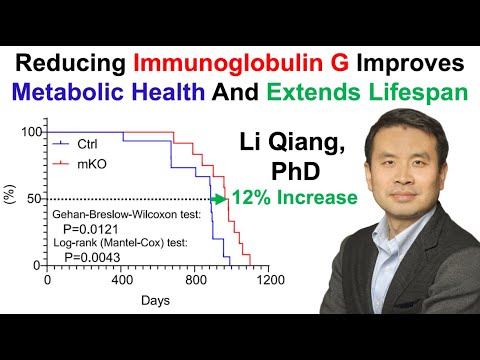
The scientific discovery in this video, if it holds up, sounds Nobel worthy. It's by far the most interesting thing I heard about the fundamental biology of insulin resistance, aging and immunity.
Fundamental Discoveries:
- IgG Accumulates in Adipose Tissue During Aging and Obesity: IgG, a type of antibody, accumulates in fat tissue with age and in obesity. This accumulation is specific to adipose tissue and is more pronounced than in blood.
- Calorie Restriction Reduces IgG: Calorie restriction, a known intervention for extending lifespan, specifically reduces IgG levels in both plasma and adipose tissue.
- IgG Induces Insulin Resistance and Adipose Tissue Inflammation: Elevated IgG levels impair insulin sensitivity and promote inflammation in adipose tissue.
- IgG Drives Adipose Tissue Fibrosis: IgG activates the TGF-beta/SMAD pathway, leading to fibrosis (scarring) of adipose tissue, which further contributes to metabolic dysfunction.
- IgG Competes with Insulin to Bind to the Insulin Receptor: IgG can directly bind to the insulin receptor, competing with insulin and impairing insulin signaling.
- Targeting IgG Recycling (FcRn) Improves Metabolic Health and Extends Lifespan: Inhibiting the recycling of IgG through the FcRn receptor in mice prevents IgG accumulation, improves metabolic health, reduces adipose tissue fibrosis, and extends lifespan.
- The Noncanonical Function of IgG: The researchers propose that IgG's role in aging and obesity is distinct from its traditional immune function and is mediated through its Fc fragment, not its antigen-binding domain.
Implications:
- IgG as a Potential Driver of Aging and Obesity: These findings suggest that IgG accumulation in adipose tissue may be a causal factor in the development of age-related metabolic decline and obesity.
- New Therapeutic Target: Targeting IgG, particularly its recycling pathway, could offer a novel therapeutic strategy for treating age-related diseases and obesity.
- Metabolic Origin of Aging: The research supports the idea that aging has a metabolic origin and that interventions targeting metabolism, like calorie restriction, may be key to extending healthspan and lifespan.
- Importance of Adipose Tissue in Aging: The study highlights the central role of adipose tissue in the aging process and suggests that it may be a primary driver of systemic aging.
- Rethinking the Role of IgG: This research challenges the traditional view of IgG solely as a component of the immune system and suggests a broader role in regulating metabolism and aging.
Further Research:
- Microbial Burden's Role: The video's host suggests investigating the potential role of gut leakiness and microbial translocation in driving IgG elevation during aging, which Dr. Qiang acknowledges as a crucial question.
- IgG Specificity: Determining whether specific types of IgG are involved in aging and obesity could lead to more targeted therapies.
- Human Studies: Further research is needed to confirm these findings in humans and explore the potential of IgG-targeting therapies in clinical settings.
- Other interventions: Investigate whether other interventions, such as exercise, parabiosis, or a high soluble fiber diet, can impact IGG levels and how they relate to health outcomes.
+Mike Lustgarten emphasizes that this research positions IgG as a major, yet often overlooked, factor in aging and metabolic health. The findings could revolutionize our understanding of these processes and pave the way for new interventions to promote healthy aging.
 ▶