The highest risk category for PAV (Percent Atheroma Volume) as measured by CT-angiogram is >15%.
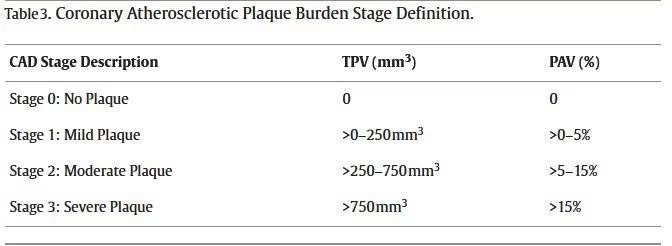
This is considered “Severe Plaque”.
This means that > 15% of the volume of a person’s vasculature is composed of plaque, as measured by CTA.
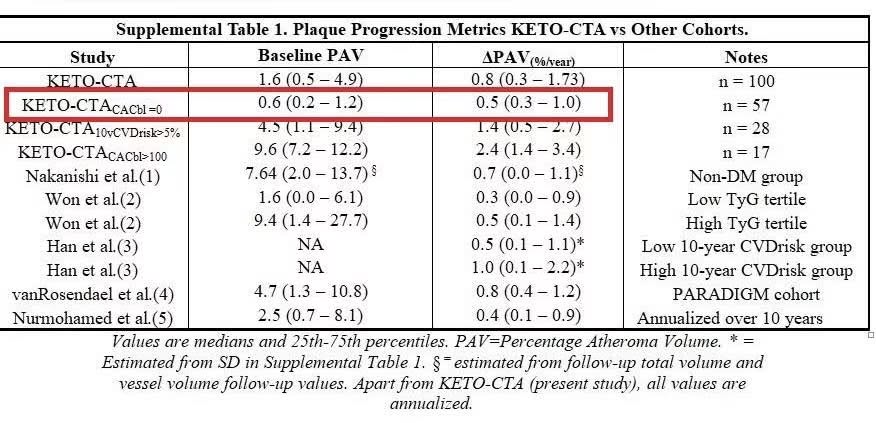
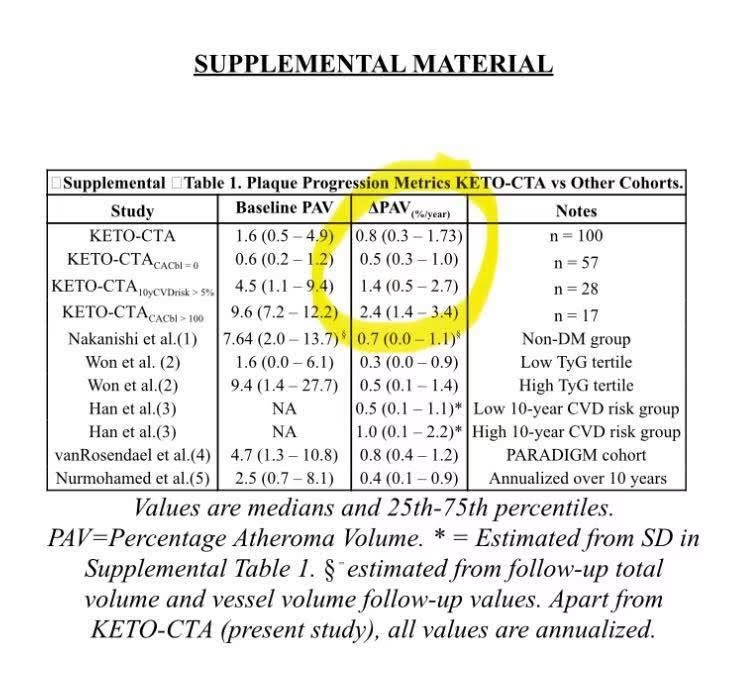
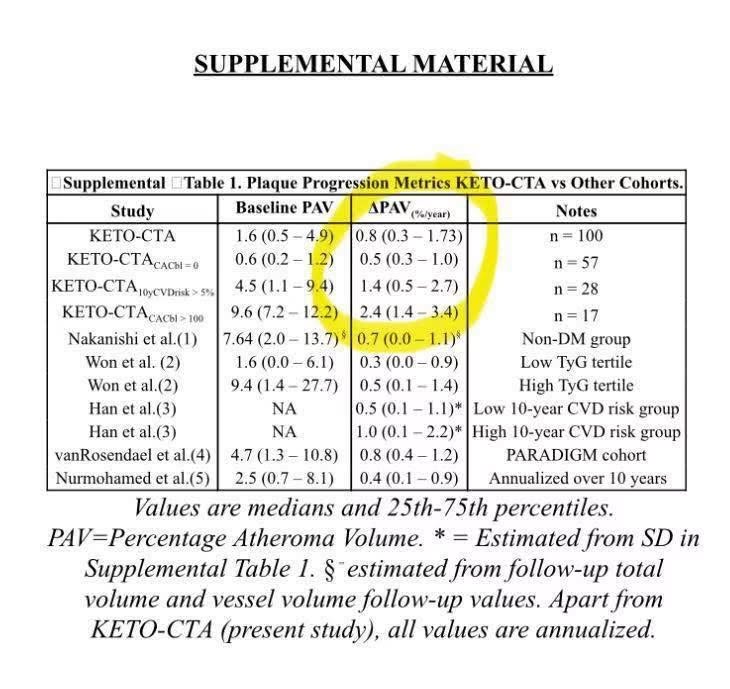
- People with CAC > 100 in the Keto-CTA (LMHR) study will cross this threshold in just 3 years from the start of the study.
(Starting with 9.6% baseline, and progressing 2.4% per year: 9.6+3(2.4)=16.8%)
- People with 10 year risk > 5% in the study will cross this threshold in 8 years.
(Starting with 4.5% baseline, and progressing 1.4% per year: 4.5+8(1.4)=15.7%)
- The average person in the study will cross this threshold in 17 years.
(Starting with 1.6% baseline, and progressing 0.8% per year: 1.6+17(0.8)=15.2%)
- People with CAC=0 do the best. It would take them 29 years to cross the threshold.
(Starting with 0.6% baseline, and progressing 0.5% per year: 0.6+29(0.5)=15.1%)
This data seems to imply that many people in this LMHR study will go on to develop “severe plaque” at some point in their lives, if they continue along this path. This is disappointing.
None of this analysis relies on comparison with any other studies. This is what the data says by itself.
All of this assumes that plaque progression does not accelerate as the total level of plaque increases over the years. However, there probably is some degree of acceleration due to age. As the arteries age, they accumulate plaque more easily. So these numbers act more like upper bounds. The real numbers are likely to be somewhat lower.