Cardiovascular Disease is Multi-Factorial
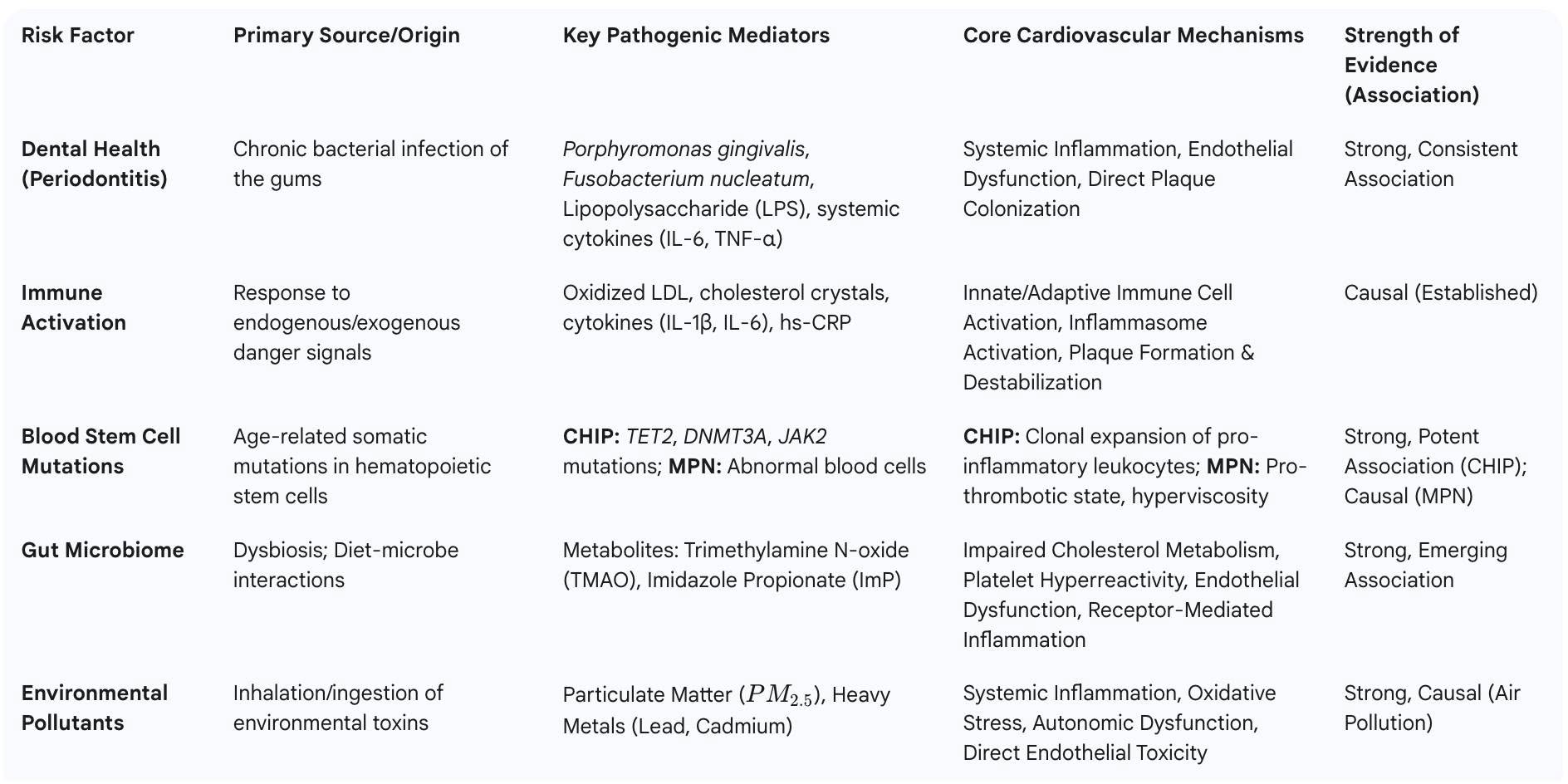
Managing cardiovascular disease requires a multi-faceted approach. While controlling traditional risk factors like LDL , BP, BMI, and Trigs etc is fundamental, emerging research highlights a far more complex picture driven by chronic inflammation. This systemic inflammation can be triggered by a wide range of factors, including viral infections like Flu, COVID-19 and shingles, as well as bacterial loads originating from poor oral hygiene and untreated gum disease. Furthermore, the gut microbiome plays a critical role, with metabolites like TMAO and Imidazole Propionate directly contributing to atherosclerosis. Finally, environmental toxins like microplastics and novel biological processes, such as plaque exhibiting tumor-like growth, demonstrate that a comprehensive heart health strategy must look beyond cholesterol and address all these interconnected risk factors.
What I personally aim for:
- Lots of high fiber foods and supplemental fiber
- Brush 2x, Floss daily (water pick is great)
- Get dental cleanings 3x yearly.
- Get yearly flu vaccine. Mask without feeling embarresed.
- Have an air purifier running 24x7 in my bedroom (not sure how much it helps with this, but I figured it cannot hurt).
- Don't eat outside (when you can avoid it). Eat at home, and buy organic. Avoid conventionally grown food as much as possible.
Non traditional risk factors for heart disease
↪ Non-traditional heart disease risk factors converge on inflammation and oxidative stress
A New Paradigm: The Infectious Roots of Heart Disease
↪ Infectious hypothesis of heart disease: oral streptococci in about 42% of coronary plaques
Beyond Cholesterol: An Infectious Trigger for Heart Attacks
↪ Dormant streptococcal biofilms in plaque can be woken by infection and rupture the plaque
A potential link between oral bacteria and heart attacks -- microfilm
↪ News: mouth bacteria biofilms in artery plaque may trigger some heart attacks
Shingles vaccine linked to reduced risk of heart attacks, stroke
↪ Shingles vaccine linked to 28% fewer heart attack and 42.5% fewer stroke hospitalizations
Strategies for lowering TMAO: Drugs, Diet, Supplements
↪ Strategies for lowering TMAO: diet, supplements and repurposed drugs
Proper mouth hygiene including regular cleanings, brushing 2x and flossing daily might help reduce systemic inflammation and cardiovascular plaque
↪ Gum disease care may reduce inflammation and plaque (reshare of Gokhan's own post)
Untreated gum disease is a contributor to atherosclerosis.
↪ Treating gum disease slows carotid artery thickening in a clinical trial
Covid infection increasing the rates of heart attack for a long time after the infection
↪ BMJ: evidence mounts that COVID-19 disrupts immunity, challenging 'immunity debt' idea
the bacterial metabolite imidazole propionate (ImP) has been identified as a significant and direct driver of atherosclerosis
↪ Imidazole propionate, a gut-bacterial metabolite, drives atherosclerosis in mice
D-lactate, produced by gut bacteria, contributes to high blood sugar and fatty liver disease
↪ Gut-microbe D-lactate raises blood sugar and liver fat; an oral 'trap' helped obese mice
Imidazole Propionate: A Microbial Metabolite Driving Chronic Disease
↪ Imidazole propionate: how gut bacteria make it from histidine and how to lower it
Atherosclerosis Shows Tumor-Like Cell Growth
↪ Atherosclerosis cells grow like tumors, according to Danish study
Researchers observed that plaque from individuals who had experienced stroke, mini-stroke, or temporary vision loss contained over 50 times more micronanoplastics than plaque-free artery samples.
↪ Micronanoplastics 50 times higher in carotid plaque than in plaque-free arteries