PCSK9 Inhibitors and Coronary Artery Calcium (CAC) Progression
Overview
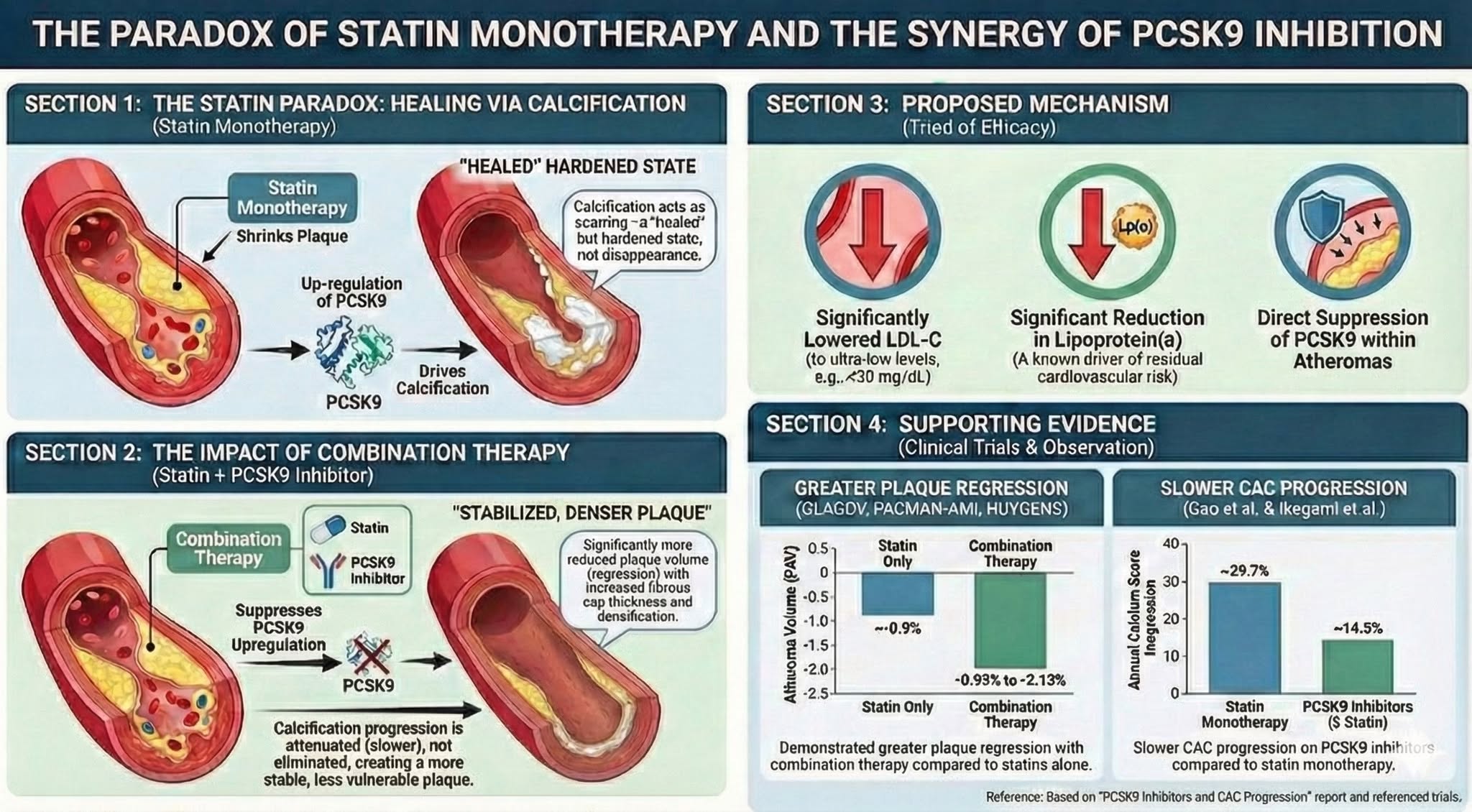
PCSK9 inhibitors, such as alirocumab and evolocumab, are potent injectable agents that dramatically lower LDL cholesterol and reduce Lipoprotein(a) [Lp(a)]. While statins alone have minimal impact on slowing the accumulation of coronary calcium, emerging evidence indicates that adding a PCSK9 inhibitor can significantly attenuate CAC progression and stabilize plaque in high-risk patients [1][2].
Clinical Evidence
Recent studies distinguish the effects of PCSK9 inhibition from standard statin monotherapy:
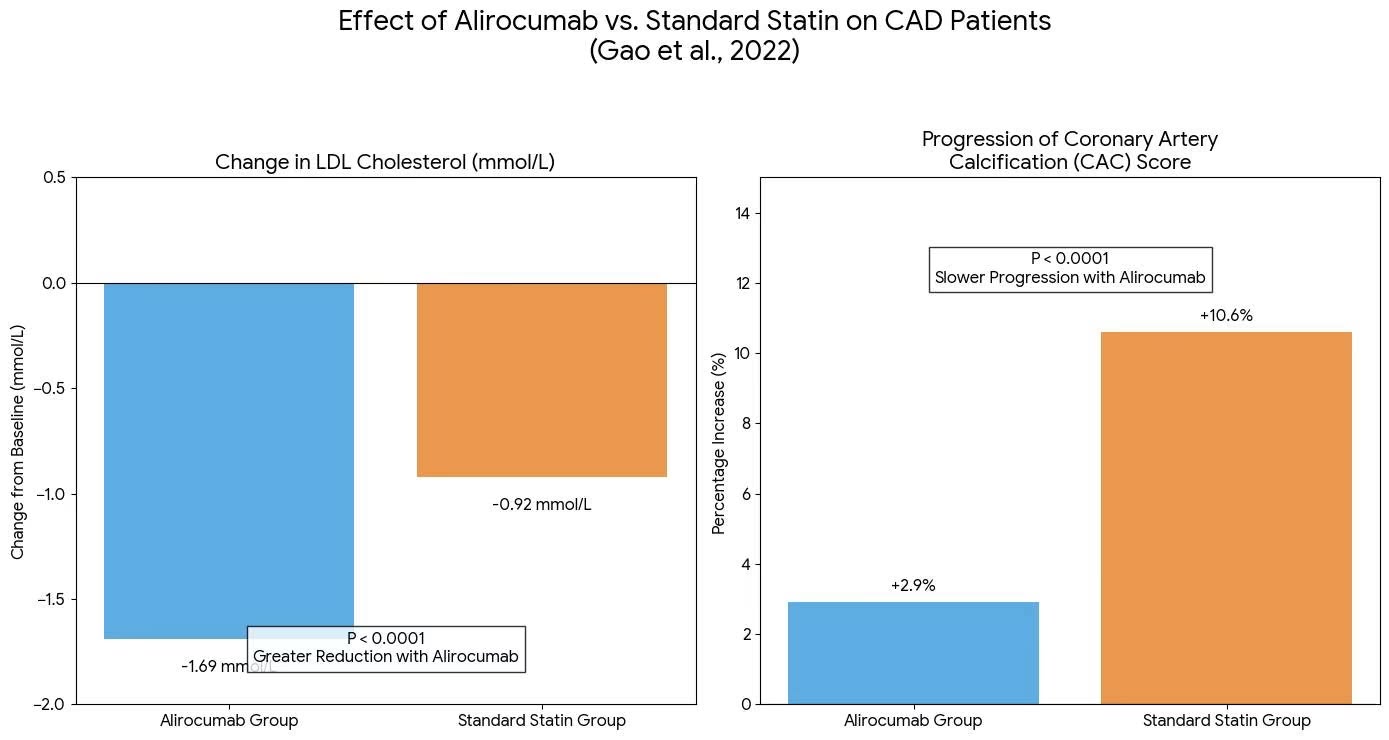
- Randomized Controlled Trial (2022): A study of 61 patients with Coronary Artery Disease (CAD) demonstrated that adding alirocumab (75 mg biweekly) to moderate-intensity statin therapy nearly halted calcification over 18 months. In contrast, patients on statins alone experienced substantial progression.
- Median CAC Change: +2.9% (PCSK9 + Statin) vs. +10.6% (Statin alone).
- Mean CAC Progression: +0.6% vs. +2.7% (P = 0.002).
- Notably, CAC scores in the PCSK9 group did not rise significantly from baseline, whereas the statin-only group showed marked increases [1].
- Retrospective Analysis: Corroborating these findings, a retrospective study by Ikegami et al. (n=120) found that combination therapy roughly halved the rate of calcium accumulation compared to statins alone.
- Annual Progression Rate: ~14.3% (PCSK9 + Statin) vs. ~29.7% (Statin monotherapy) [2].
Mechanism of Action
The ability of PCSK9 inhibitors to slow calcification is thought to stem from aggressive lipid modulation. In clinical trials, alirocumab reduced LDL levels to ~30–50 mg/dL and significantly lowered Lp(a), a risk factor statins typically do not affect. Analyses suggest that the reduction in Lp(a) correlates directly with the slowed progression of CAC, implying that Lp(a) lowering may be a key mediator of this benefit [1].
Clinical Implications
While larger long-term studies are needed, current data supports the use of PCSK9 inhibitors for secondary prevention or very high-risk primary prevention (e.g., familial hypercholesterolemia or high CAC scores). In these populations, adding a PCSK9 inhibitor to maximally tolerated statins appears to not only regress soft plaque but also prevent the rapid progression of calcified plaque often seen with statin monotherapy [2].
References
[2] The annual rate of coronary artery calcification with combination therapy with a PCSK9 inhibitor and a statin is lower than that with statin monotherapy (Ikegami et al., 2018)
PaperThe annual rate of coronary artery calcification with combination therapy with a PCSK9 inhibitor and a statin is lower than that with statin monotherapyresearchgate.net[3] Coronary Artery Calcium Progression: An Update (Frontiers in Cardiovascular Medicine, 2020)
Paper · Front. Cardiovasc. Med. · 2020Coronary Artery Calcification Under Statin Therapy and Its Effect on Cardiovascular Outcomes: A Systematic Review and Meta-AnalysisObjective: To compare Agatston scores between patients without statin therapy and those under standard and intensive statin therapy and to systematically review the relationship between coronary artery calcification (CAC) progression under statin therapy and cardiovascular outcomes. Methods: Literature search was conducted across databases. Randomized controlled trials and observational studies that reported…frontiersin.org Paper · Atherosclerosis · 2022PCSK9 promotes arterial medial calcificationsciencedirect.com