From Subclinical Disease to Rupture: The Role of Rapid Plaque Progression
#
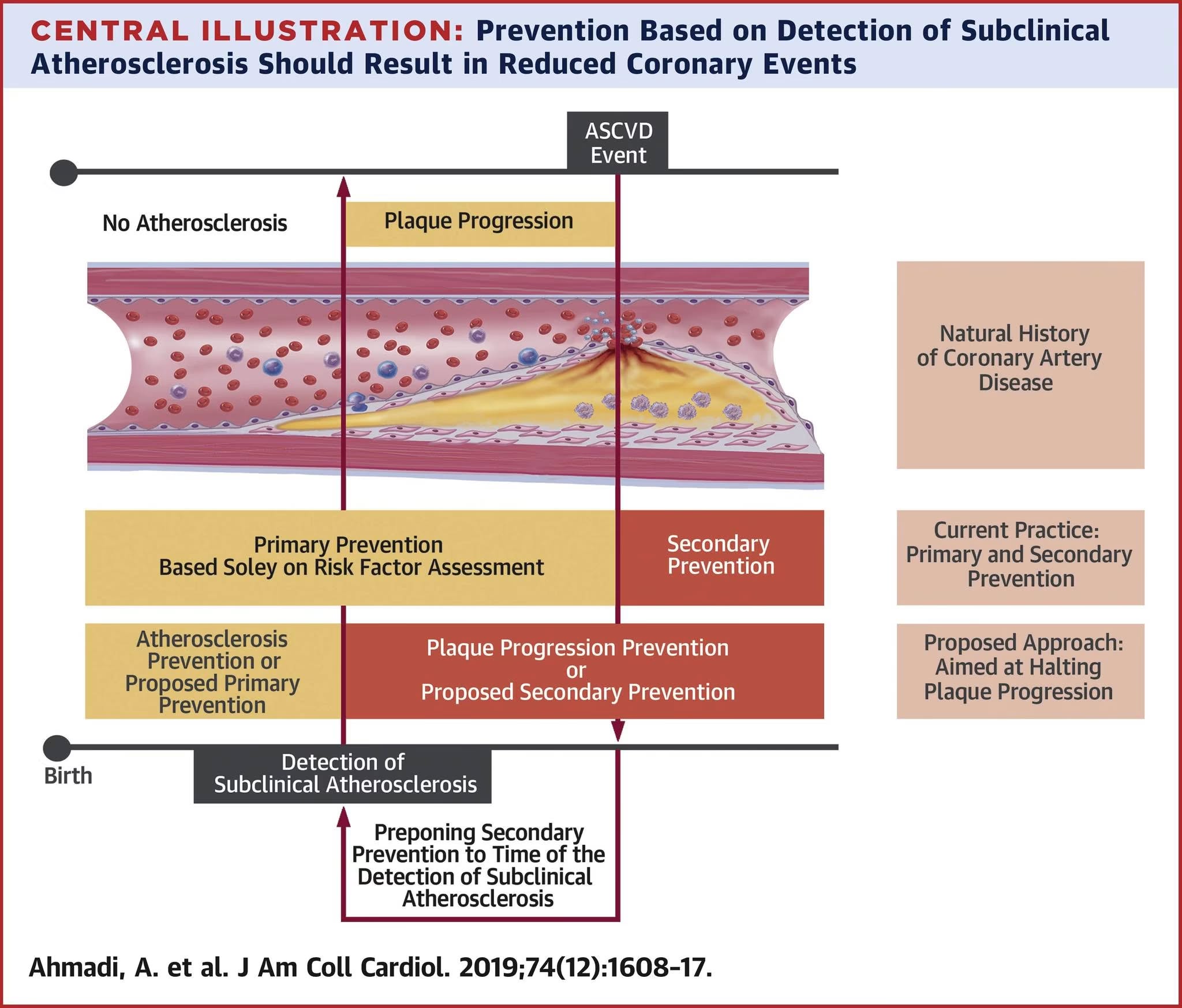
This review from the Journal of the American College of Cardiology (from 2019) challenges the traditional understanding of acute coronary syndromes. It argues that plaque progression is a necessary, biologically distinct, and modifiable step linking subclinical atherosclerosis to plaque rupture and myocardial infarction (MI).
The authors propose a paradigm shift: moving away from preventing events based solely on population-derived risk estimates (primary prevention) toward preventing events by detecting subclinical atherosclerosis via imaging and treating it aggressively to halt progression.
- The Myth of the "Mild" Plaque
Historically, it was believed that most heart attacks resulted from the sudden rupture of mild, non-obstructive plaques. This was based on angiograms taken months or years before an event. However, the authors present evidence from serial imaging studies showing that these "mild" plaques undergo a phase of rapid progression shortly before rupturing.
- Post-MI findings: In patients who underwent thrombectomy after a heart attack, the underlying culprit lesions were found to be obstructive, with an average stenosis of >60%. Postmortem studies showed 70% of ruptured plaques had >75% narrowing.
- Rapid Growth: The PROSPECT study found that lesions responsible for events grew significantly in the time leading up to the event:
- Baseline stenosis: 32% ± 21%
- Stenosis at time of event: 65% ± 16% ($p < 0.001$)
- Risk Multiplier: The study noted that interim plaque enlargement quadrupled the likelihood of a cardiac event.
- NHLBI Registry: Similar findings showed non-culprit lesions progressing from 42% to 84% stenosis by the time of a subsequent event.
- Redefining Plaque Progression
Progression should not be defined merely by luminal narrowing (stenosis) but by changes in plaque volume and composition (high-risk features). Computed Tomographic Angiography (CTA) studies highlight that plaques prone to rupture have specific quantitative features compared to stable plaques:
- Total Plaque Volume: Eventful lesions were larger (135 ± 14 mm³ vs. 58 ± 6 mm³).
- Necrotic Core Volume: Eventful lesions had significantly larger necrotic cores (20 ± 3 mm³ vs. 1 ± 1 mm³).
- Progression Risk: High-risk plaques that demonstrated progression over time carried a 28-fold higher likelihood of an acute coronary event compared to non-progressing plaques.
- Modifiability: The Role of LDL
The review asserts that plaque progression can be halted or reversed through intensive lipid-lowering therapy.
- The Critical Threshold: Plaque progression stops when LDL cholesterol is lowered to <70 mg/dl.
- Regression: Actual regression of plaque volume generally requires LDL levels even lower (e.g., <60 mg/dl or lower).
- Key Study Results:
- PARADIGM Study: Statins significantly reduced plaque growth (Hazard Ratio: 0.796) and low-attenuation (necrotic) plaque volume (Hazard Ratio: 0.644).
- GLAGOV Study: Patients on PCSK9 inhibitors plus statins achieved an average LDL of 37 mg/dl and showed significant atheroma volume reduction.
- PESA Study: No atherosclerosis was observed in subjects with LDL <60 mg/dl, suggesting this is the threshold for disease development.
- A New Clinical Paradigm
The authors argue that the current distinction between "primary" and "secondary" prevention is outdated. Instead, patients should be stratified by the presence or absence of subclinical atherosclerosis detected via imaging (such as Calcium Scoring or CTA).
- Targeting the Disease, Not the Risk:
- In patients with a Coronary Calcium Score of 0, the Number Needed to Treat (NNT) with statins to prevent an event is >500.
- In patients with subclinical atherosclerosis (Calcium Score >100), the NNT drops dramatically to 12.
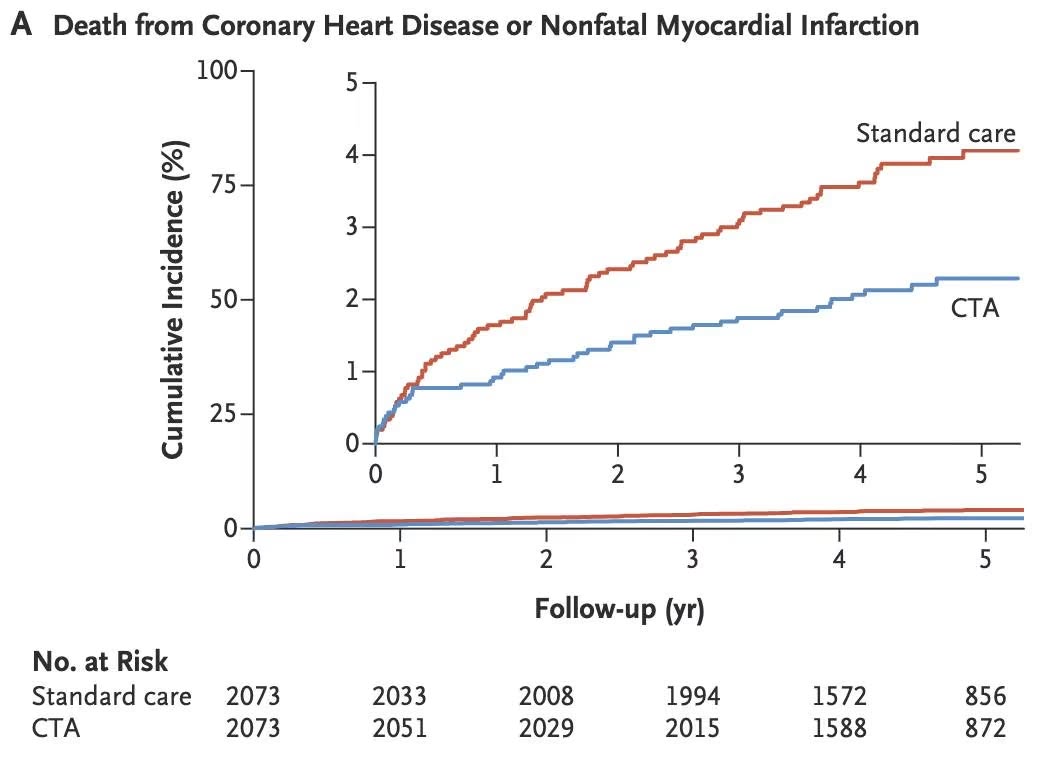
- Outcomes: The SCOT-HEART study (5-year follow-up) demonstrated that using CTA to guide treatment resulted in a significantly lower rate of myocardial infarction (Hazard Ratio: 0.45) compared to standard care based on risk estimates alone.
Conclusion
The authors conclude that identifying early, uncomplicated atherosclerosis offers a specific window of opportunity. By initiating intensive lipid-lowering therapy (Target LDL <70 mg/dl) upon detection, clinicians can halt the plaque progression necessary for rupture, effectively preventing acute coronary events before they occur.
Paper · Journal of the American College of Cardiology · 2019From Subclinical Atherosclerosis to Plaque Progression and Acute Coronary Eventsjacc.org