What do I do with my high coronary calcium CT results: An excellent guide
 kahnlongevitycenter.comWHAT DO I DO WITH MY HIGH CORONARY CALCIUM CT RESULTS: AN UPDATED GUIDE: Joel Kahn, MD: Integrative CardiologistHeart disease can be detected when it is early and silent using coronary artery calcium scoring (CACS) scans done by CT imaging. When abnormal results are foundkahnlongevitycenter.com
My hope is that in many decades my tombstone will say "he convinced the medical system to screen for early and silent heart disease". While the work to incorporate these scans routinely after age 40, many do get abnormal CACS results and unsure what to do about them. The Kahn Center has counseled thousands of patients regarding their CACS results...
- Why Get a Heart CT Scan?
- What Do I Do With the Results?
- What Can I do to Reverse Atherosclerosis?
... These studies give hope that even for patients with advanced disease, nutrition, exercise, and nutraceutical therapies can improve their quality and quantity of life.
Regression and stabilization of atherogenic plaques, 2023
drive.google.comGoogle Drive filedrive.google.comPlaque regression and stabilization may be the most crucial component in treating atherosclerosis, the leading cause of death worldwide. Therapies and interventions that demonstrate this ability offer a truly anti-atherosclerotic effect. The prevailing paradigm, which focuses on reducing MACE, could be revised to measure earlier stages of events if atherosclerosis is being modified from the outset. The future of plaque-modifying therapies is promising, and further research is encouraged.
Topics covered:
- Diet, lifestyle, and exercise
- Statins
- Ezetimibe
- Icosapent Ethyl
- Lipoprotein (a)
- PCSK9 Inhibitors
- Testosterone
- Colchicine
- Direct oral anticoagulants
- Semaglutide
- Thiazolidinediones
- Dipeptidyl peptidase-4 inhibitor
- Metformin
- Antihypertensives
Coronary Atherosclerotic Plaque Regression: JACC State-of-the-Art Review, 2022
Paper · Journal of the American College of Cardiology · 2022Coronary Atherosclerotic Plaque Regressionjacc.orgTopics covered:
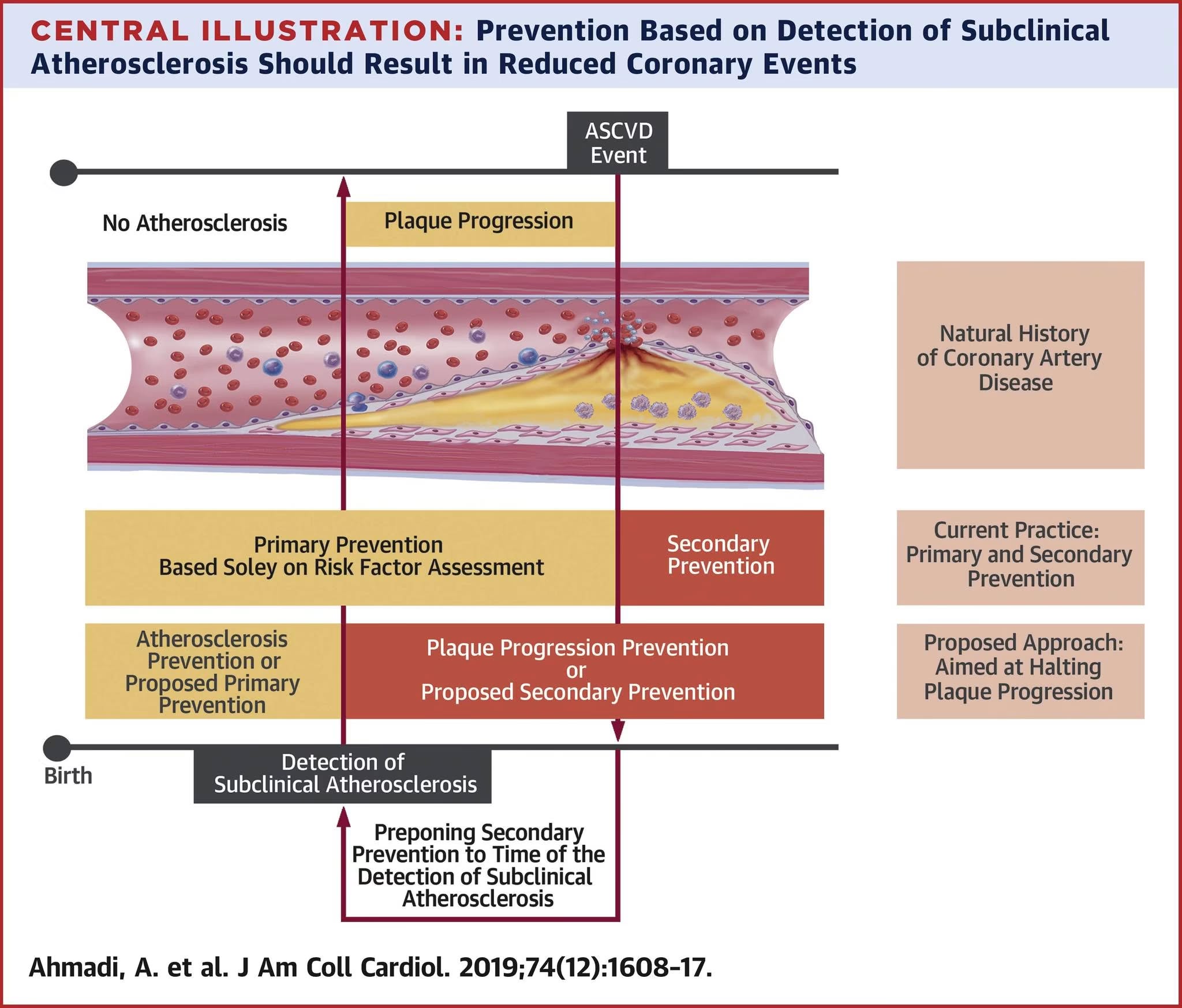
- Mechanisms of Plaque Formation and Natural History
- Plaque Regression Strategies
A large body of evidence suggests that statins induce plaque regression in a dose-dependent manner and proportionally to reductions in LDL-C. IVUS has been the main modality used to assess changes in plaque burden, although several studies have begun to use CCTA in the last few years. In response to statins, fibrous and calcified plaque volumes appear to increase, whereas noncalcified, fibrofatty, and necrotic core volumes decrease.