Exercise is great for you, but it doesn’t work that well (by itself) as a weight loss strategy.
This new paper may partially explain why.
Quoted:
“For decades, scientists have used a simple mathematical formula to calculate how much energy we use, which is essentially: Total Burn = Living Cost + Exercise. This is known as the Additive Model, and it means that every calorie you burn during a workout is simply added to the calories you use just to stay alive.
So, for example, if you burn 2,000 calories a day during your normal activities and then go for a run and burn 400 calories, you'll burn 2,400 calories in a day according to the formula. The thought has been that this extra burn could lead to weight loss.
However, in recent years, another model has emerged called the Constrained Model. It says that our bodies have a limit on how much energy they spend. So if we burn more calories through exercise, the body reduces internal tasks, such as cell repair, to keep total energy expenditure within a narrow, predictable range. It means that the extra calories you thought you were burning at the gym are partially offset.”
“Two researchers from Duke University in the U.S., Herman Pontzer and Eric T. Trexler, decided to compare these two ideas to see which one is supported by the data.
They analyzed 14 different studies involving 450 people who participated in exercise programs, as well as several animal studies. By comparing the energy these subjects were expected to burn with the energy they actually burned, the scientists calculated how much the body was compensating. They also compared data from different populations.
Their results suggested that the Additive Model often overestimates how much total daily energy expenditure rises with exercise. Instead, they found that as people and animals become more active, they may compensate by reducing energy spent on other processes or activities.”
My note:
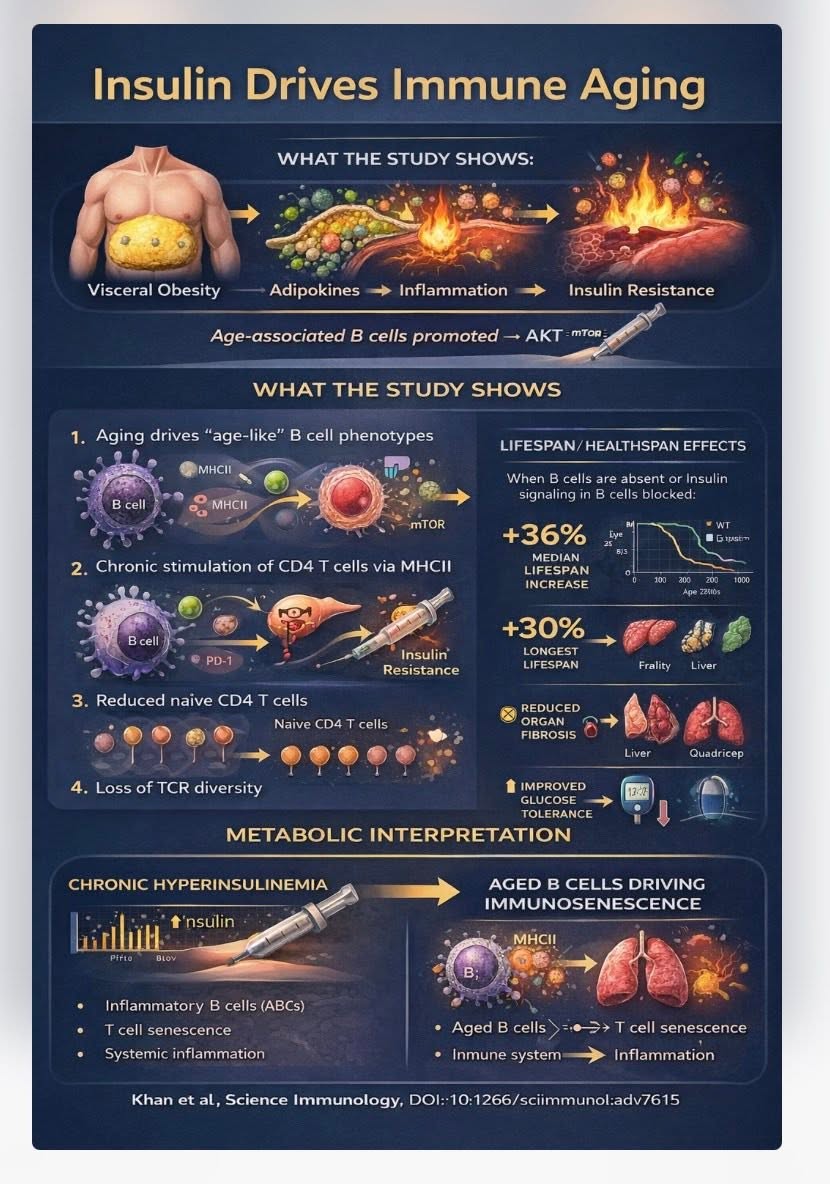
The “constrained model” of energy expenditure during exercise (which is presented in this paper) might partially explain why exercise extends lifespan. By diverting calories away from internal tasks like “cellular repair”, there is less activation of growth pathways like mTOR and IGF1 that become pathological as we get older. Old cells overactivate mTOR as an attempt to repair the overwhelming amount of cellullar damage that has accumulated with age, a process that is doomed to failure. Diverting energy away from this doomed process may reduce the pathological systemic effects that it has in the aging body.