A thickened Achilles tendon (≥8 mm in men, ≥7.5 mm in women) is a significant prognostic marker for cardiovascular risk.
A 2026 study showed these patients face a much higher risk of major adverse cardiovascular events (MACE) within three years after a stent procedure compared to those without thickening:
Paper · Circ J · 2026Prognostic Impact of Achilles Tendon Thickening After Percutaneous Coronary Intervention Compared Between Acute and Chronic Coronary Syndromes.Conclusion: ATT may be a simple, non-invasive marker for risk stratification after PCI, particularly in ACS patients.pubmed.ncbi.nlm.nih.govFindings on Achilles Tendon Thickening and Heart Health
- MACE Risk: Patients with thickened Achilles tendons had a 28.4% MACE rate compared to 17.9% in those without it, including death, infarction, stroke, or revascularization.
- ACS Prognosis: Thickened tendons were more prevalent (24.3%) in Acute Coronary Syndrome (ACS) patients compared to Chronic Coronary Syndrome (13.7%) and predicted a 4.7-fold increase in early recurrence of cardiovascular events in ACS patients.
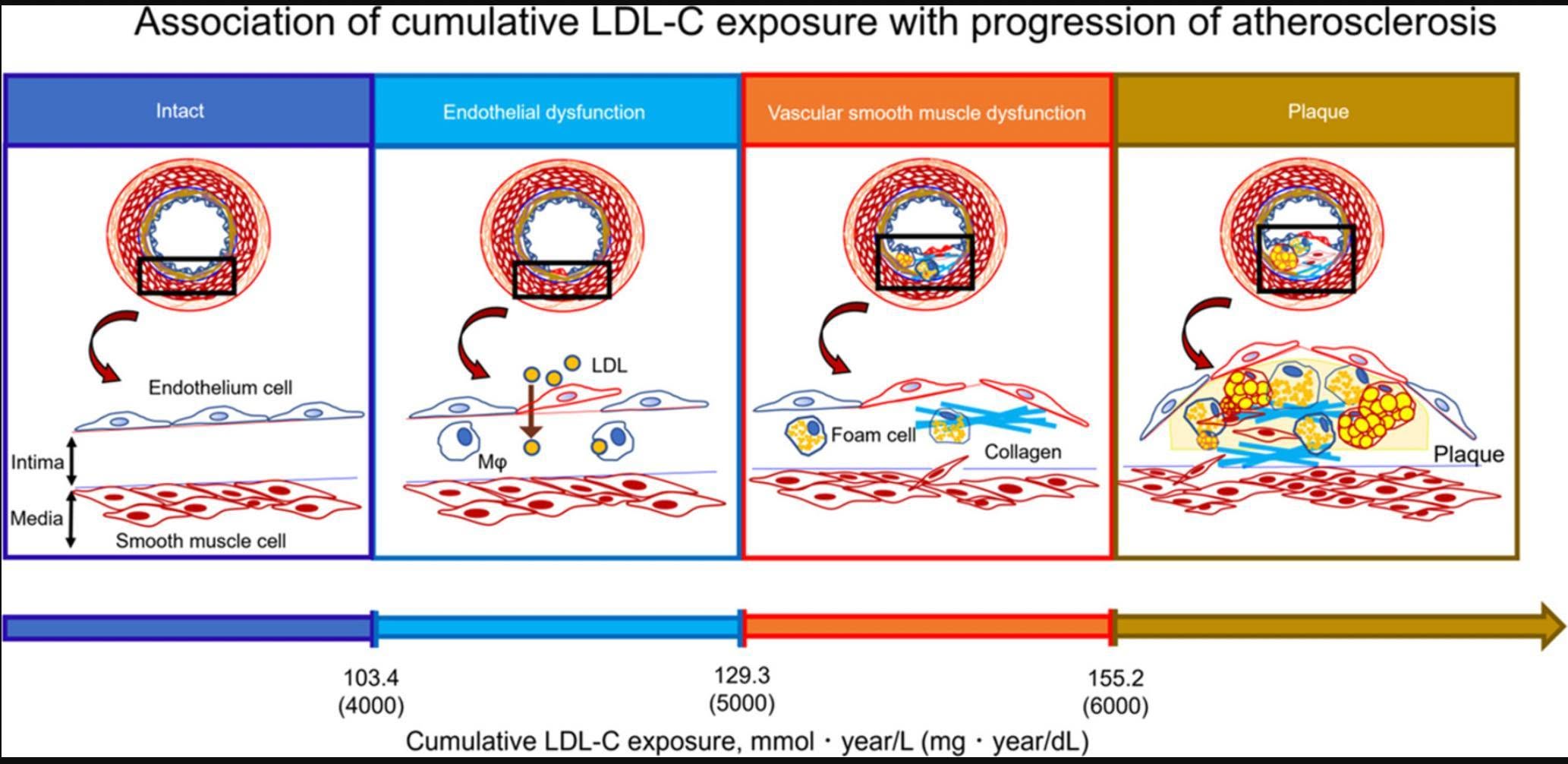
- Mechanism: Thickened tendons are often a manifestation of hypercholesterolemia, reflecting cumulative long-term LDL cholesterol exposure, acting as a "window" into the severity of coronary artery disease.
- Independent Risk Factors: Studies indicate Achilles tendon thickness is a predictor of carotid atherosclerosis and coronary vessel disease independent of traditional risk factors.
While this study didn't establish direct causation, it supports using the physical assessment of the Achilles tendon for secondary prevention and risk stratification in cardiology.
Why the Achilles Tendon?
The connection lies in how our bodies handle LDL over decades.
- Cholesterol Sequestration: The Achilles tendon is one of the few places in the body where excess cholesterol can deposit directly into the tissue (forming what doctors call xanthomas).
- Cumulative Record: Unlike a blood test, which shows your cholesterol levels today, a thickened tendon represents the cumulative damage and exposure over your entire life.
- The "Silent" Warning: This is why it’s a hallmark of Familial Hypercholesterolemia (FH). Even if a patient's current blood work looks okay due to medication, a thickened tendon suggests that the arteries have likely already endured significant stress.
Quoted:
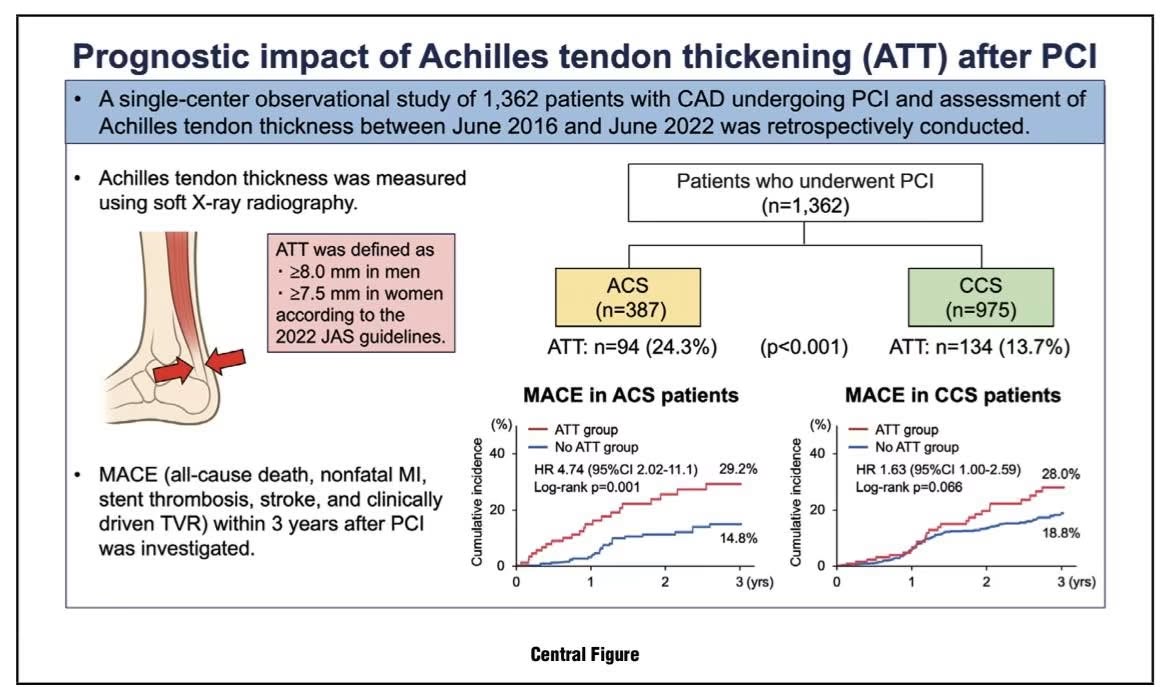
“A total of 1,362 patients were analyzed: 387 (28.4%) ACS [acute coronary syndrome] and 975 (71.6%) CCS [chronic coronary syndrome] patients. Overall, ATT [achilles tendon thickening] was observed in 228 patients (16.7%). The prevalence of ATT was significantly higher in ACS than CCS patients (24.3% vs. 13.7%, P<0.001). Kaplan-Meier curve analysis demonstrated that the incidence of 3-year MACE after PCI was 28.4% in the ATT group and 17.9% in the no ATT group (hazard ratio [HR] 1.99, 95% confidence interval [CI] 1.38-2.87, P<0.001) (Figure). In ACS patients, 3-year MACE occurred more frequently in the ATT group (HR 4.74, 95% CI 2.02-11.1, P=0.001). A similar trend was observed in the CCS patients, but did not reach statistical significance HR 1.63, 95% CI 1.00-2.59, P=0.066).”