Vitamin D didn’t “treat” cancer.
It changed how the body responded to chemotherapy.
A 2025 randomized controlled clinical trial published in the World Journal of Surgery followed 227 women with breast cancer receiving neoadjuvant chemotherapy (chemo before surgery).
Participants were randomized to:
- Chemotherapy alone
- Chemotherapy plus vitamin D3
The vitamin D protocol:
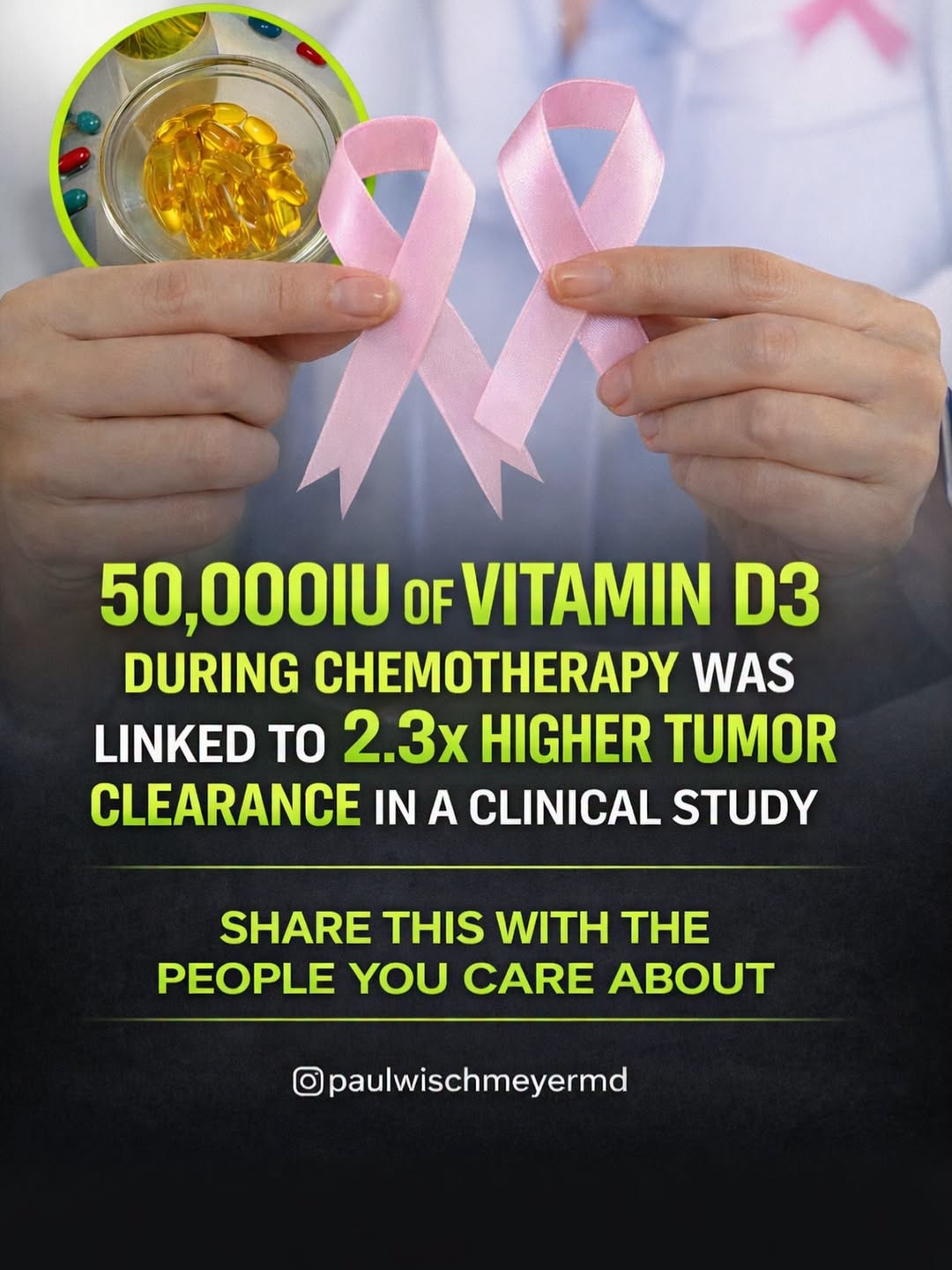
50,000 IU of vitamin D3 once weekly, given throughout the entire chemotherapy course.
⸻
What outcome did researchers study?
They focused on pathologic complete response (pCR) — meaning no detectable cancer at surgery, a marker strongly linked to better long-term outcomes.
⸻
What did they find?
After adjusting for tumor stage, hormone receptor status, HER2 status, and proliferation markers:
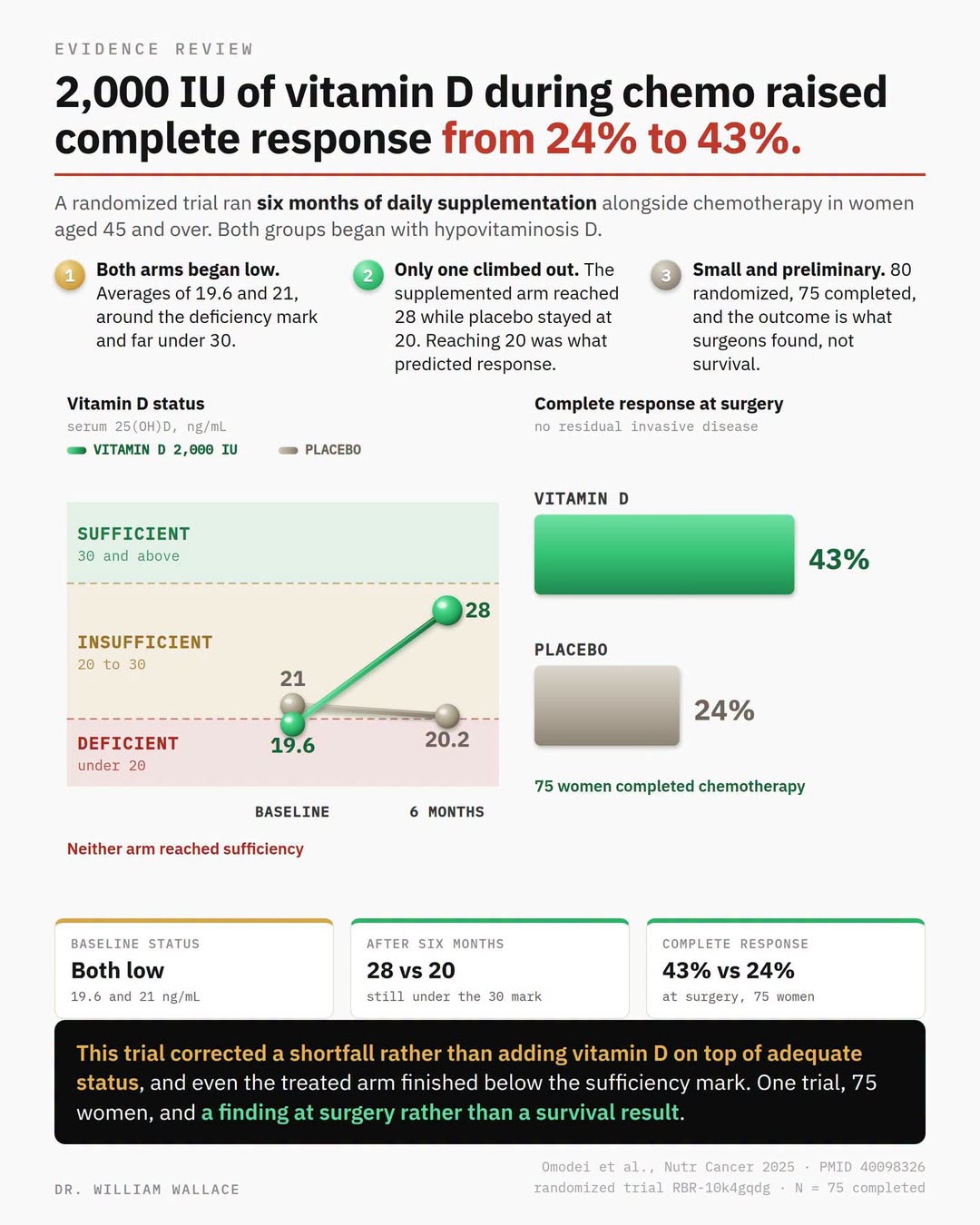
- 2.33× higher odds of achieving pCR with vitamin D
- 95% CI: 1.20–4.53
- Statistically significant (p = 0.013)
In plain language:
Women receiving vitamin D during chemotherapy were more than twice as likely to completely clear detectable tumor tissue by the time of surgery.
⸻
Why this matters
Chemotherapy works by damaging cancer cells.
This trial moves beyond theory and shows a measurable clinical effect in humans—suggesting physiology matters, not just drugs.
⸻
Important limitations (read this)
- Vitamin D was adjunctive, not a standalone therapy
- This was not a survival study (yet)
- The dose was high-dose weekly, not casual daily supplementation
- Patients were under medical supervision during active cancer treatment
⸻
What this does not mean
❌ Vitamin D does not replace chemotherapy
✅ It suggests that optimizing physiology may improve how treatments work
⸻
Study:
World Journal of Surgery, 2025
PMID: 40229998
Educational only. Not medical advice.
Cancer treatment decisions should always be made with an oncology team.
If this helped you understand treatment response (not hype), save this and share it with someone who needs clarity and real information they can trust.