HD-OPM Archive
Topics › Cancer

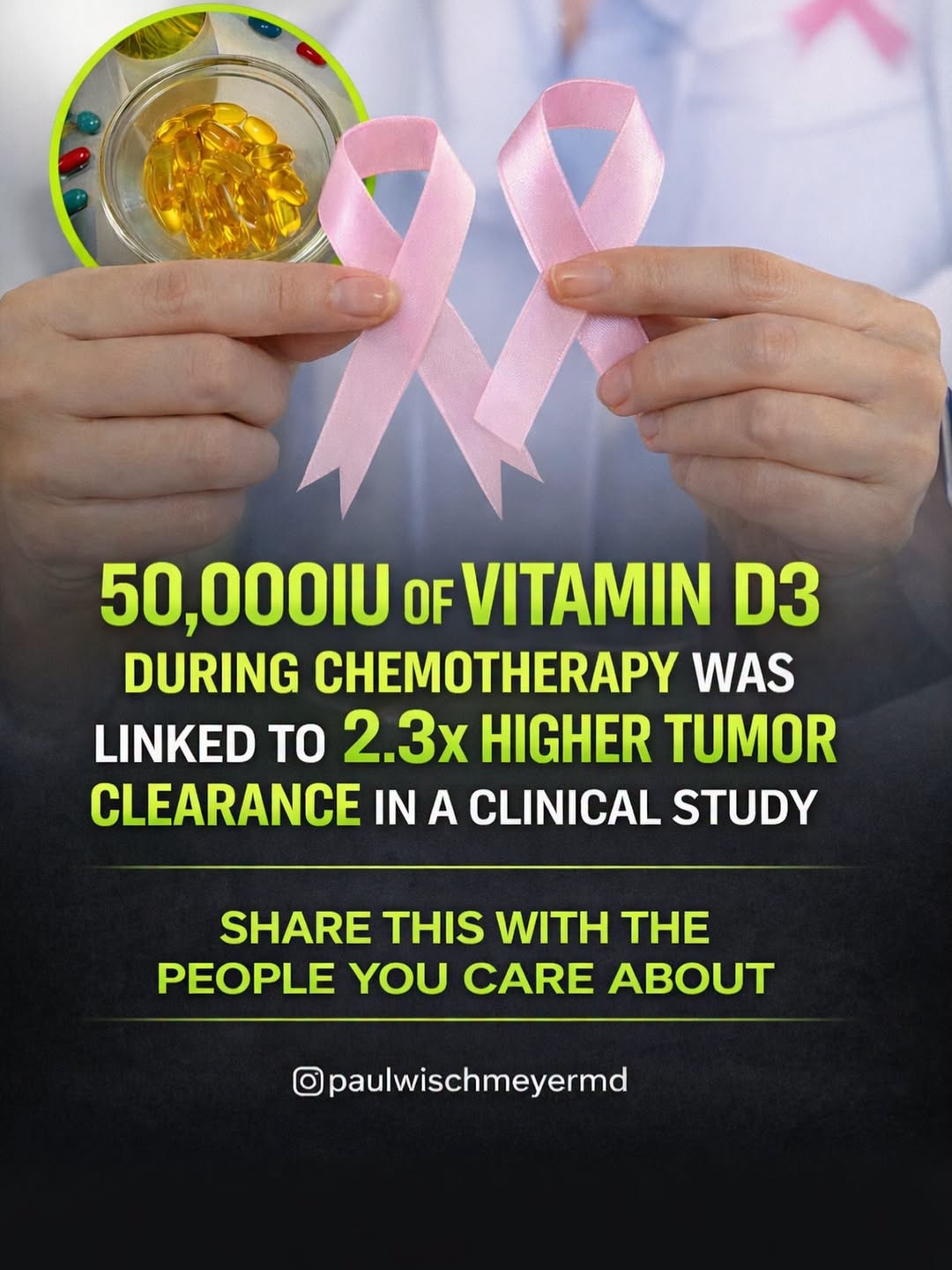
Vitamin D3 2,000 IU raised complete response to chemotherapy in breast cancer: 43% vs 24%

Louis Nervegna · Oct 31, 2026 · ♥ 1 reactions · 0 comments · original Facebook post
CancerSupplements & vitamins
AI summary & key facts

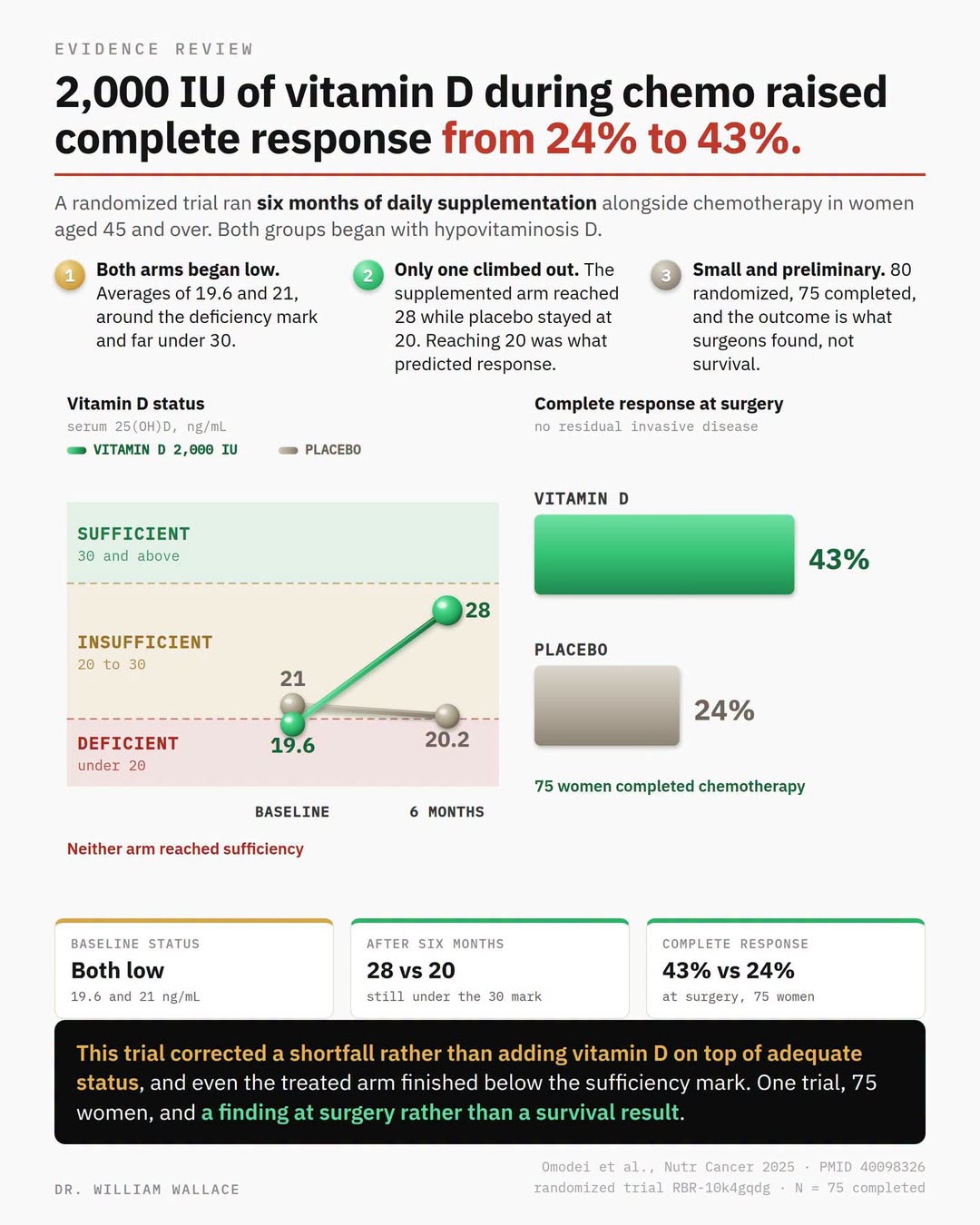
In an RCT of 80 women aged 45 or older receiving neoadjuvant chemotherapy for breast cancer, 2,000 IU daily vitamin D3 for six months was compared with placebo. Among 75 who completed treatment and had surgery, pathological complete response was 43% with vitamin D versus 24% with placebo. Small trial in cancer, not heart disease.

Link to journal paper (2025):

Paper · Nutr Cancer · 2025Vitamin D Supplementation Improves Pathological Complete Response in Breast Cancer Patients Undergoing Neoadjuvant Chemotherapy: A Randomized Clinical Trial.This study aimed to evaluate the effect of vitamin D (VD) supplementation on the pathological complete response (pCR) rate in women with breast cancer (BC) undergoing neoadjuvant chemotherapy (NCT). A randomized clinical trial was conducted with 80 women aged ≥45years with BC who were eligible for NCT. Women were randomized into two groups: VD group, daily supplementation with 2,000IU of cholecalciferol (n = 40) or…pubmed.ncbi.nlm.nih.gov
#vitamindHD #breastcancerHD #cancerHD

Research cited

Shared from Dr Erickson · original post

A randomized clinical trial studied 80 women aged 45 or older receiving neoadjuvant chemotherapy for breast cancer. Participants received either 2,000 IU of vitamin D3 daily or a placebo for six months.

Among the 75 women who completed treatment and underwent surgery, pathological complete response was reported in 43% of the vitamin D group compared with 24% of the placebo group. A pathological complete response means that no remaining invasive cancer was detected during examination of the surgically removed tissue—it does not mean vitamin D eliminated the tumor by itself.

Most participants began the study with low vitamin D levels, and chemotherapy remained the primary cancer treatment. This was a small trial, so larger studies are needed before vitamin D can be considered a proven method for improving treatment response. Patients should have their levels and dosage managed by their oncology team.
Shared for information purpose only.
Reference: Omodei MS et al. Nutrition and Cancer. PMID: 40098326.

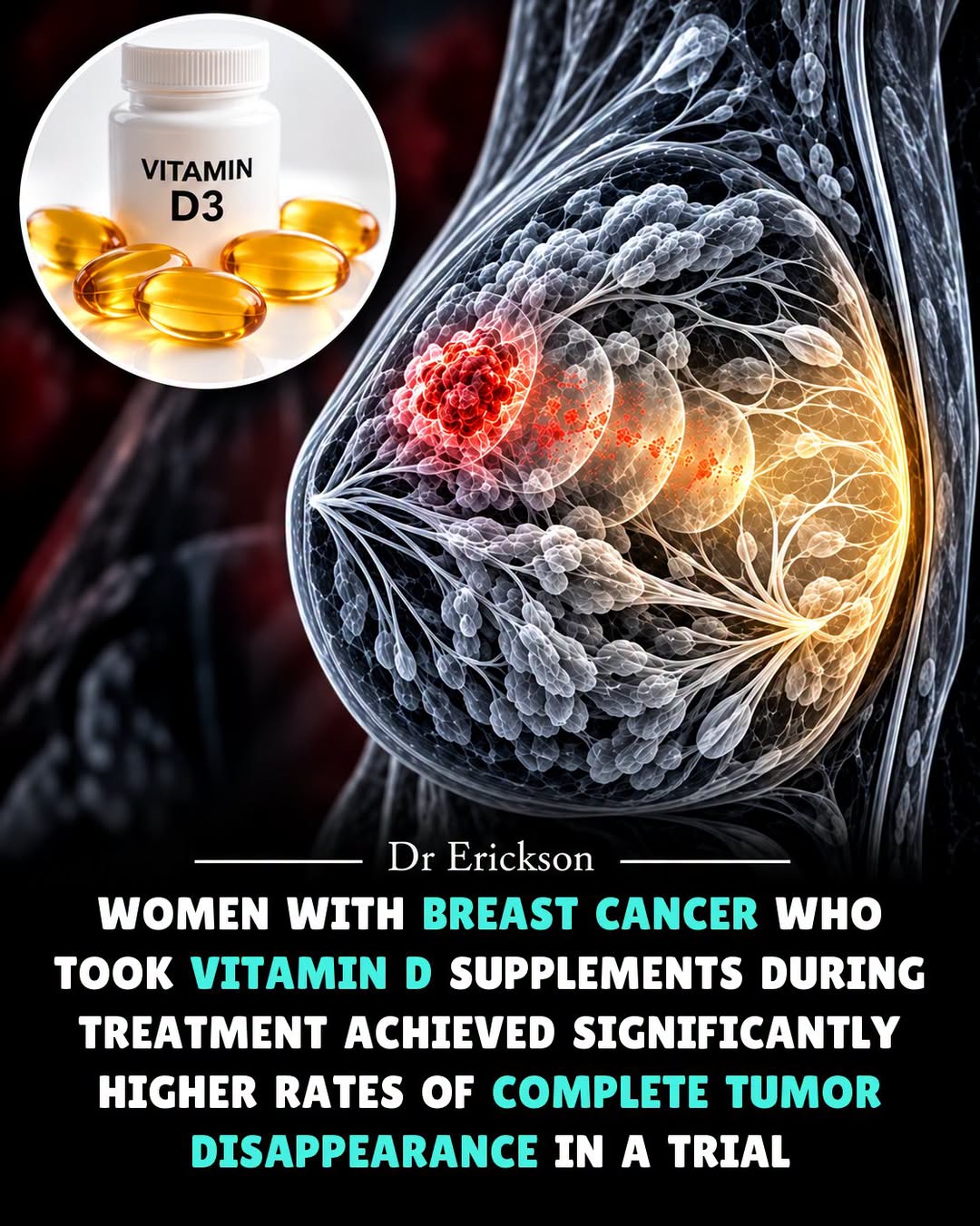
May be an image of text
← newer: GGT liver enzyme: what gamma-glutamyl transferase measures aolder: Review: amyloid-beta may cross a leaky blood-brain barrier a →