Previous research has shown that metformin might slow brain aging in non-human primates:
↪ Metformin slowed brain aging in monkeys, with neurons resembling those 6 years younger
Now it is clear that metformin’s mechanism of action in lowering blood glucose operates partially inside the brain.
Link to journal paper:
Paper · Sci. Adv. · 2025Low-dose metformin requires brain Rap1 for its antidiabetic actionMetformin is the most commonly prescribed antidiabetes drug, yet its precise mechanism of action remains controversial. Previous studies have suggested that metformin acts peripherally by reducing hepatic glucose output and altering gut functions. Here, we report a neural mechanism via the small guanosine triphosphatase Ras-related protein 1 (Rap1). Mice with forebrain-specific Rap1 knockout exhibited resistance to…science.orgQuoted:
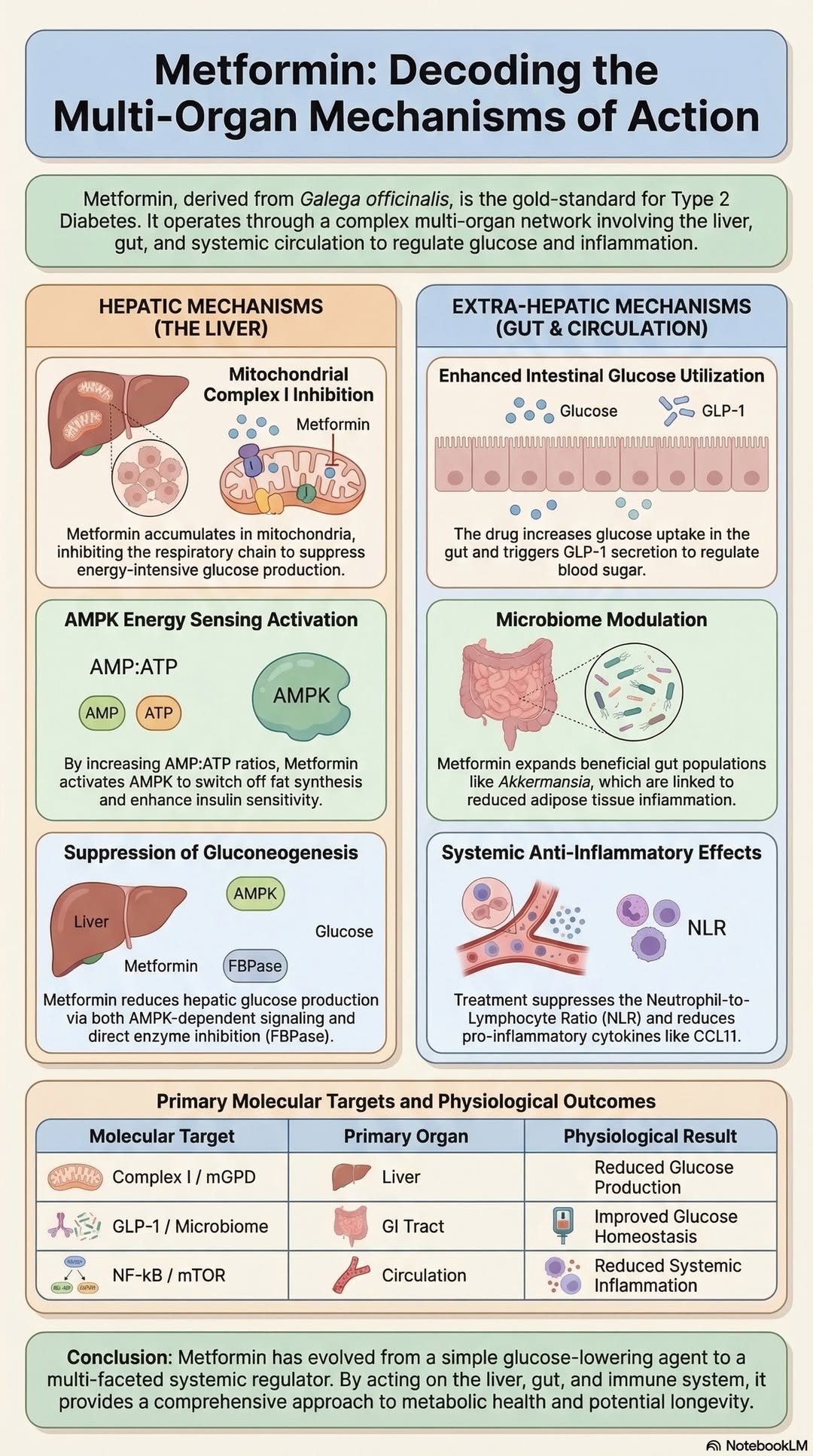
Traditionally, scientists thought that metformin lowered blood glucose by activating an enzyme in cells called AMP-activated protein kinase (AMPK).
With time, however, evidence has surfaced to suggest the drug's reach could go far beyond that, meaning metformin might be having an unseen effect in millions of patients worldwide.
Decades of research have gradually revealed a much more complex picture of metformin's action, expanding the initial perspective of AMPK-dependent hepatic glycemic improvement to multiple modes of action across peripheral organs," Fukuda and his team explain in their paper.
To further test the extent of this – and specifically whether metformin's activity extended to the brain – the researchers used a mouse model, breeding mice that had been genetically modified to lack the protein Rap1 in a part of the brain called the ventromedial nucleus of the hypothalamus (VMH).
In a previous study by Fukuda's lab, the researchers showed Rap1 in the VMH helps regulate blood glucose and energy balance in mice.
In their follow-up, the team wanted to know if Rap1 in the VMH was also part of how metformin works in the body, which would indicate the drug's glucose-lowering action also involved the brain, not just the liver and the gut.
The experiment showed that when the Rap1 gene was deleted in mice, preventing their cells from making the Rap1 protein, metformin didn't work to lower their blood glucose levels in animals fed a high-fat diet to mimic type 2 diabetes.
Rap1-deficient mice did respond to other kinds of anti-diabetic drugs, including insulin and GLP-1 agonists, but the fact that the animals didn't respond to metformin suggests the drug relies on the VMH Rap1 pathway to achieve its effect.
"This discovery changes how we think about metformin," said Fukuda.
“It's not just working in the liver or the gut; it's also acting in the brain."
The researchers didn't stop there.
In an experiment involving obese mice, the researchers injected a small dose of metformin directly into the animals' brains and found the drug significantly reduced their blood glucose levels.
"The effect was seen with as little as 1 μg of metformin, which is several thousand times lower than the doses required for oral or peripheral administration in rodent studies … suggesting that the brain is highly sensitive to metformin," the researchers wrote in their paper.
According to the team, metformin works in the brain by activating cells called SF1 neurons, which help regulate metabolic processes in the body, including blood sugar levels, appetite, and energy balance.
The more we know about how metformin can achieve these effects in the brain's VMH pathway, the more we might be able to unlock new kinds of treatments – and not just for controlling blood sugar.
Research has previously shown daily doses of metformin may have potential for slowing brain aging, based on an experiment involving macaques.
The drug has also been linked with anti-aging effects in people, which suggests it could have potential use for extending human longevity.
For Fukuda and team, it all means there's a lot more we can discover about this powerful and promising drug, and the paths it travels.
These findings open the door to developing new diabetes treatments that directly target this pathway in the brain," Fukuda said.
"In addition, metformin is known for other health benefits, such as slowing brain aging. We plan to investigate whether this same brain Rap1 signaling is responsible for other well-documented effects of the drug on the brain."