Does getting a CAC scan actually change whether or not you ultimately have a heart attack?
For some people, it is a wake up call and a life saver.
But for the average person, it doesn’t seem to change outcomes.
Louis asks whether CAC scanning changes whether you have a heart attack; for some it is a wake-up call, but for the average person it does not seem to change outcomes. The shared text cites a Danish trial of 30,000 men (no reduction in death, MI or stroke at seven years, more serious bleeding) and the US CorCal trial of nearly 6,000 people (same event rates as a risk calculator).
Does getting a CAC scan actually change whether or not you ultimately have a heart attack?
For some people, it is a wake up call and a life saver.
But for the average person, it doesn’t seem to change outcomes.
Scan or scam? A calcium scan tells you plaque exists. No trial has shown it helps anyone, and it’s being sold to everyone. Two randomized trials this year say it does not change whether you live or have a heart attack: a Danish trial of 30,000 men screened with CAC showed no reduction in death, MI, or stroke at seven years and more serious bleeding (Lindholt JS et al, Eur Heart J 2026), and a US trial of nearly 6,000 people using CAC to guide statin decisions found identical event rates to a plain risk calculator (Muhlestein JB et al, CorCal Outcomes, ESC Congress 2026). The US Preventive Services Task Force does not recommend it for routine risk assessment in asymptomatic adults, citing insufficient evidence that it prevents events and the cardiology guidelines give the test one job: helping decide on a statin when the risk is borderline. Everything else is marketing. Remember, I’m a doctor, just not your doctor. Talk to your own doctor about your own risk and medical decision making.
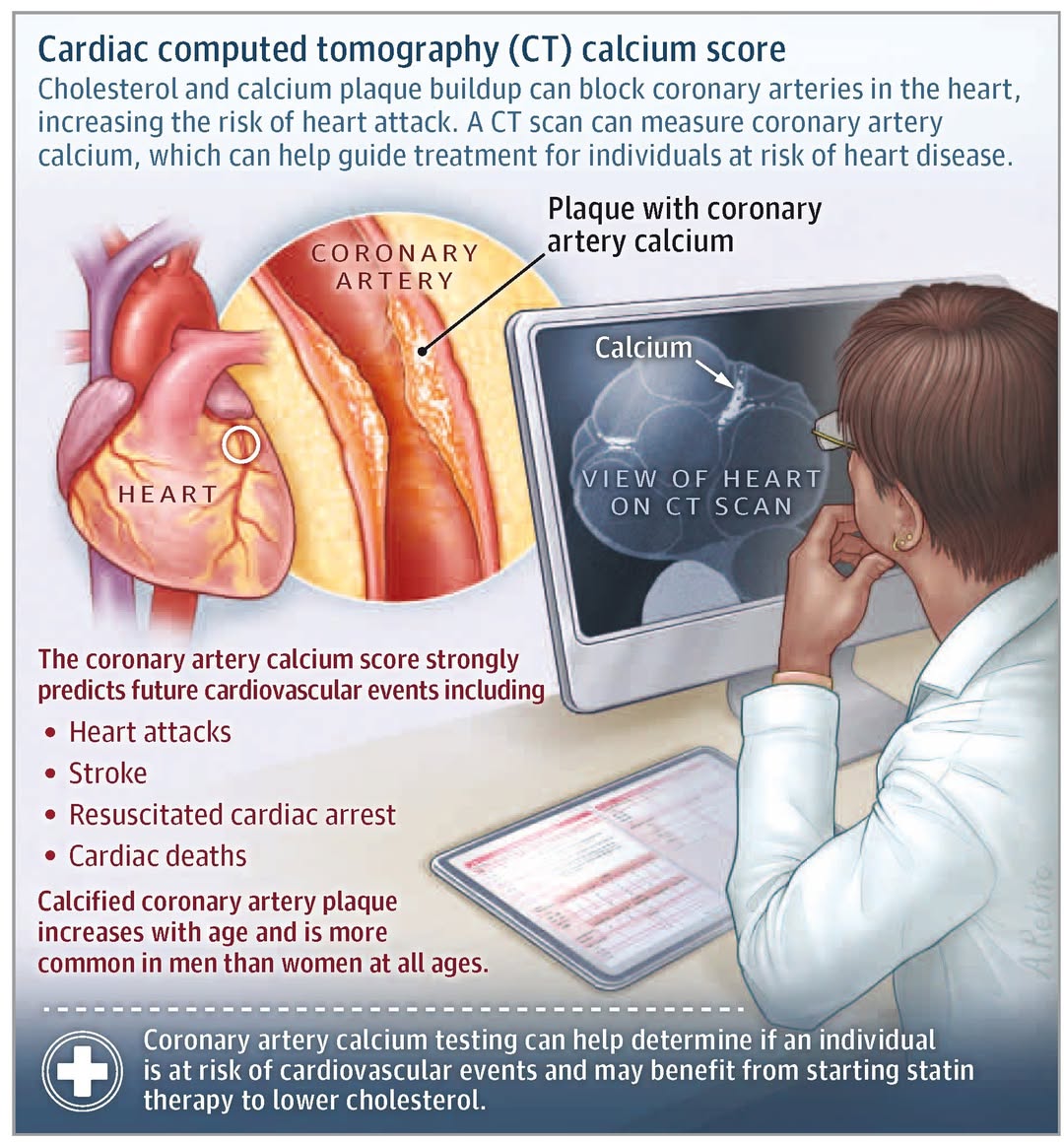
Louis shares a JAMA Patient Page explaining that coronary plaque contains cholesterol and calcium and that a CT calcium score can estimate risk of atherosclerotic cardiovascular disease and inform statin therapy decisions.
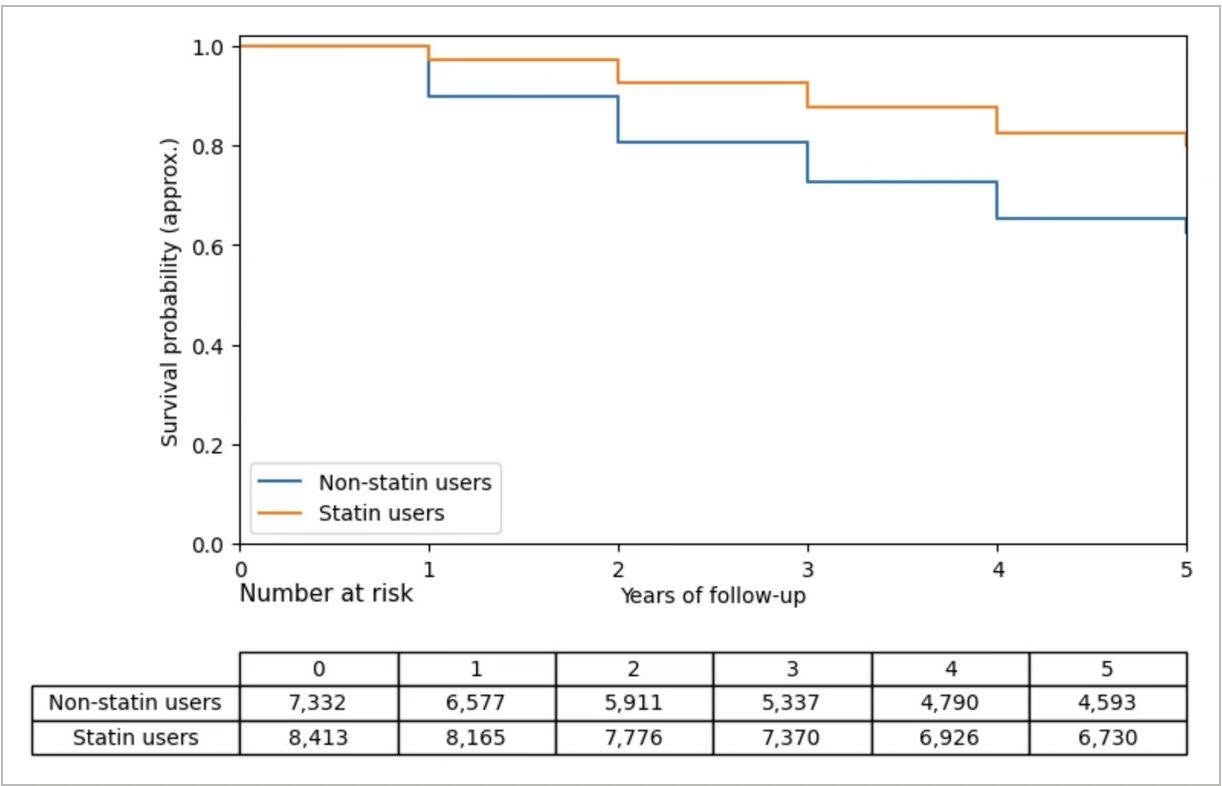
Quotes Dr Carvalho on a new analysis in people aged 80 or older: statin users had a 31% lower relative risk of dying and, as stated, a 17% lower absolute risk. The key principle is that absolute benefit depends on control-group risk, so it looks small in young people over the short term but grows with time, age or illness.
Louis works through why universal statin use could cut lifetime heart attack and stroke risk from about 20% to 10% while extending average lifespan by only days over 5 years: only about 10% of heart attacks and strokes are fatal, and only 1 in 5 US deaths are from them, so the reduction in overall deaths is about 50 times smaller. His arithmetic suggests a 0.022% to 0.094% reduction in overall deaths over 5 years. Note that this is a population-averaged back-of-envelope calculation.
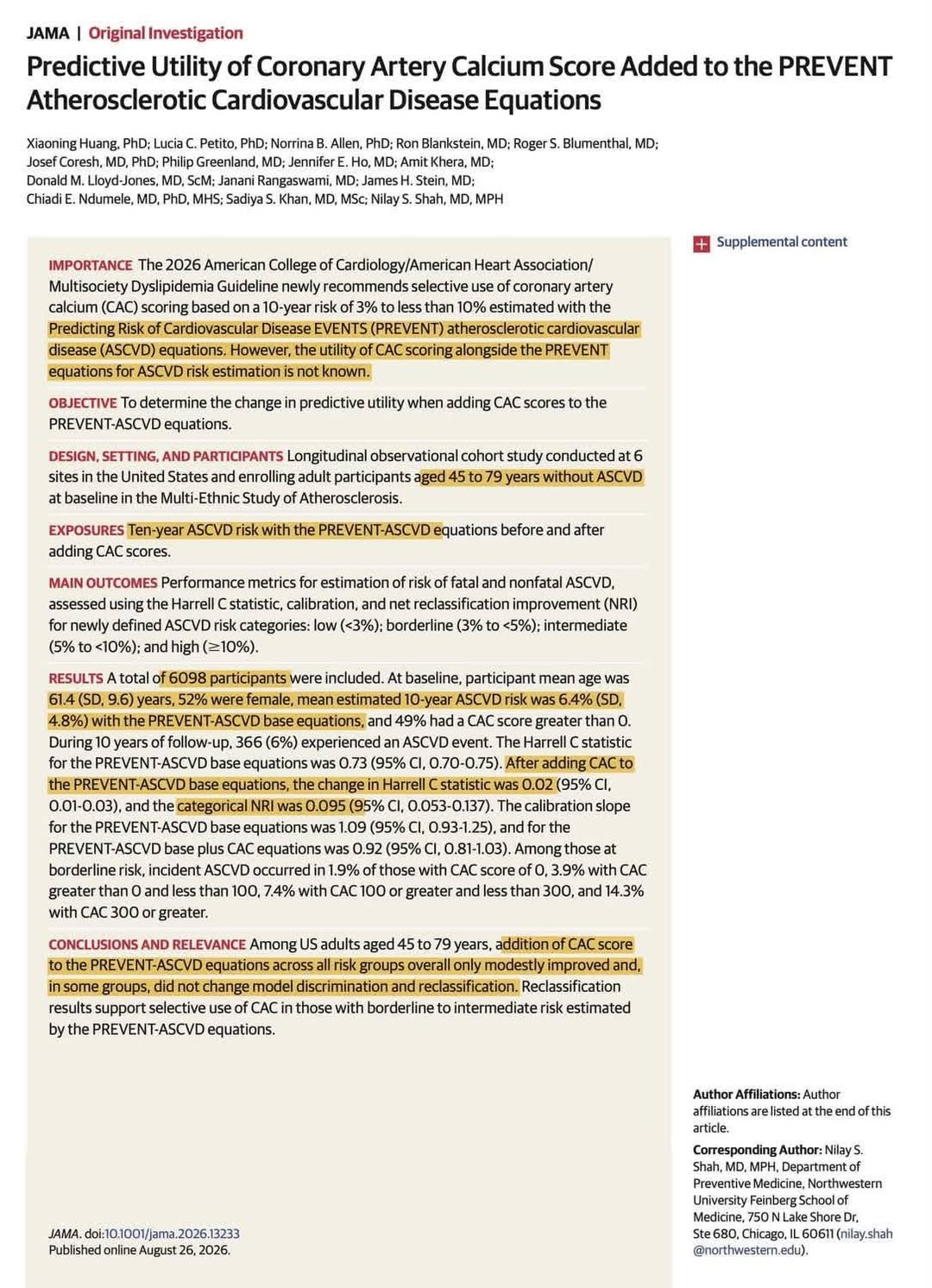
Louis explains that adding CAC score to the AHA PREVENT-ASCVD equations improves prediction only modestly in US adults 45-79, suggesting standard risk factors already capture much of what CAC reflects. He notes that a very high CAC should still be treated as high risk.
Louis summarizes the updated lipid guideline: LDL goals stay risk-scaled, with early prevention emphasis and consideration of Lp(a), apoB and CAC testing to guide intensity.
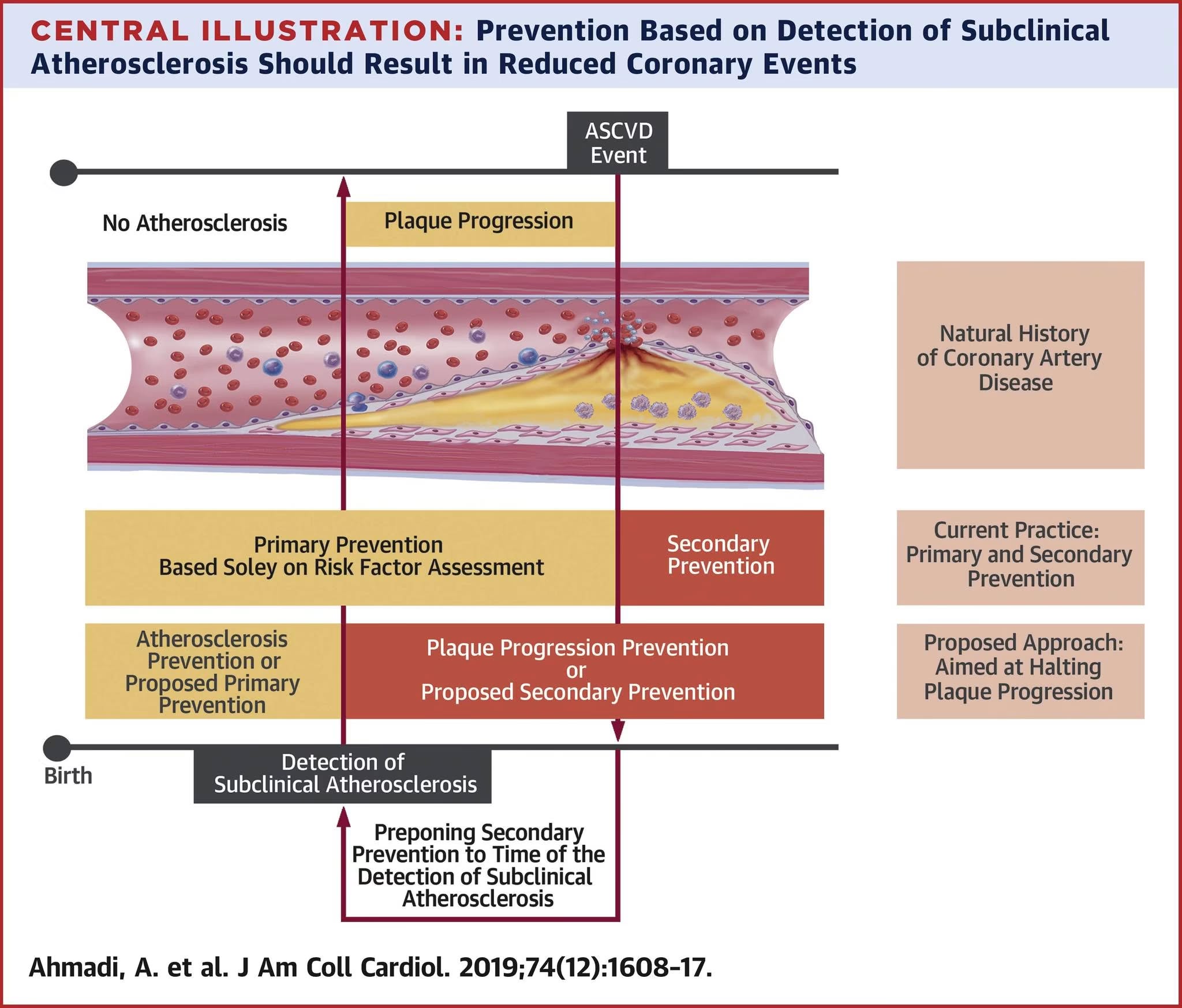
Summarises a 2019 JACC review arguing plaque progression is a necessary, modifiable step between subclinical atherosclerosis and MI, and that preventive strategy should shift toward imaging and aggressively treating subclinical disease. It reports data from PROSPECT, PARADIGM, GLAGOV and PESA showing progression stops at LDL <70 mg/dL and regression needs lower.