This is one of the most important articles anyone can read for their health regarding cardiovascular prevention.
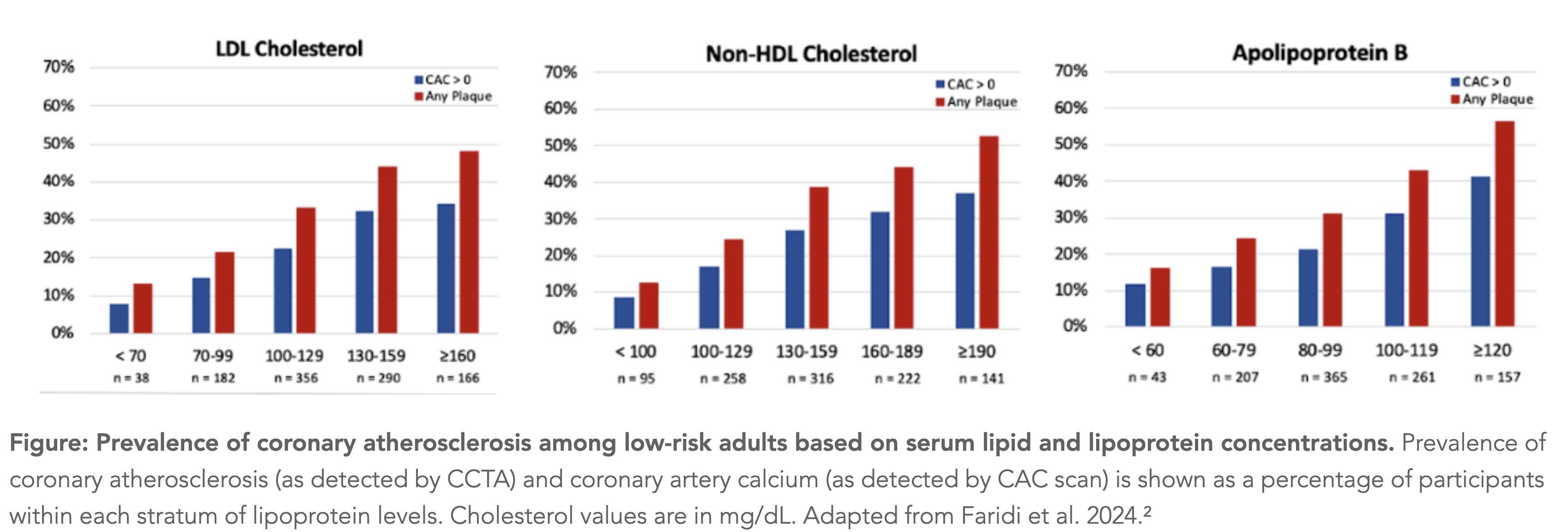
TL;DR Even individuals who're at low risk can develop significant atherosclerosis. However, those who maintain low levels of LDL and ApoB experience this far less frequently. By keeping your LDL levels in check (<70mg/dL in this article), you can greatly reduce the risk of cardiovascular disease.
A recent study published in JACC Advances reveals an alarmingly high prevalence of coronary atherosclerosis among asymptomatic adults classified as "low risk" for cardiovascular disease. The study, which analyzed data from 1,033 participants aged 40-65 without some traditional risk factors, found that over one-third (35.9%) had coronary plaque and about a quarter (25.3%) showed early-stage artery calcification. The prevalence of atherosclerosis increased linearly with higher levels of LDL cholesterol, non-HDL cholesterol, and apoB, even at levels below current guidelines for optimal cardiovascular health.
These findings underscore the importance of proactive lipid testing and cardiac imaging, even for seemingly healthy individuals. The study suggests that millions of people may be unaware they have atherosclerosis, which develops silently over decades. Despite the existence of effective lipid-lowering therapies that can halt or slow the progression of atherosclerosis, heart disease remains the leading cause of death in the United States. The authors argue that being proactive about testing and treatment could significantly reduce mortality from coronary atherosclerosis, potentially eliminating it as a major cause of death.
 Peter Attia MDCoronary atherosclerosis is a silent killer, but we have tools to stop itA new study reveals that the prevalence of atherosclerosis is alarmingly high among asymptomatic adults classified as “low risk” and underscores the importance of lipid-lowering therapies for avoiding atherosclerosis progression and mortalitypeterattiamd.com