The video, titled "334 - Cardiovascular Disease, the Number One Killer," features renowned clinical lipidology expert Tom Dayspring as he delves into why cardiovascular disease remains the leading cause of death. In the episode, Dayspring explains how factors like cholesterol imbalance, inflammation, and other metabolic irregularities contribute to the development of heart disease. He highlights the importance of early detection and discusses emerging diagnostic tools and targeted therapies that can help manage and potentially mitigate these risks. Overall, the episode offers a detailed yet accessible exploration of cardiovascular health, providing both medical professionals and the general public with valuable insights into prevention and treatment strategies.
 ▶
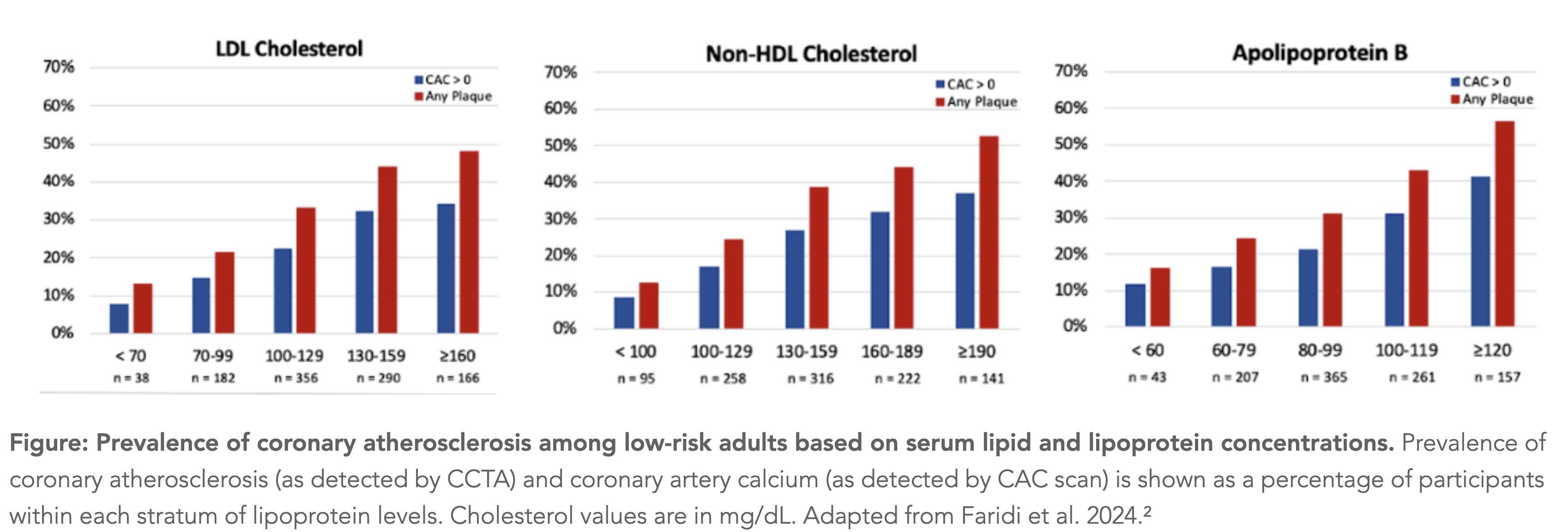
Over a third of 'low-risk' adults had coronary plaque; low LDL and ApoB were protective
A JACC Advances study of 1,033 asymptomatic adults aged 40-65 classified as low risk found 35.9% had coronary plaque and 25.3% early calcification, increasing with higher LDL, non-HDL cholesterol and apoB, even below guideline levels. Gokhan reads it as showing that keeping LDL under 70 mg/dL greatly reduces risk.