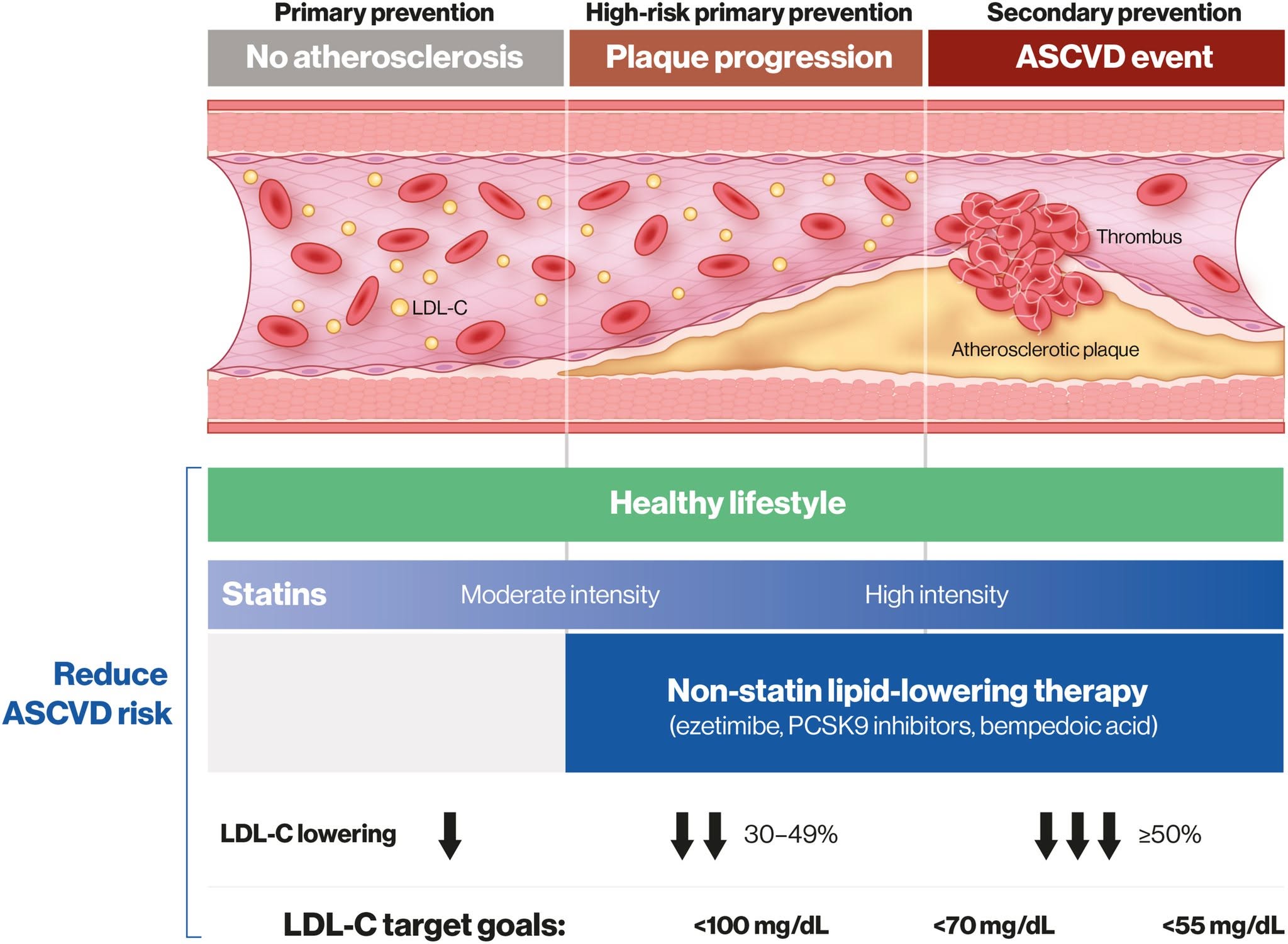
Lipoprotein(a)
Lipoprotein(a) is a low-density lipoprotein (LDL) particle with an added apolipoprotein(a) [apo(a)] attached to the apolipoprotein B-100 (apoB100) component of the LDL particle via a disulfide bridge (Farzam et al, 2024). The structure of Lp(a) is highly heterogeneous due to many different apo(a) isoforms within the population.
An individual's Lp(a) level is 80-90% genetically determined in an autosomal codominant inheritance pattern. Lp(a) levels are fully expressed by 1-2 years of age, with adult-like levels achieved by approximately 5 years old. Outside of acute inflammatory states, a person's Lp(a) level remains relatively stable throughout their lifetime regardless of lifestyle factors (Scheel et al, 2019).
Elevated Lp(a) is estimated to affect more than 1.4 billion individuals globally and 1 in 5 individuals in the US, making it the most common genetic lipidemia (Demeter, 2023). Importantly, a person may have normal lipid levels and yet have elevated Lp(a).
Role in Cardiovascular Disease
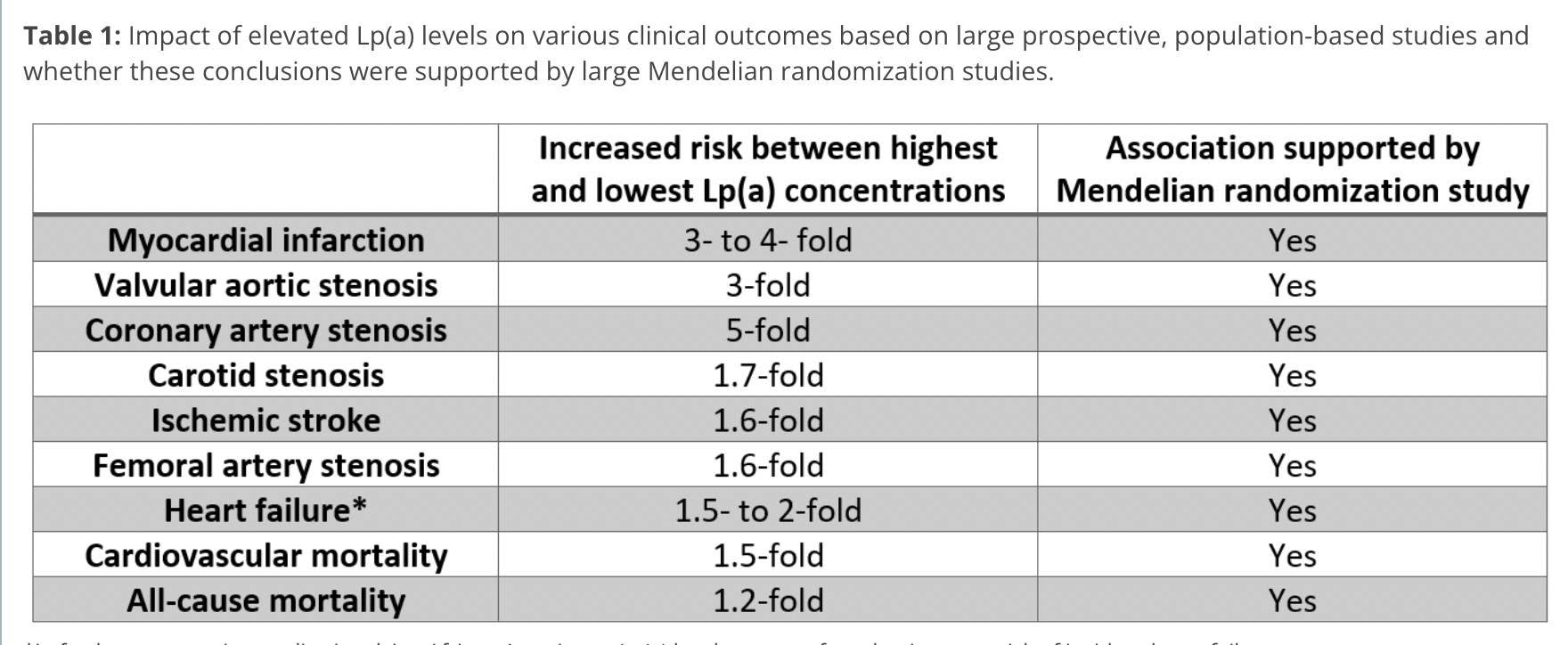
High quality evidence from epidemiologic, Mendelian randomization, and genome-wide association studies supports a link between elevated Lp(a) levels and increased risk of various cardiovascular outcomes. Lp(a) levels >50 mg/dL or >125 nmol/L are associated with increased risk of ASCVD (Reyes-Soffer et al, 2022).
The exact pathophysiologic mechanisms are not entirely clear, but current theories propose a two-pronged contribution:
- Apo(a) has homology with plasminogen and has been shown in vitro to inhibit fibrinolysis. This could promote thrombosis at vulnerable arterial plaques or areas of turbulent flow.
- The LDL-like portion may promote intimal cholesterol deposition, though the cholesterol content even in very high Lp(a) levels is below traditional LDL cutoffs.
- Newer evidence suggests oxidized phospholipids co-localize with Lp(a) molecules and together may promote endothelial dysfunction, inflammation and calcification in vasculature (Tsimikas et al, 2005).
Lp(a) has been associated with increased risk of:
- Coronary heart disease (CHD) and myocardial infarction (MI)
- Ischemic stroke
- Aortic valve stenosis
- Peripheral artery disease
Some key findings from studies include:
- A meta-analysis showed increased risk of CHD and MI with Lp(a) concentrations >30 mg/dL (62 nmol/L) (Scheel et al, 2019)
- The INTERHEART trial found Lp(a) >50 mg/dL was associated with increased risk of MI (OR 1.48; 95% CI 1.32-1.67; P < 0.001) (Scheel et al, 2019)
- Another study showed a 2x higher risk of ischemic stroke with smaller apo(a) isoforms and higher Lp(a) concentrations (Scheel et al, 2019)
- A 2021 study reported a 'robust' association between Lp(a) and aortic valve calcium, reinforcing research on the causal role of Lp(a) in aortic valve stenosis pathogenesis (Kaiser et al, 2021)
Genome-wide association studies have found that high Lp(a) concentrations confer the highest risk of ASCVD and valvular aortic stenosis independent of other known causes and risk factors (Scheel et al, 2019).
Current Treatment Approaches
Despite the observed associations between elevated Lp(a) and ASCVD, there are currently no randomized controlled trials showing that targeted Lp(a) lowering improves clinical outcomes. As of 2023, there are no FDA-approved medications specifically for lowering Lp(a). However, some current therapies have shown Lp(a)-lowering effects:
PCSK9 Inhibitors:
- In the FOURIER trial, evolocumab reduced Lp(a) by 27%
- The observed reduction in major adverse cardiovascular events (MACE) was greatest for those with the highest baseline Lp(a) levels
- In ODYSSEY OUTCOMES, alirocumab showed increased MACE reduction in individuals with higher baseline Lp(a) levels
- While promising, the impact of PCSK9 inhibitors on Lp(a) is modest. More analysis is needed before they can be recommended specifically as Lp(a)-targeted therapy.
Apheresis:
- Highly effective at lowering Lp(a) levels
- FDA-approved for patients with elevated Lp(a) and recurrent ASCVD events, FH, LDL ≥ 100 mg/dL, and Lp(a) ≥ 60 mg/dL
- Costly and cumbersome; may be difficult to obtain insurance coverage
- Reserved for refractory patients after optimizing other risk factors
- A German study showed 70% reduction in MACE for patients with recurrent ASCVD events and elevated Lp(a), regardless of LDL-C levels
Notably, several common preventive strategies are ineffective for Lp(a):
- Lifestyle changes including diet and exercise do not reduce Lp(a), though they can reduce overall cardiovascular risk
- Statins do not lower Lp(a) and may even increase levels in some patients
- Those with high Lp(a) on statins remain at increased ASCVD risk even if LDL-C improves
- Hormone replacement therapy reduces Lp(a) but has excess adverse events
- Niacin reduces Lp(a) by 23% but did not improve ASCVD outcomes in trials. It has significant side effects and limited efficacy in those who may benefit most (small isoform size, highest baseline Lp[a])
Current guidelines recommend:
- Initiating moderate- to high-intensity statin therapy in adults 40-75 years old with 10-year ASCVD risk 7.5-20% and Lp(a) ≥100 nmol/L
- Considering more intensive LDL-lowering therapies (ezetimibe, PCSK9 inhibitors) in high-risk patients with LDL-C ≥70 mg/dL (non-HDL-C ≥100 mg/dL) and Lp(a) ≥100 nmol/L on maximally tolerated statin
Novel Therapies in Development
Several promising therapies specifically targeting Lp(a) are in clinical trials:
- AKCEA apo(a)-LRx: An antisense oligonucleotide that reduced Lp(a) up to 80% in phase 2 trials. Phase 3 studies are planned.
- OxPL antibody: Binds and inactivates the pro-osteogenic activity of Lp(a). Promising in vitro data.
0
 PCNALp(a): Looking Beyond LDL to Assess ASCVD Risk - PCNAA risk calculator(opens in new tab) is an excellent tool in assessing potential risk for atherosclerotic cardiovascular disease (ASCVD), with a focus on age, sex, race, blood pressure, diabetes, tobacco use, and cholesterol—but clinicians should consider looking beyond LDL to assess ASCVD risk. One example is Lipoprotein(a), also known as…pcna.net
[i] Farzam K, Senthilkumaran S. Lipoprotein A. StatPearls [Internet]. Treasure Island (FL): StatPearls Publishing; 2023 Checking your browser - reCAPTCHA (ncbi.nlm.nih.gov)
[ii] Scheel P, Meyer J, Blumenthal RS, Martin SS. Lipoprotein(a) in Clinical Practice. July 2, 2019. *American College of Cardiology. *Lipoproteina in Clinical Practice (acc.org).
[viii] Kaiser Y, Singh SS, Zheng KH, et al. Lipoprotein(a) is robustly associated with aortic valve calcium. Heart. 2021. 107:1422–1428. The BMJ article (The BMJ)