Evolving Management of Low‐Density Lipoprotein Cholesterol (2023)
(The linked document is an excellent overview of current best practices. Please read the relevant sections to understand what is optimal in your specific situation. Sharing a summary down below.)
Risk Categories:
- Low risk: 10-year ASCVD risk <5%
- Borderline/Intermediate risk: 10-year ASCVD risk 5-20%
- High risk: 10-year ASCVD risk ≥20% or other high-risk conditions
- Very high risk: established ASCVD, diabetes with target organ damage, severe CKD, or unequivocal ASCVD on imaging
LDL-C Treatment Thresholds/Goals:
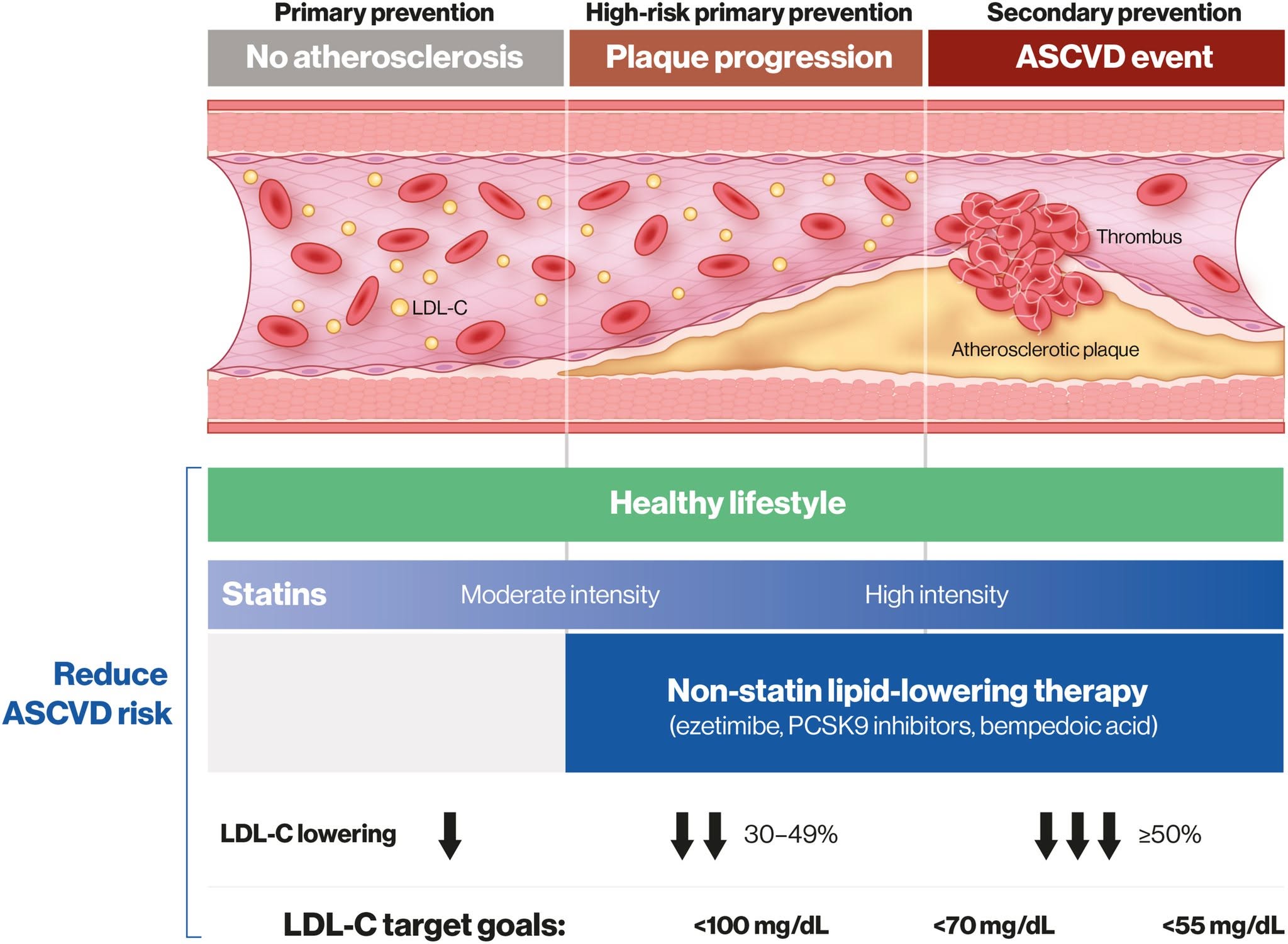
- High risk: ≥50% LDL-C reduction from baseline; goal <70 mg/dL
- Very high risk: ≥50% LDL-C reduction from baseline; goal <55 mg/dL or <40 mg/dL for recurrent events on statins
Treatment Recommendations:
- Statins first-line for both high and very high risk
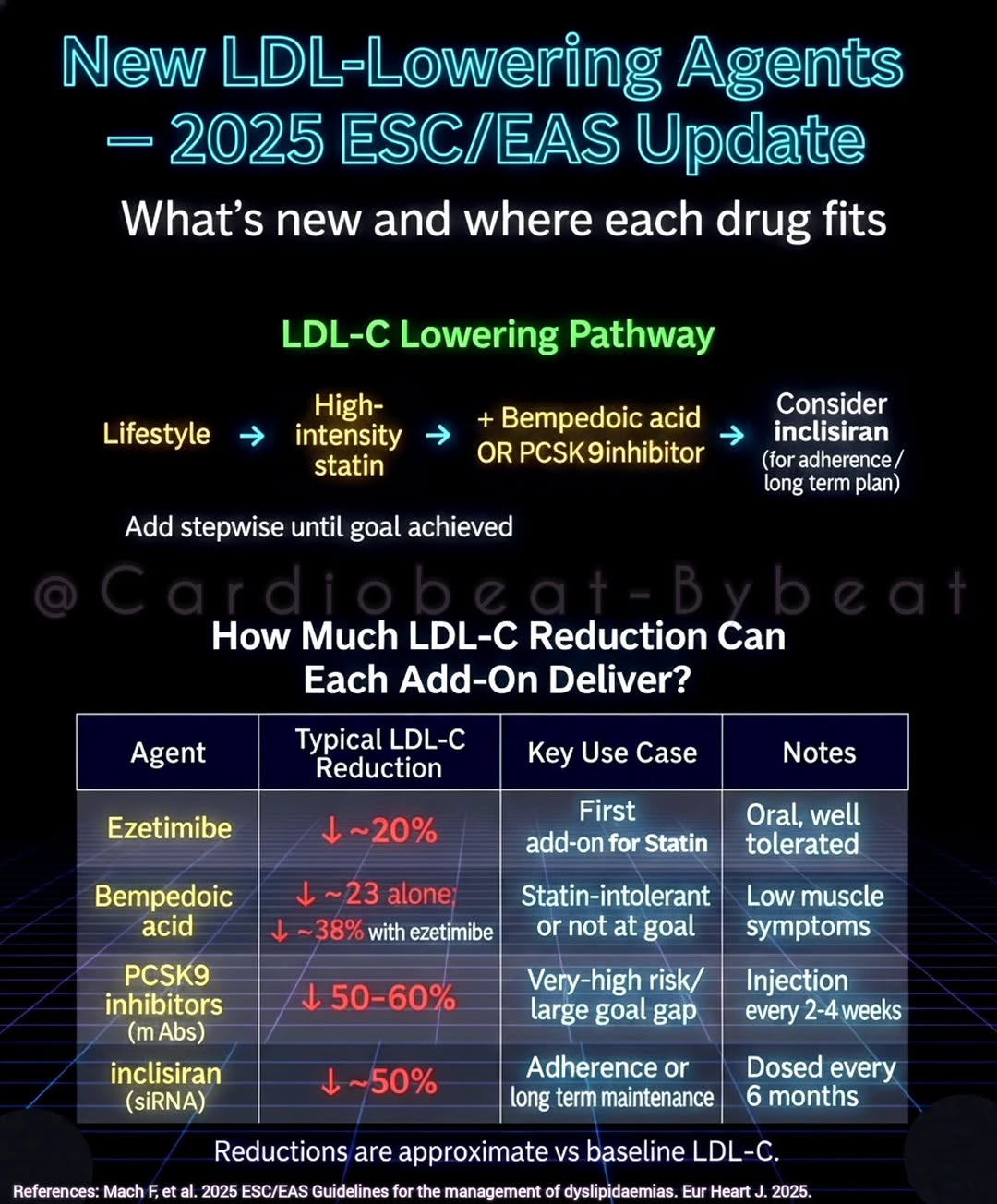
- Consider addition of ezetimibe and/or PCSK9 inhibitor in very high risk if ≥50% LDL-C reduction or <55-70 mg/dL goal not achieved on max tolerated statins
- Consider newer agents like bempedoic acid or inclisiran for high/very high risk if additional LDL-C lowering needed
The guidelines emphasize early risk assessment and treatment to prevent first and recurrent ASCVD events across a continuum of risk. Combination therapy is key for high risk patients needing significant LDL-C lowering.
Paper · JAHA · 2023Evolving Management of Low‐Density Lipoprotein Cholesterol: A Personalized Approach to Preventing Atherosclerotic Cardiovascular Disease Across the Risk ContinuumManagement of elevated low‐density lipoprotein cholesterol (LDL‐C) is central to preventing atherosclerotic cardiovascular disease (ASCVD) and key to reducing the risk of ASCVD events. Current guidelines on the management of blood cholesterol recommend statins as first‐line therapy for LDL‐C reduction according to an individual's ASCVD risk and baseline LDL‐C levels. The addition of nonstatin lipid‐lowering therapy…ahajournals.org