Optimal CVD Prevention Requires Lifelong LDL Control
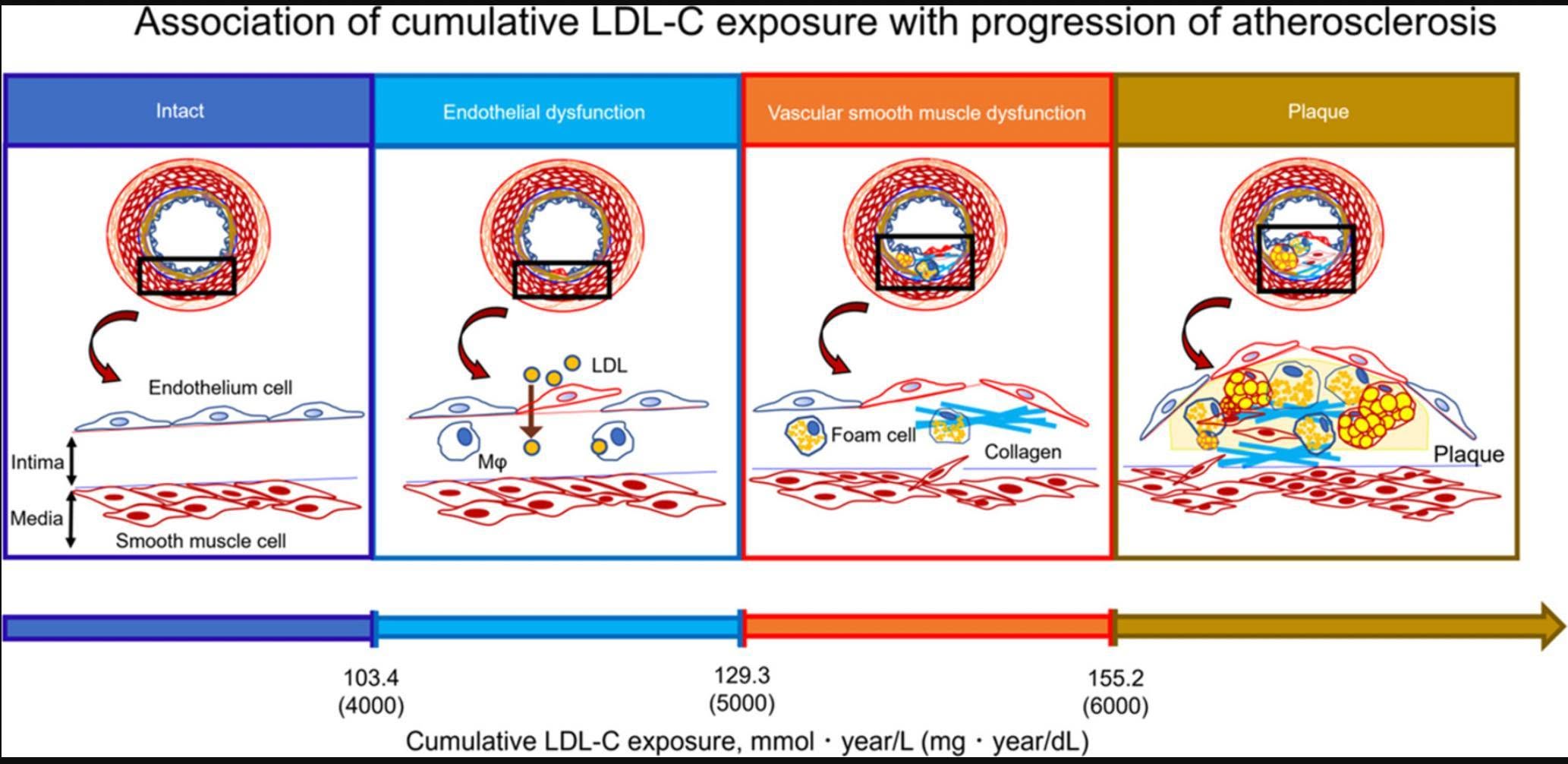
The scientific understanding of atherosclerotic cardiovascular disease (ASCVD) is undergoing a critical evolution, shifting away from a reliance on static, single-point measurements of low-density lipoprotein (LDL) cholesterol toward a more dynamic and biologically accurate model centered on the cumulative burden of exposure over a lifetime. This paradigm posits that the total arterial insult from LDL is a function of both how high the LDL concentration is and for how long it remains elevated. This concept, often quantified as "cholesterol-years," frames atherosclerosis as a chronic, cumulative disease where the lifelong, time-integrated exposure to LDL is the most powerful determinant of plaque progression and ultimate cardiovascular risk.
The Scientific Foundation: Pathophysiology and Evidence
The rationale for the cumulative exposure model is rooted in the fundamental pathophysiology of atherosclerosis. The disease process begins when LDL particles infiltrate the arterial wall and become trapped, initiating a chronic inflammatory cascade. This leads to the formation of lipid-laden foam cells, the development of fatty streaks, and, over decades, the growth of complex atherosclerotic plaques. This entire process is inherently time- and dose-dependent. Sustained exposure to elevated LDL continuously fuels this cycle, causing more cholesterol deposition, persistent inflammation, and plaque enlargement. Critically, there appears to be no absolute threshold below which LDL is entirely harmless; rather, risk increases along a continuous spectrum with greater cumulative exposure.
This biological framework is substantiated by three powerful and converging lines of evidence: genetic studies, longitudinal population cohorts, and observations in patients with familial hypercholesterolemia (FH).
- Genetic Evidence (Mendelian Randomization): These studies, which use naturally occurring genetic variants to simulate a lifelong randomized trial, provide the strongest causal evidence. A landmark analysis by Ference et al. (2012) found that a lifelong, genetically mediated lower LDL level of approximately 39 mg/dL was associated with a ~55% reduction in coronary heart disease (CHD) risk. This effect is profoundly larger—approximately three-fold greater—than the risk reduction seen per unit of LDL lowering in short-term statin trials initiated in middle age. Similarly, studies on individuals with loss-of-function mutations in the PCSK9 gene (Cohen et al., 2006) show that a lifetime of modestly lower LDL (15-28% lower) confers a disproportionately large reduction in CHD risk (47-88%), underscoring the immense benefit of early and sustained LDL control.
- Longitudinal Cohort Studies: Long-term observational studies that track individuals from young adulthood have been instrumental in validating the cumulative hypothesis in the general population.
- The Framingham Offspring cohort (Navar-Boggan et al., 2015) demonstrated the dose-dependent effect of exposure duration. Individuals with 11 to 20 years of hyperlipidemia by age 55 had a future CHD risk of 16.5%, compared to just 4.4% for those with no history of early hyperlipidemia. Each decade of exposure to elevated cholesterol nearly doubled the risk of CHD.
- The Coronary Artery Risk Development in Young Adults (CARDIA) study (Domanski et al., 2020) provided one of the most definitive analyses. It found that the cumulative LDL exposure, measured as the Area Under the Curve (AUC) from ages 18 to 40, was a powerful predictor of cardiovascular events after age 40. Crucially, in statistical models that included both cumulative exposure and the single LDL measurement at age 40, the cumulative metric remained highly significant while the single measurement lost all predictive power (p=0.42). This indicates that a single midlife reading is largely a proxy for past exposure. The study also revealed that the timing of exposure matters: LDL burden accrued earlier in life (ages 18-30) was more detrimental than the same amount of burden accrued later (ages 30-40).
- A pooled analysis of four major cohorts including over 18,000 participants (Zhang et al., 2021) confirmed these findings on a larger scale. Individuals in the highest quartile of cumulative LDL exposure had a ~97% higher risk of CHD compared to those in the lowest quartile, an association that persisted even after adjusting for their midlife LDL levels. This highlights that a history of high cholesterol leaves a legacy of risk that a single current measurement cannot fully capture.
- Familial Hypercholesterolemia (FH): FH serves as a stark human "natural experiment" of extreme cumulative LDL burden. Due to genetic defects, these individuals have profoundly high LDL levels from birth, leading to a massive accumulation of cholesterol-years. Consequently, untreated FH patients face a 10 to 20-fold increased risk of premature ASCVD, often suffering heart attacks in their 30s and 40s. Their dramatically elevated risk is almost entirely explained by their extreme cumulative LDL exposure, not just their high LDL at a single point in time.
Implications for Prevention and Clinical Practice
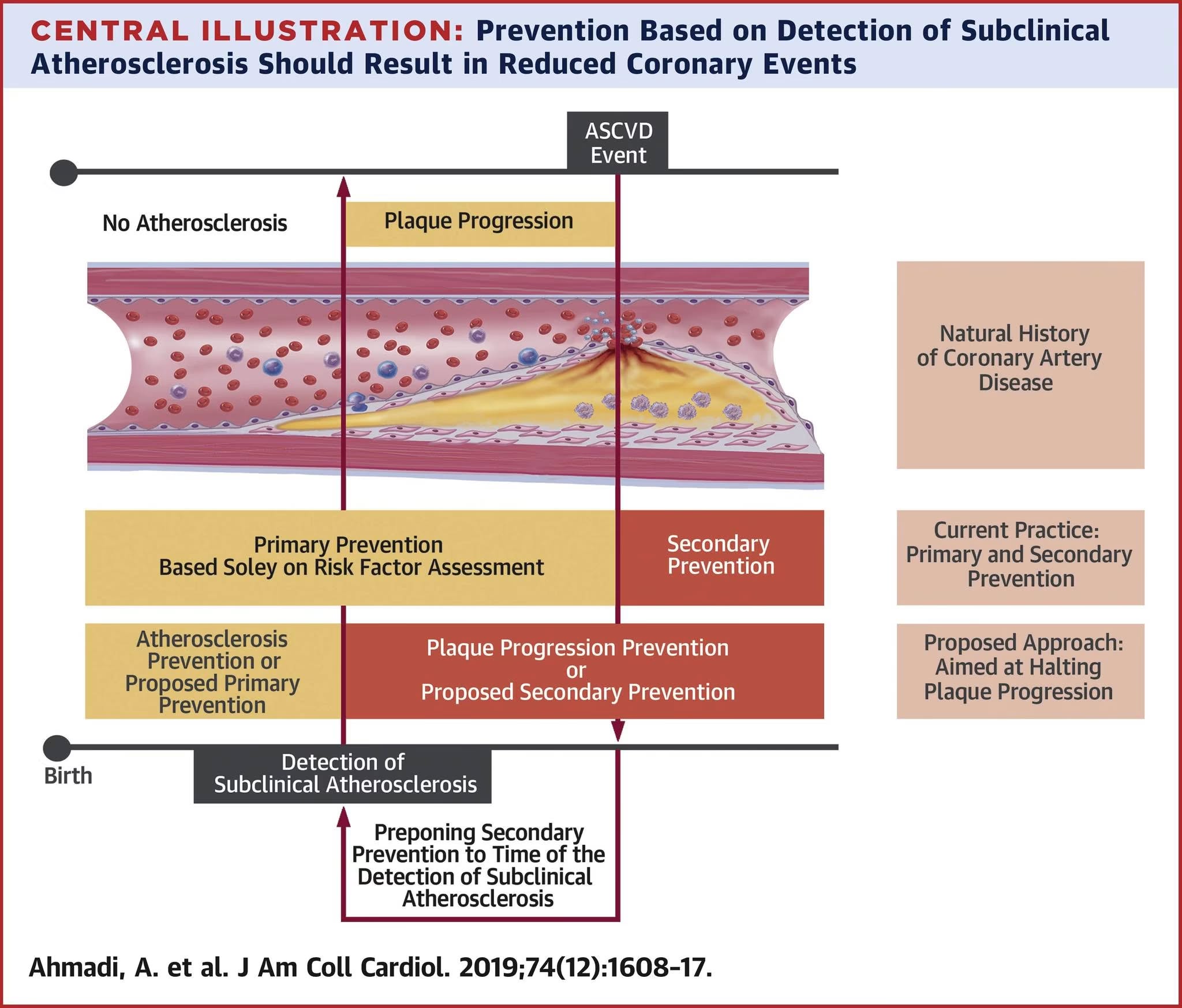
The overwhelming evidence supporting the cumulative LDL hypothesis has profound implications for how cardiovascular disease should be prevented, challenging the traditional paradigm of intervening only when short-term risk becomes high in middle age.
The central tenet is a shift towards a "lower for longer" strategy, emphasizing lifelong risk management. This necessitates a move away from a singular focus on 10-year risk calculators, which inherently underestimate the threat to younger individuals. A 35-year-old with moderately elevated LDL may have a low 10-year risk but is on a trajectory to accumulate a substantial burden of atherosclerosis over the next several decades.
This new paradigm calls for several key strategic shifts:
- Emphasis on Primordial and Early Primary Prevention: The safest and most effective way to lower cumulative LDL is through healthy lifestyle habits (diet, exercise, weight management) initiated in childhood and maintained throughout life. The goal is to prevent risk factors from ever developing.
- Selective Earlier Pharmacotherapy: For young adults with persistently elevated LDL that is not controlled by lifestyle, especially those with a family history or other risk enhancers, there is a compelling argument for considering early initiation of pharmacotherapy (e.g., statins). By preventing decades of LDL accumulation, the long-term benefit in reducing lifetime ASCVD risk is likely to be substantial.
- Improved Risk Communication: The concept of "cholesterol-years," analogous to "pack-years" for smoking, can be a powerful tool to help patients understand that cardiovascular risk is not a static state but a burden that builds over time. This can motivate better adherence to long-term lifestyle changes and therapies.
Challenges to Implementation
Despite the scientific clarity, translating the cumulative burden concept into routine clinical practice faces significant hurdles.
- Data Availability: Calculating a precise cumulative exposure requires longitudinal LDL data, which is often unavailable in fragmented healthcare systems.
- Clinical Tools: Busy clinicians lack simple, integrated tools within electronic health records to calculate and interpret cumulative metrics.
- Guideline Inertia: Current major guidelines are built around 10-year risk models and have not yet formally incorporated metrics of long-term exposure.
- Patient Adherence: Convincing an asymptomatic young person to commit to a daily medication for several decades to prevent a distant future event is a major behavioral challenge.
In conclusion, the scientific evidence is clear and convergent: the cumulative burden of LDL cholesterol over the lifespan is the primary driver of atherosclerosis. It is a more powerful and accurate predictor of risk than any single measurement. While practical challenges to its implementation remain, embracing this life-course perspective is essential for the future of cardiovascular prevention. This requires a paradigm shift among clinicians, guideline developers, and public health advocates toward earlier screening, more sustained interventions, and a lifelong commitment to minimizing the total burden of atherogenic cholesterol exposure.
docs.google.comGoogle Docdocs.google.com