HD-OPM Archive
Topics › Cardiovascular disease: the big picture

Lifestyle and drug therapy have additive benefits, so prevention should combine both

Louis Nervegna · Dec 10, 2025 · ♥ 7 reactions · 0 comments · original Facebook post
Cardiovascular disease: the big pictureStatinsGuidelines, policy & public health
AI summary & key facts

Louis quotes a statement arguing that cardiometabolic risk is cumulative and multifactorial, that interventions on different pathways give additive rather than competing benefits, and that lifestyle remains foundational while drugs targeting LDL-driven atherogenesis can add durable effect. He posts it as a counter to influencers who pit the two against each other.

“High-quality randomized trials, cohort studies, and Mendelian randomization consistently show that cardiometabolic risk is cumulative and multifactorial; interventions acting on different causal pathways produce additive, not competing, benefits. Lifestyle modification remains foundational, yet its effect sizes, while meaningful, in certain patients may not achieve the magnitude or durability seen with therapies targeting specific biological drivers of disease such as LDL-mediated atherogenesis.
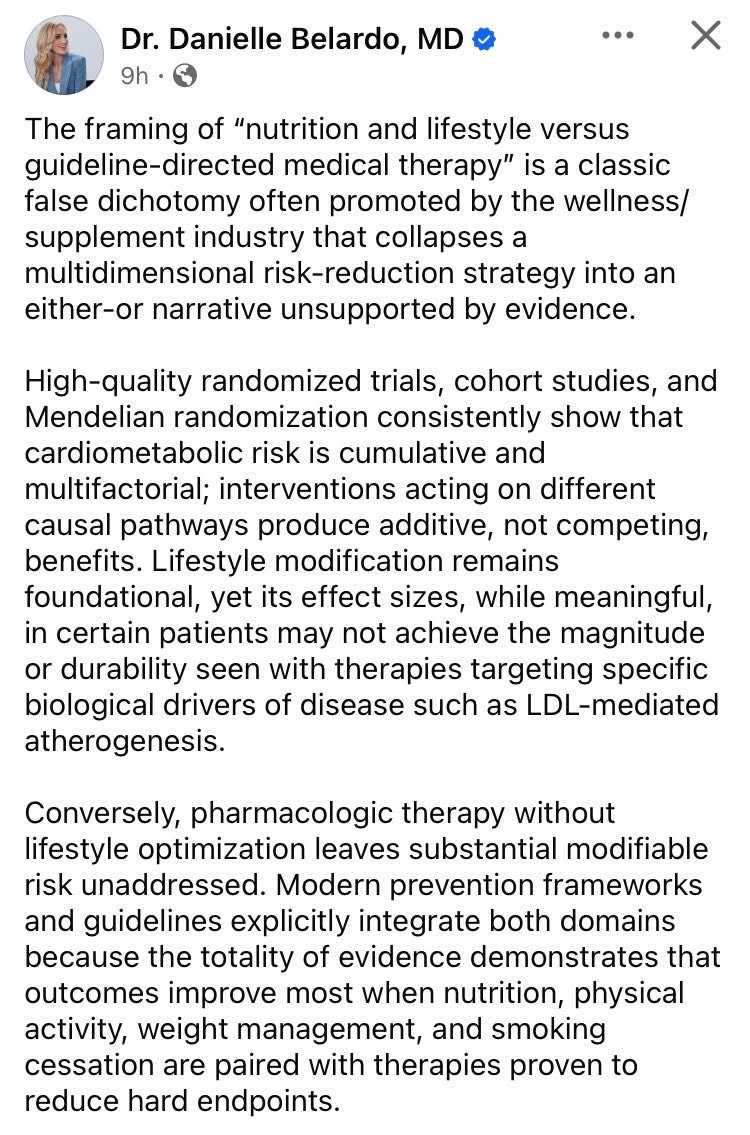
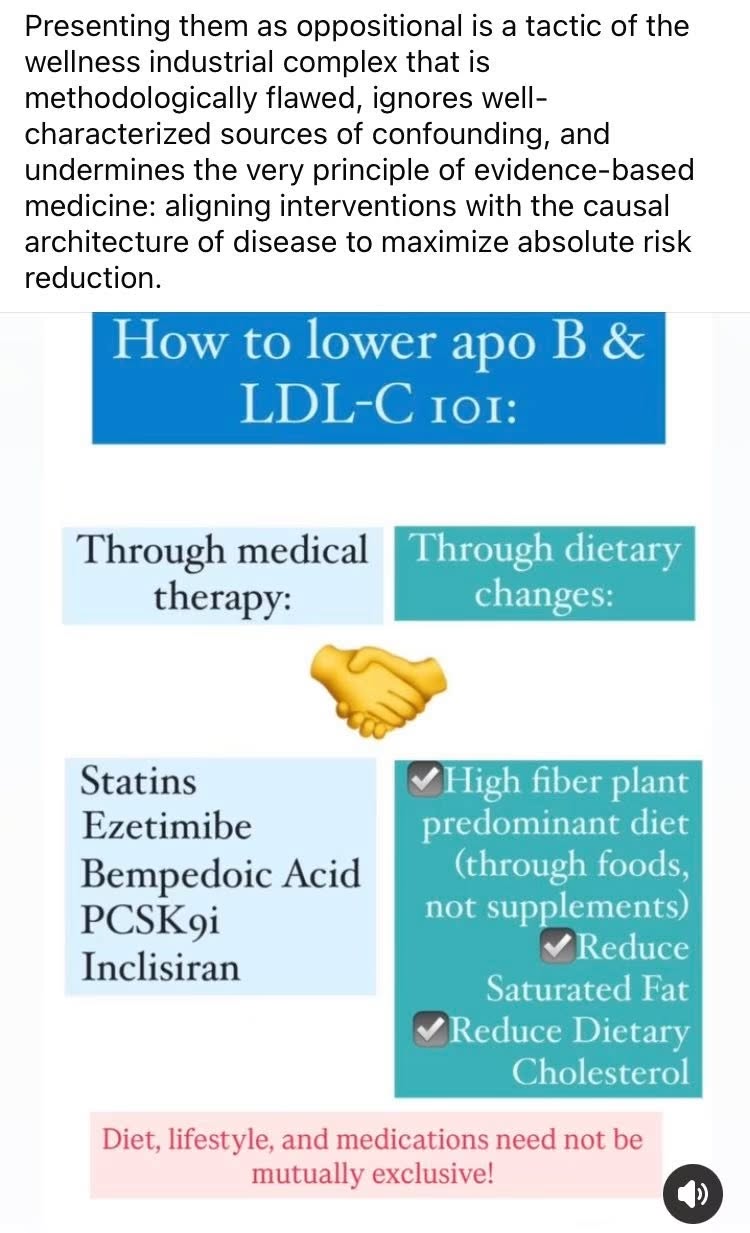
Conversely, pharmacologic therapy without lifestyle optimization leaves substantial modifiable risk unaddressed. Modern prevention frameworks and guidelines explicitly integrate both domains because the totality of evidence demonstrates that outcomes improve most when nutrition, physical activity, weight management, and smoking cessation are paired with therapies proven to reduce hard end points.”

Link to original post:
facebook.com/share/r/14KHic1T42m

#influencersHD

#prevention#mendelianrandomization#guidelines#nutrition#smoking
← newer: Replace saturated fat with unsaturated fats; yogurt and cheeolder: Metformin improved oral precancer histology in 60% in a smal →