HD-OPM Archive
Topics › Plaque, CAC & CT angiography

Plaque regression is real: Louis links the randomized trials of drugs, colchicine and EPA

Louis Nervegna · Sep 05, 2026 · ♥ 28 reactions · 6 comments · original Facebook post
Plaque, CAC & CT angiographyStatinsPCSK9, ezetimibe & newer drugs
AI summary & key facts

Louis points to prior posts collating randomized trials showing plaque regression with statins, ezetimibe, PCSK9 inhibitors, colchicine and high-dose EPA. Tags reference trials such as ASTEROID, GLAGOV, PACMAN-AMI, EVAPORATE and LODESTAR. The post itself is mainly a pointer to those earlier posts.

Plaque reversal is real.

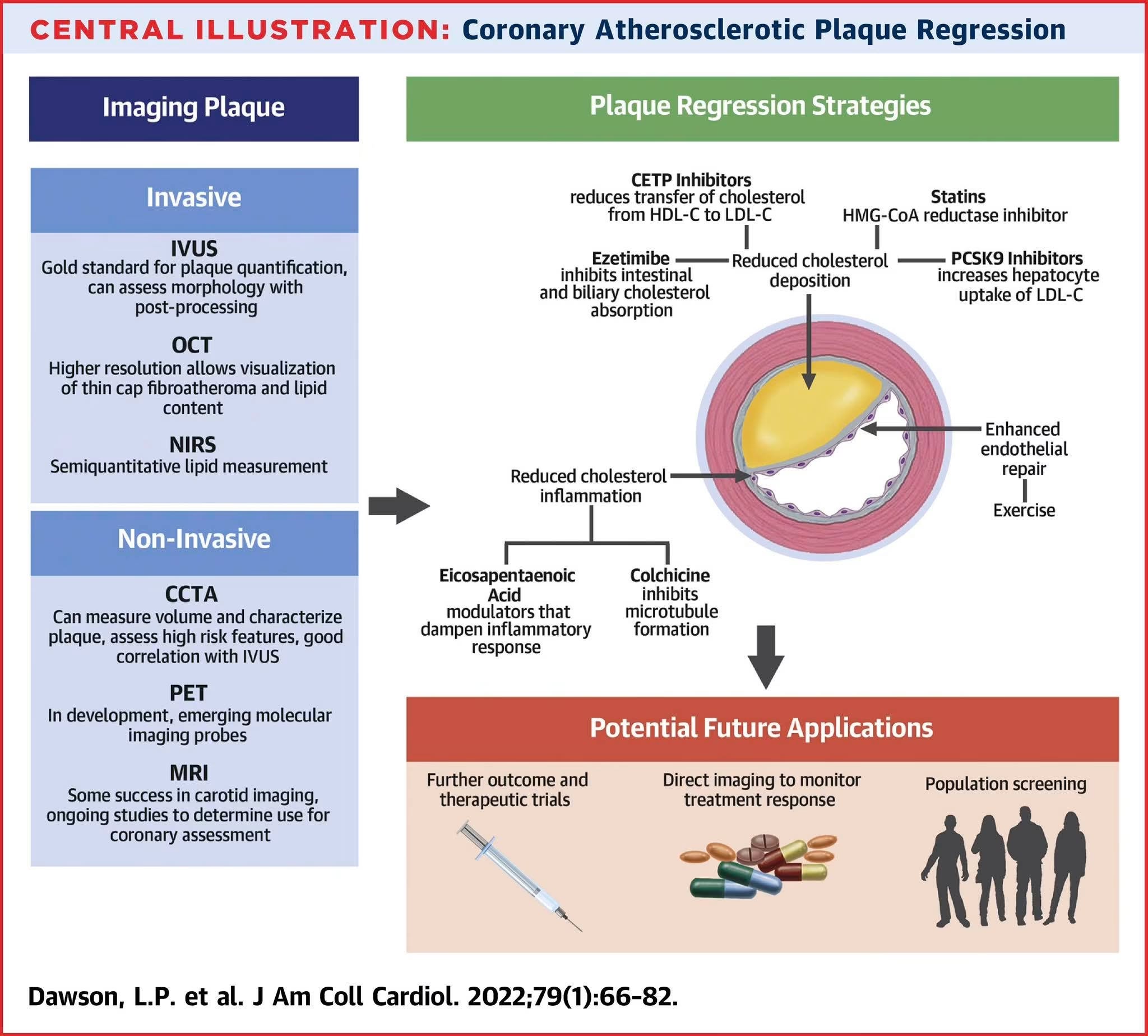
All the major randomized trials showing plaque reversal with statins, ezetimibe, PCSK9 inhibitors, and other lipid lowering drugs, are shown in one chart here: ↪ Plaque volume begins to regress once LDL-C falls below about 90 mg/dL across RCTs.

The 6 randomized trials showing that statins reverse plaque are described here: ↪ Six RCTs show statins reverse total plaque volume by 5% to 17%.

The randomized trial showing colchicine can reverse plaque is described here: ↪ Colchicine 0.5 mg cut plaque volume by over 1% in one year on CT angiography (Budoff).

The randomized trial showing high-dose EPA can reverse plaque is described here: ↪ EVAPORATE: high-dose EPA reversed plaque in patients with triglycerides above 135 mg/dL.

#reverseHD #asteroidHD #glagovHD #pacmanamiHD #evaporateHD #ivusHD #lodestarHD #colchicineHD #epaHD #triglyceridesHD #portfoliodietHD #exerciseHD #walkingHD
Research cited

Your cardiologist probably never told you this - but the science has been here for years. Cardiac plaque regression is real, it’s measurable, and it happens with the right strategy. Here’s exactly what the data says.
Save this. Share it with someone who thinks their calcium score is a
life sentence.
#HeartHealth #PlaquRegression #PreventiveCardiology
#CardiovascularHealth #HeartDiseasePrevention

← newer: CBD and CBG reduced liver fat and improved blood sugar in obolder: Does a CAC scan change outcomes? Two 2026 randomized trials →