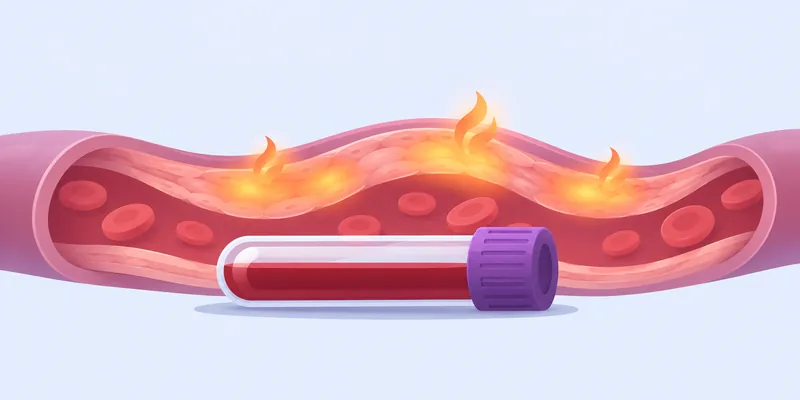
Inflammation is the immune system's alarm response. When it is short-lived, as with a twisted ankle or a mild flu, it is part of healing; when it smolders for years it can damage tissue silently, and it has been linked to heart disease, among other conditions.1 The group's view, echoed by several heart specialists whose work members have shared, is that chronic arterial inflammation is not a side effect of atherosclerosis (plaque build-up in the artery walls) but one of its drivers.23
Colchicine is the drug at the centre of this idea. Louis Nervegna describes it as the first drug approved to treat heart disease by targeting inflammation.4 It has FDA approval for lowering cardiovascular events, and the approval language he shared covers people with established atherosclerotic disease and also those with multiple risk factors.5 This article explains what the group has posted about the drug, how that fits with the wider inflammation story (including a notable failure), and what the admins suggest for practical decision-making. It is a summary of group discussion, not medical advice.
Why inflammation matters for the heart
Cholesterol lights the match, immune cells fan the fire
A Scientific American article that Louis endorsed, built on the work of Harvard's Paul Ridker, explains the current thinking. Cholesterol that builds up in the artery wall takes a crystal-like form that the immune system does not recognize, and the resulting immune attack on the vessel is what ultimately leads to heart attacks and strokes.3 The same article notes that cholesterol is therefore the match that lights the fire of vascular inflammation rather than a minor player.3
Another member-shared overview describes the central pathway. Danger signals such as cholesterol crystals activate the NLRP3 inflammasome (a protein complex in immune cells), which releases the cytokine IL-1 beta. IL-1 beta drives IL-6, and IL-6 makes the liver produce C-reactive protein (CRP).7 The same post reports that the CANTOS trial, which blocked IL-1 beta with the drug canakinumab, produced a 15% reduction in major cardiovascular events in high-risk patients.7 Peter Libby, in a talk summarized in the group, also pointed to canakinumab and colchicine as therapies that have shown cardiovascular benefit.10
Residual inflammatory risk
Many people are on a statin with low LDL and still have heart attacks. Ridker's phrase, quoted in a post by Louis, is that "you're not home free": even with low LDL on a statin you may carry inflammatory risk.11 That is called residual inflammatory risk. In the Scientific American excerpt, the JUPITER trial enrolled nearly 18,000 people with low LDL but high CRP; those on a statin had 54% fewer heart attacks and 48% fewer strokes, and the trial was stopped early.3 Louis argues that inflammation is largely independent of classical risk factors such as LDL, blood pressure, diabetes and smoking, so it can keep driving disease even when those are well managed.3
Not everyone agrees on emphasis. In a debate summarized by Gokhan Can, Libby argued that substantial inflammatory risk remains with well-controlled LDL, and that IL-6 plays a causal role. Derick Raal argued that LDL is the primary cause and inflammation largely a consequence, best handled by earlier, more aggressive LDL lowering plus lifestyle and weight loss. Both agreed there is value in addressing both.12
Measuring inflammation: hsCRP and beyond
The 2025 American College of Cardiology Scientific Statement, summarized by Gokhan, calls inflammation a clinically actionable risk factor and recommends universal screening with high-sensitivity CRP (hsCRP) alongside cholesterol assessment, in both primary prevention (no known disease) and secondary prevention (existing disease).2 The thresholds it restates are:
- below 1 mg/L: lower relative risk
- 1 to 3 mg/L: average relative risk
- above 3 mg/L: higher relative risk2
The statement cites a 30-year study of nearly 28,000 women in which a single hsCRP measurement spread future risk more widely than LDL or lipoprotein(a), and a meta-analysis of over 160,000 people in which each one-standard-deviation rise in hsCRP went with a 37% higher risk of coronary heart disease and a 55% higher risk of cardiovascular death.2 IL-6 and fibrinogen also predict risk, and a CT-based measure called the perivascular fat attenuation index is described as promising but not routine.2
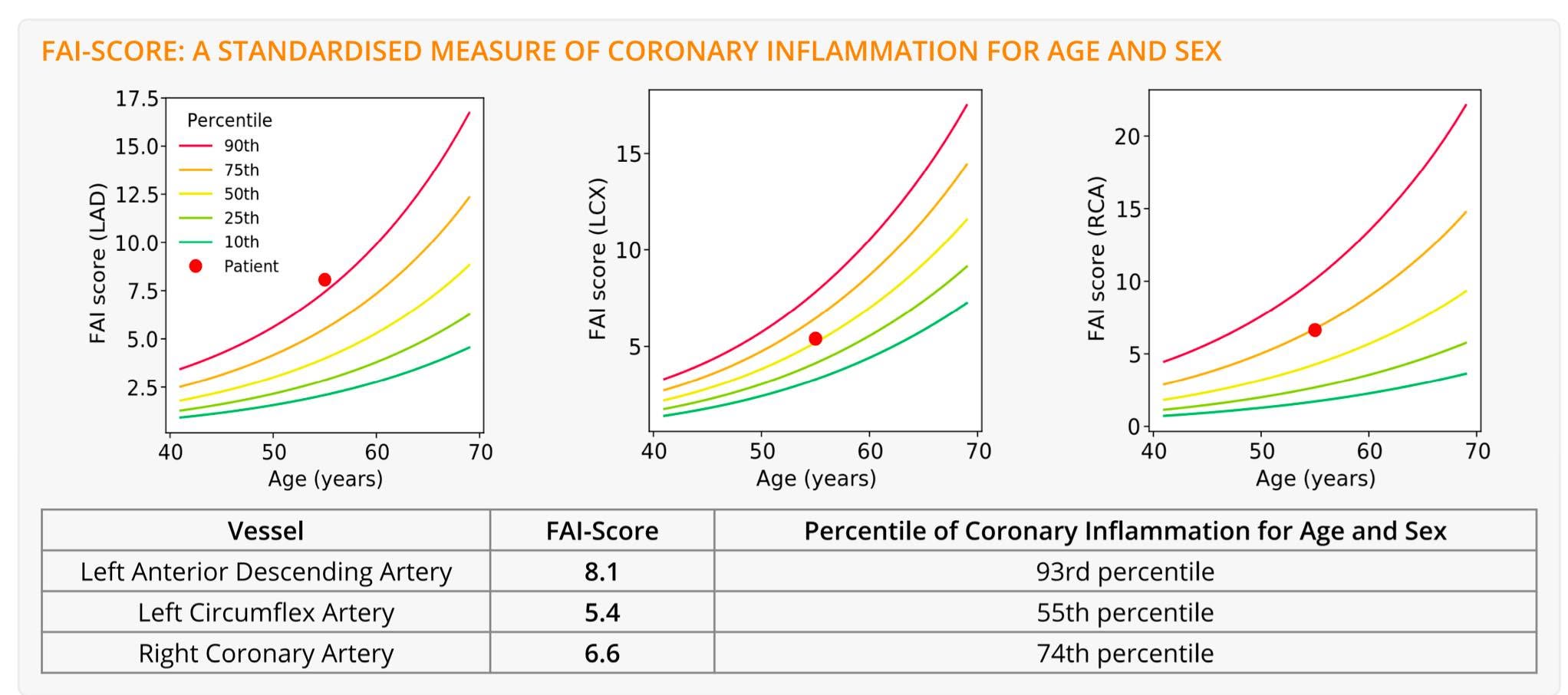
A case shared in the group shows the limits of a blood test. After aggressive lipid lowering (LDL 35-50 mg/dL) his stenosis fell from 70% to under 25%, and his hsCRP was only 0.15 mg/L, yet an AI analysis of his CT angiogram (CaRi-Heart) reported a high coronary fat attenuation score of 8.1 in the LAD artery, at the 93rd percentile for his age and sex. Louis describes that CT-based approach as probably the most accurate non-invasive way to estimate residual inflammatory risk, and he tags it with colchicine.13 This is a single case and a commercial tool, so it is best read as an illustration rather than a validated pathway.
What the colchicine evidence shows
Approval and the outcome story
The group's posts treat colchicine's approval as the practical turning point. Louis writes that it has full FDA approval to treat heart disease, even for primary prevention, working by lowering arterial inflammation.5 The Scientific American piece states that the FDA approved colchicine in 2023 to reduce heart attack and related risk, based in part on the inflammation research described above.3 A separate post lists "ten game-changing" cardiology trials and calls number ten the first major trial showing that lowering arterial inflammation reduces heart attacks and strokes, which Louis argues proved inflammation is causal; he tagged that post with colchicine, though the linked list is no longer available.14
Gokhan flagged a Circulation editorial saying that affordable, widely available colchicine shows promise in reducing atherothrombotic risk in ASCVD (atherosclerotic cardiovascular disease) by stabilizing coronary plaques and reducing inflammation. His own reaction: "This sounds very big."15 A Heart journal podcast shared by Louis discusses the imaging substudy of the LoDoCo2 trial, which tested colchicine in patients with chronic coronary syndromes, and how colchicine affects inflammation in the coronary arteries; the post gives no results.16
The Budoff plaque-imaging trial
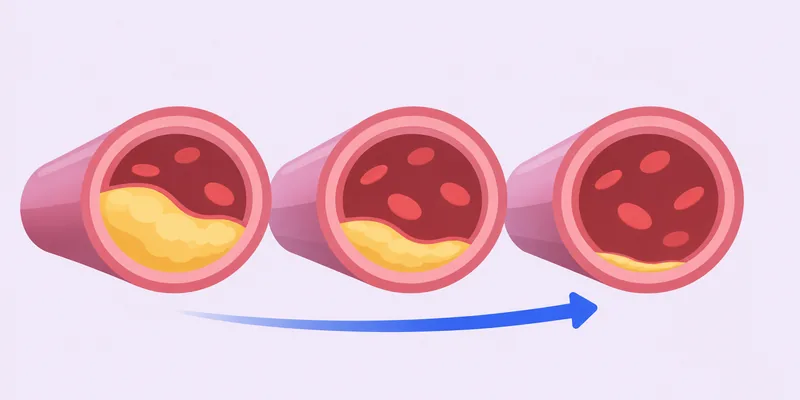
The most detailed colchicine data in the group concern plaque. In the trial Louis highlighted, patients were randomized to colchicine 0.5 mg daily or placebo and had CT angiography at baseline and after one year. Matthew Budoff reported more than a 1% reduction in percent atheroma volume (PAV, the share of the artery wall volume occupied by plaque) in the colchicine group, a size of change he said mirrors what earlier intravascular ultrasound studies linked to significant reductions in major cardiovascular events.6 There was also a significant fall in CRP, trends toward regression of non-calcified, fibro-fatty and fibrous plaque, and a significant slowing of calcified plaque progression.6
Budoff himself stressed it was a relatively small, one-year study, though he said it supports using colchicine in chronic stable coronary disease.6 Louis contrasts it with the Keto-CTA study from the same investigator, where PAV rose 0.8% on a ketogenic diet.6
Gokhan's earlier plaque summary gave a more cautious read. He rates colchicine "likely helpful" for plaque and cites an open-label CT angiography study in which 0.5 mg per day reduced low-attenuation (soft, lipid-rich) plaque volume compared with optimal medical therapy alone over 12 months, while total atheroma volume changes were similar. He says further imaging RCTs are needed even though clinical outcome data are promising.8 In the same post, statins, PCSK9 inhibitors and ezetimibe are ranked as having the strongest plaque evidence.8
Louis counts colchicine among at least six strategies shown to reverse plaque in human randomized trials, alongside major weight loss, Mediterranean or DASH diets, LDL-lowering drugs, exercise and high-dose EPA fish oil, and says he would love to see a trial combining them all.1718 He also points to the earlier posts describing the randomized colchicine trial.19 Because the evidence base for colchicine plaque regression is small compared with that for statins, these are claims to weigh carefully rather than settled fact.
Possible mechanisms beyond general inflammation
- IL-11 (speculative). Louis notes colchicine has anti-fibrotic properties and was once studied in pulmonary fibrosis, and he speculates it may work partly by inhibiting IL-11, a cytokine whose blockade extended mouse lifespan by about 25%. He labels this a hypothesis.420
- TET2 clonal hematopoiesis. Clonal hematopoiesis (CHIP) refers to acquired mutations in blood stem cells and was reported in the PESA-CNIC-Santander study to precede and raise atherosclerosis risk. In a related European Heart Journal study, colchicine slowed atherosclerosis in animals with TET2 mutations, and people with TET2 mutations treated with colchicine for other conditions had a lower risk of heart attack. These findings suggest a possible personalized approach but are early.21
Other anti-inflammatory strategies and what the group makes of them
Lipid drugs also lower inflammation
Louis summarizes meta-analysis data on average hsCRP reductions: statins 17.3%, bempedoic acid 20%, fibrates 10.3%, ezetimibe 3.2%, with fish oil about 12.8%; he also lists PCSK9 inhibitors at 6%. The paper's own illustration, shared in the same post, shows PCSK9 inhibitors slightly raising hsCRP (about +6%) rather than lowering it, and the fibrate reduction as not statistically significant.22 Part of this, he says, is that LDL itself is inflammatory once it oxidizes inside the artery wall.22 Gokhan's earlier post on the same Cardiovascular Research meta-analysis notes that the effect is independent of LDL reduction and adds colchicine, GLP-1 receptor agonists and low-dose pioglitazone to the list of other options to consider.23 Ezetimibe added to a statin gave a significant extra 10% CRP reduction in a pooled analysis.24 In the PROVE IT-TIMI 22 trial, atorvastatin 80 mg cut 30-day death, heart attack or rehospitalization (3.0% versus 4.2%), an early effect Louis attributes at least partly to anti-inflammatory and plaque-stabilizing actions, while noting others argue lower LDL itself accounts for some of it.25
Canakinumab and the IL-6 disappointment
In the COSMOS trial of canakinumab plus rosuvastatin 40 mg (not to be confused with the cocoa trial of the same name), PAV fell 0.95% versus 0.05% with placebo over 52 weeks in 418 patients.26
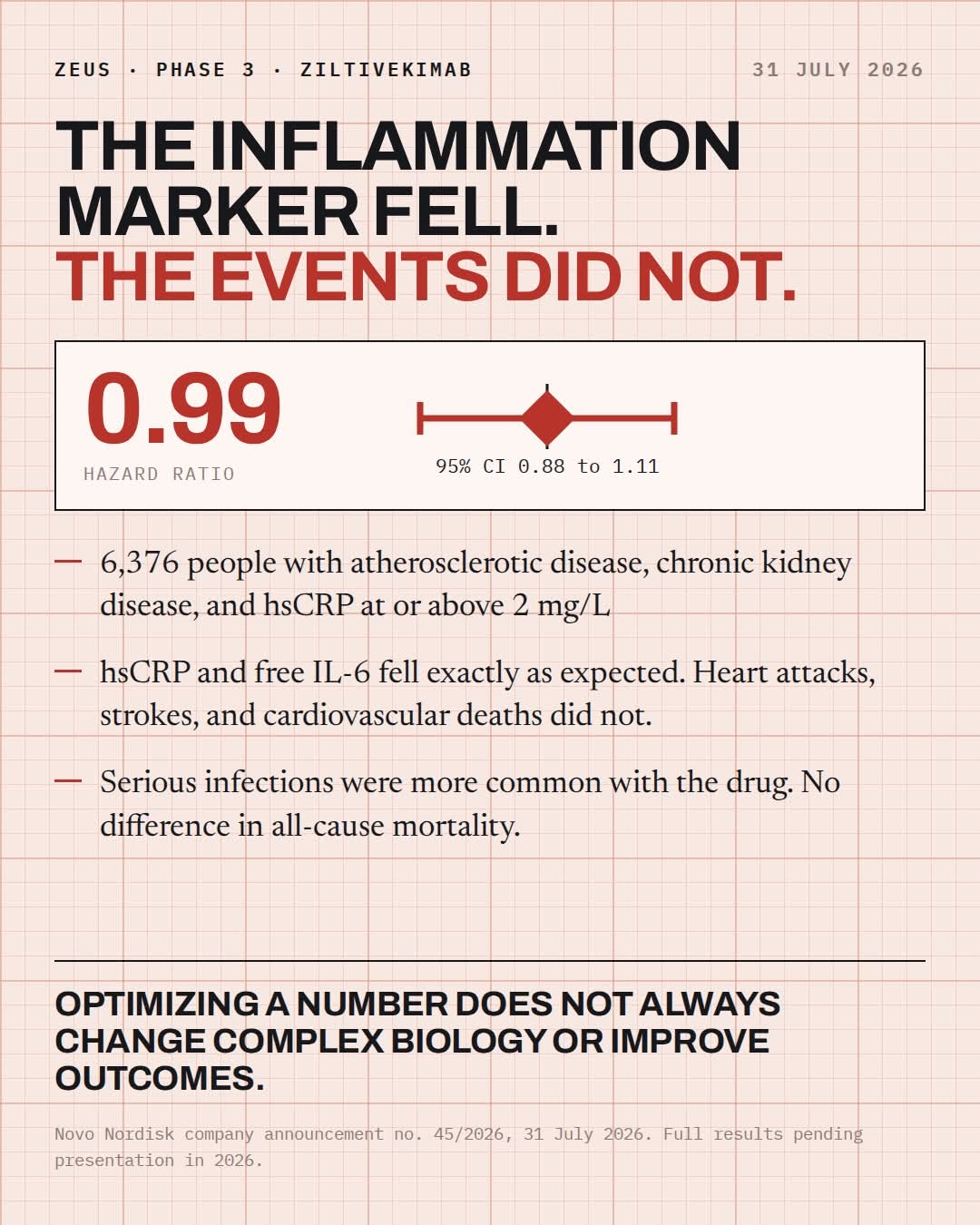
The ZEUS trial of ziltivekimab (an IL-6 blocker) is the cautionary example. It lowered hsCRP and IL-6 as designed, but heart attacks, strokes and cardiovascular deaths matched placebo, with more serious infections.9 Louis concludes that IL-6 now looks like a marker rather than a cause, similar to HDL, and that the overall inflammatory pattern is what matters; diet and colchicine, he argues, address that wider pattern.9 The commentary shared alongside the post offered another possibility: that in patients whose LDL was already low there may have been less room to see benefit.9 Louis adds that the interventions that have worked best, such as statins and diet, tackle upstream causes of inflammation, whereas NSAIDs and corticosteroids lower hsCRP downstream yet make heart disease worse.27
Diet, supplements and other drugs
Gokhan keeps a personal list of anti-inflammatory agents he has used (curcumin, fish oil, aspirin, rosuvastatin and others) and wrote that he wanted to try low-dose colchicine; it is an experiment list, not trial evidence, and he notes aspirin carries bleeding risk and needs medical supervision.28 Louis also names a "lower the whole inflammatory pattern" approach through the Mediterranean diet and exercise.2027 Posts on SGLT2 inhibitors describe anti-inflammatory vascular effects (lower TNF, IL-6, MCP-1), though one empagliflozin finding was a small pilot.2930 The Scientific American supplement article, as shared, warns that most anti-inflammatory supplements lack solid evidence.1 Louis also argues that more than 30 human trials show omega-6 oils from nuts and seeds do not raise inflammatory markers.3132
What this means for you
- Ask about inflammation, not just LDL. The ACC statement recommends hsCRP alongside cholesterol, and the group's admins suggest knowing your number (below 1 is lower risk, above 3 is higher).2
- Colchicine sits on top of LDL lowering. The group's plaque-regression posts rank statins, PCSK9 inhibitors and ezetimibe as having the strongest evidence, and colchicine as promising and approved.817
- The approval covers established disease and some people with multiple risk factors. Whether it suits you is a conversation for your cardiologist.5
- Remember the dose studied. The plaque trial used 0.5 mg daily.6 The group's posts concentrate on benefit; side effects and medication interactions are worth discussing with a prescriber.
- Do not self-treat with NSAIDs or steroids. They lower CRP but, per Louis, make heart disease worse.27
- Be cautious with imaging add-ons and supplements. CT inflammation scores such as CaRi-Heart are newer and shown here by a single case.13
- Do not drop the basics. Louis argues diet and exercise remain the best way to address upstream causes of inflammation.27
Frequently asked questions
Is colchicine approved for heart disease?
Yes. Louis states it has full FDA approval, including for primary prevention in people with multiple risk factors.5 The Scientific American article dates the approval to 2023.3
What dose was used in the plaque study?
Colchicine 0.5 mg daily versus placebo, with CT angiography at baseline and one year.6 Gokhan's summary of an open-label study also used 0.5 mg per day.8
Does colchicine shrink plaque?
One randomized CT trial reported more than a 1% fall in PAV and trends toward regression of several plaque types in a year; Budoff called it small.6 Gokhan rates it "likely helpful" and asks for larger imaging trials.8
Why did the IL-6 drug fail if inflammation matters?
Louis argues IL-6 is a marker of a broader inflammatory pattern, and that colchicine and diet work because they address that broader pattern.9 The commentary shared with the post suggested low baseline LDL may have limited the visible benefit.9
Should everyone test hsCRP?
The 2025 ACC statement recommends universal screening.2 Louis cautions that hsCRP can be low while CT-measured coronary inflammation is high, so a single number is not the whole picture.13
Could colchicine matter more for some genetic groups?
Early work links TET2 clonal hematopoiesis mutations with benefit from colchicine in animals and observational human data, but this is a hypothesis-generating finding.21