Cigarette smoking is the best-established lifestyle cause of vascular damage discussed in the group, and nothing in the posts softens that. Newer questions are about what else we breathe, drink and touch: nicotine pouches, cannabis, polluted air, metals in the body, "forever chemicals" (PFAS) and microplastics. The honest answer is that evidence ranges from very solid (smoking) to preliminary (microplastics).
The group's admins, Louis Nervegna and Gokhan Can, hold different levels of alarm. Gokhan has said he believes environmental chemicals may one day prove as harmful as smoking, while Louis repeatedly describes the microplastics-and-heart-disease literature as early and speculative.12 This summary lays out both views and the data behind them. The group's posts say very little about e-cigarette vaping specifically, so this article covers nicotine pouches, cannabis and smoking itself rather than claiming more than the posts support.
Smoking: the established risk
How big is the risk?
Louis compared hazard ratios (relative risks) from the SCORE O.P. risk model for adults over 65. In that table, each year of age multiplies coronary death risk by 1.16, which compounds to roughly 19.5 times from age 65 to 85. By comparison, diabetes raised risk 2.3-fold, smoking 1.88-fold, a systolic blood pressure 40 mmHg higher 1.31-fold and a total cholesterol 40 mg/dL higher 1.13-fold.3 The point of the post is that age dominates, but smoking is still among the larger modifiable factors.
Show data
| Hazard ratio (log scale) | 95% CI | |
|---|---|---|
| Diabetes | 2.3 | – |
| *Smoking | 1.88 | – |
| Systolic blood pressure 40 mmHg higher | 1.31 | – |
| Each additional year of age | 1.16 | – |
| Total cholesterol 40 mg/dL higher | 1.13 | – |
Large lifestyle cohorts point the same way:
- In the Harvard and VA analysis of 276,132 people, physical inactivity (39.9%), ever smoking (23.8%) and poor nutrition (13.8%) accounted for most attributable preventable deaths. Never smoking was one of eight lifestyle factors that together were associated with 87% lower mortality when all eight were present.4
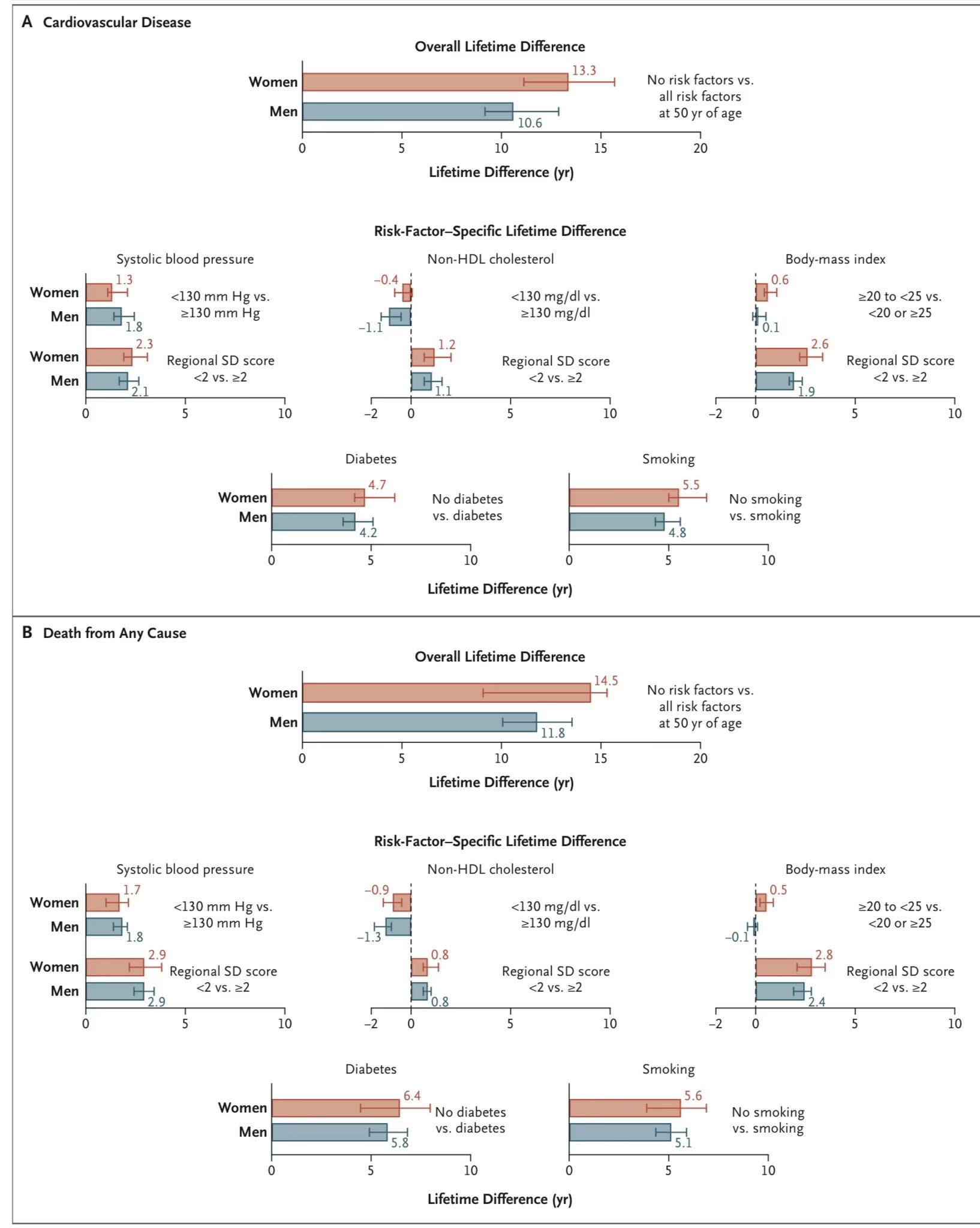
- A pooled NEJM analysis of more than 2 million people in 39 countries looked at blood pressure, non-HDL cholesterol, BMI, diabetes and smoking. At age 50, having none of the five versus all five meant up to 13.3 more years free of cardiovascular disease. Only about half of cardiovascular events were attributable to these five classic factors.11
- A Harvard Nurses' Health Study analysis of five lifestyle factors (including not smoking) was associated with 82% lower heart disease and 90% lower diabetes risk over about 14 years, though only 3 to 4% of nurses met all five; Louis notes it is a cohort study and cannot firmly establish causation.12
- In the ARIC cohort, 6 to 7 ideal American Heart Association health metrics were linked to 51% lower cancer risk, but when smoking was removed from the count the association shrank to 25%, which shows how much of the benefit smoking carried.13
- A 2025 UK study discussed in a video found that modifiable factors such as physical activity and social engagement were associated with 40 to 63% lower sudden cardiac arrest risk, while unemployment and smoking raised it.14
Beyond the heart: brain and aging
A study of about 12,000 US adults found that people with normal blood pressure, no diabetes and no smoking at age 55 had an average of 30.1 more dementia-free years, about 13 more than people with all three risk factors. The summary notes that this observational study cannot prove cause and effect.1516
A National Geographic piece on 3D facial imaging reported that smoking, snoring and high cholesterol were typical of fast biological agers, while yogurt, regular mealtimes and higher bone density marked slow agers.17
Risk compared with other factors
Louis notes that, aside from smoking and heavy drinking, obesity is the biggest driver of premature mortality in large prospective cohorts.1819 A JACC: CardioOncology review quoted in the group says poor diet has overtaken smoking as the leading risk factor for death in the United States.20 Neither claim makes smoking harmless; they place it among several large risks.
How do we know smoking is causal?
Louis points out that no human randomized trial ever showed that smoking causes lung cancer, nor that trans fats cause heart disease. He argues that long-latency diseases are established by combining high-quality prospective cohorts, short-term biomarker trials and animal mechanism studies, judged with Bradford-Hill criteria, with the Framingham Heart Study as an example.2122 That framing matters when reading newer environmental research: the question is whether several independent lines of evidence eventually agree.
A curiosity: smoking and Parkinson's disease
Louis explains that smokers have 40 to 60% lower Parkinson's risk in prospective studies and that newer research suggests very low-dose carbon monoxide, not nicotine, may be responsible, possibly via the enzyme heme oxygenase-1. He is clear that there is no safe way to inhale carbon monoxide and that combustion is unsafe; he instead points to dietary polyphenols as ways to stimulate the body's own heme oxygenase system.23 This is a hypothesis, and it does not change the cardiovascular picture of smoking.
Nicotine pouches, cannabis and quitting
Nicotine without smoke
Louis quotes a video saying a single 2 to 4 mg nicotine pouch can raise blood pressure by about 5 mmHg and resting heart rate by 5 to 10 beats per minute, with higher doses causing larger rises. It also impairs arterial stiffness, a marker strongly linked to long-term cardiovascular risk. The effects are driven by activation of the sympathetic nervous system. The quote adds that the effects are often short-lived, but repeated exposure can make them persistent in habitual users.7
Cannabis
A post from JAMA Cardiology reports that chronic cannabis smoking and THC ingestion were associated with endothelial dysfunction (impaired function of the artery lining) similar to that seen in tobacco smokers.8 The post gives no further numbers.
Help with cravings
Louis shared a report that GLP-1 drugs such as semaglutide may reduce craving for alcohol and nicotine. In a recent trial, adults with alcohol-use disorder on weekly low-dose semaglutide for nine weeks drank less and reported fewer cravings than those on placebo, while the nicotine findings come from rodent studies. Larger long-term trials are needed.24
Air pollution and metals
The group's posts on air pollution are limited but concrete.
- HEPA purifiers. A JACC study found that portable HEPA air purifiers at home lowered systolic blood pressure in adults with elevated baseline readings, even in areas with relatively low pollution. Louis describes the effect (about 3 mmHg) as small but real.6
- Metals and calcification. In 6,418 participants of the MESA cohort followed over 10 years, higher urinary levels of cadmium, tungsten and uranium (non-essential metals) and cobalt, copper and zinc (essential metals) corresponded to more coronary artery calcification and progression. The associations were comparable in size to those of traditional risk factors such as smoking and diabetes, and the lead author called pollution the greatest environmental risk to cardiovascular health.25
- Residual risk. Gokhan shared an overview arguing that factors beyond the classic ones (gum disease, immune activation, clonal hematopoiesis, gut metabolites and environmental pollutants) converge on chronic inflammation and oxidative stress.26 The NEJM analysis of five classic risk factors similarly lists air pollution among non-classic contributors.11
These are observational findings except for the purifier trial, so they show association rather than proven causation.
Microplastics
Microplastics are tiny plastic particles; nanoplastics are smaller still. They enter the body through food and drink and by inhalation.
Human data
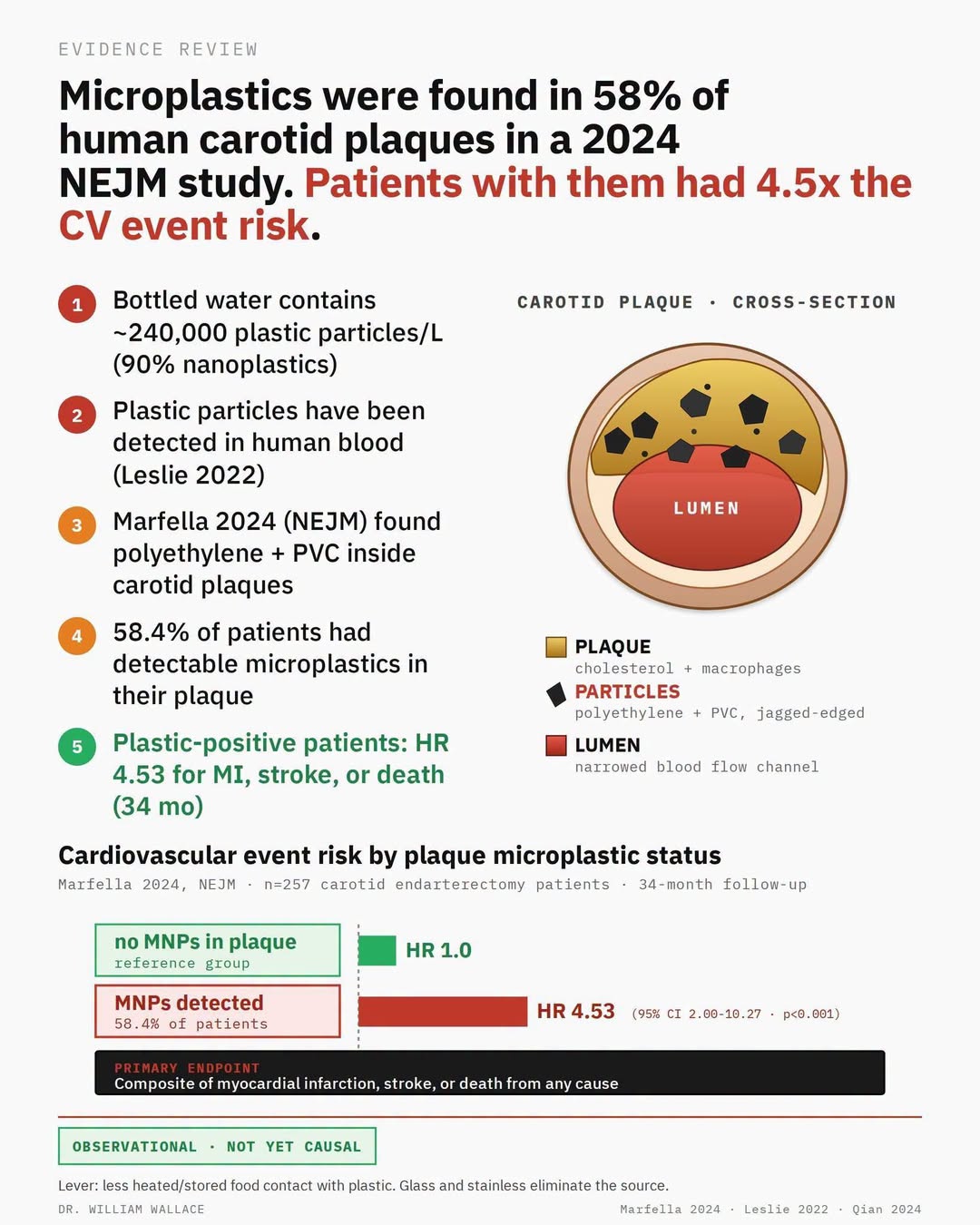
- Carotid plaque (NEJM 2024, Marfella). In 304 patients undergoing carotid endarterectomy for asymptomatic carotid disease, researchers analyzed the removed plaque. Of 257 patients followed for a mean 33.7 months, polyethylene was detected in plaques from 150 patients (58.4%) and polyvinyl chloride in 31 (12.1%). Patients with detectable microplastics had a hazard ratio of 4.53 (95% CI 2.00 to 10.27) for heart attack, stroke or death. Electron microscopy showed jagged particles inside plaque macrophages. The summary also cites a 2022 Environment International paper that quantified plastics in the blood of 22 healthy donors.5
- Louis shared a video discussion of this widely publicized study, asking whether microplastics are a causal heart-disease risk factor.27 He stresses that the research is "still very early stage".5
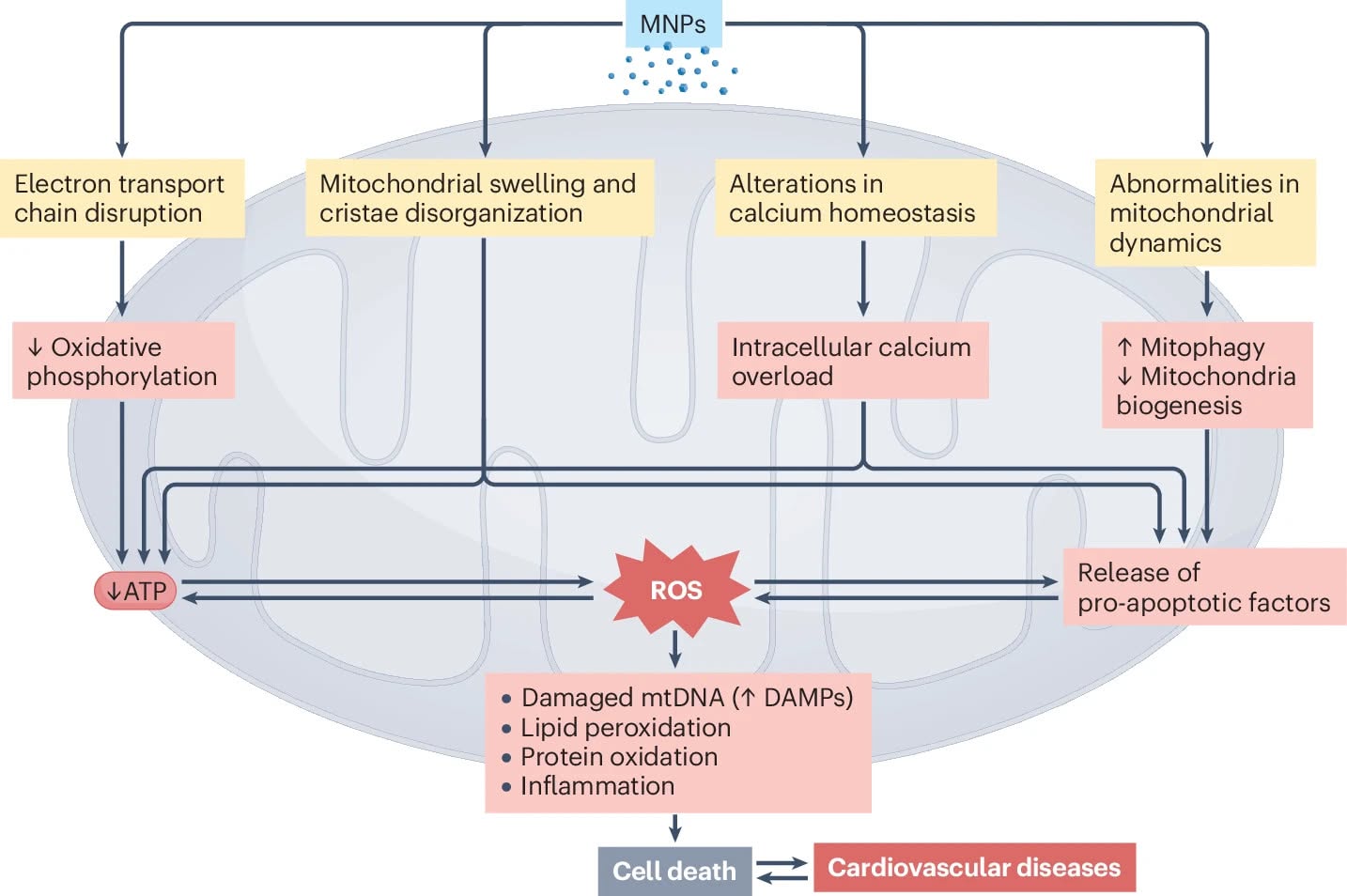
- A 2026 Nature Reviews Cardiology review lists candidate mechanisms (inflammation, oxidative stress and mitochondrial dysfunction). Louis calls the link biologically plausible but still speculative, "emphasis on might".2
Animal and mechanistic data
In atherosclerosis-prone mice given 10 mg/kg/day of microplastics for nine weeks, males had 63% more plaque in the aortic root and 624% more in the brachiocephalic artery, while females showed no significant increase. Body weight and cholesterol were unchanged, which the summary takes to suggest direct endothelial damage and inflammation.28 Gokhan reported another news item in which everyday-level microplastic doses caused insulin resistance and liver damage in mice, and commented that microplastics may be "the new smoking", which is his opinion rather than a study finding.29
Do blood tests for microplastics help?
Louis argues that commercial microplastic blood tests are unreliable. Reporting single-digit particle counts in 100 microliters of blood would require a cleanroom and a plastic- and phthalate-minimised laboratory, and plastic contamination during drawing, transport and processing would swamp the signal.10 Even a contamination-free result would only reflect what the person recently ate, drank or inhaled, since the blood level changes as soon as diet or environment changes.30
Practical ways to reduce exposure
A Bloomberg-based post lists steps: use less plastic, especially single-use; avoid microwaving food in plastic; choose glass or stainless steel; wear natural fibers (wool, cotton, linen); use HEPA filters at home; and remove shoes indoors. It states that complete avoidance is impossible and the links to heart disease are potential.9 Podcast promotion material shared by Louis makes bolder claims, such as up to 90,000 extra particles a year from drinking only bottled water, up to 55 times more BPA exposure from food heated in plastic and over 4 million particles released from 3 minutes of microwaving in plastic. These are claims in episode text, not study details.31
Fiber may help: a FoundMyFitness post suggests fiber can block larger microplastics from being absorbed in the gut, although the tiniest nano-sized particles can still cross the gut lining. No study is cited.32 Gokhan's long fiber summary also says fiber reinforces the gut barrier against toxins such as microplastics, and cites a WHO-commissioned 2019 meta-analysis where 25 to 29 g/day was linked to 15 to 30% lower all-cause mortality.33 Gokhan adds, as personal opinion beyond the study, that a high-fiber diet and regular Finnish sauna use are two of the best defenses.28
PFAS ("forever chemicals") and related chemicals
PFAS are persistent chemicals used in non-stick coatings and other products. Gokhan summarized a Veritasium video describing how DuPont knew about the toxicity and persistence of PFOA and discharged it into the environment; the post says PFAS are present in nearly all human blood and linked to cancers and thyroid disease. His suggested response is to learn how to avoid exposure and to donate blood regularly if possible, which he presents as a personal suggestion rather than a proven treatment.34 A Guardian-reported US study found coffee, eggs and white rice, as well as seafood and red meat, were associated with higher PFAS levels, highlighting how widespread the chemicals are.35
On removing PFAS:
- In a 10-person Swedish study of adults with high PFAS exposure, cholestyramine increased fecal PFAS excretion and a 12-week course of colesevelam lowered blood PFAS by up to 38%. The authors say it was very small and observational and that people should not use these drugs off-label.36
- FoundMyFitness proposes that oat beta-glucan, by reducing bile acid reabsorption, may increase fecal PFAS excretion (shown in animal studies) and also lowers LDL by about 5 to 7% at roughly 3 g/day. PFAS clearance in humans is a proposed mechanism only.37
Separately, Gokhan shared a CNN report linking phthalates, found in plastics, cosmetics and food packaging, to thousands of global heart-disease deaths. He comments that the US uses large amounts of such chemicals without serious study or regulation.1 The post gives no further numbers.
Nuances and common misconceptions
- Early evidence is not the same as proof. Most environmental data here are observational, from mice, or small. The one human outcome study on microplastics tied detection to a higher event rate, but it cannot show that plastic caused the events, since people with detectable plastic may differ in other ways. This is a limitation inferred from the study design; Louis's own caution is that it is early.
- Opinions differ. "Microplastics are the new smoking" is Gokhan's view.29 Louis's tone is more cautious.2 Neither contradicts the fact that smoking remains the better-documented harm.
- Classic factors still matter most. The NEJM analysis shows classic factors explain roughly half of cardiovascular events, so non-classic exposures are worth knowing about without displacing blood pressure, lipids, glucose, weight and not smoking.11
- "Smoke-free" products are not necessarily benign. Nicotine itself acutely raises blood pressure and heart rate, and cannabis smoking was linked to endothelial dysfunction like tobacco.78
- Sitting is not the new smoking. Gokhan argues the slogan confused association with causation; a CNN-reported study found standing desks may not fix the risks of prolonged sitting.38 Likewise, Louis's note that processed meat is classed by the WHO in the same carcinogen group as smoking concerns cancer classification, not equal cardiovascular harm.3940
What this means for you
- Not smoking is among the largest single steps the posts discuss. People who smoke may want to talk to their doctor about quitting support.34
- Nicotine in any form raises blood pressure and heart rate in the short term; the group's sources suggest not treating pouches as risk-free.7
- If blood pressure is elevated, the JACC trial suggests a home HEPA purifier may lower systolic pressure by about 3 mmHg, a small but real effect.6
- Reasonable steps to reduce plastic exposure include glass or stainless steel instead of plastic, not microwaving food in plastic, natural-fiber clothing and removing shoes indoors. Complete avoidance is not possible.9
- The admins are skeptical of consumer microplastic blood tests.1030
- Eating enough fiber is advised for general health and may reduce absorption of larger microplastics.3233
- For PFAS, the group's evidence is limited: avoid exposure where possible, and do not use cholesterol drugs off-label to remove them without medical advice.3436
Frequently asked questions
How does smoking compare with age and other risk factors?
In the SCORE O.P. table, smoking raised coronary death risk 1.88-fold and diabetes 2.3-fold, while age compounds to about 19.5-fold from 65 to 85.3
Do microplastics cause heart attacks?
Not shown. A 2024 NEJM study found microplastics in 58.4% of carotid plaques and a hazard ratio of 4.53 for heart attack, stroke or death in those patients, and mouse studies show more plaque in males. Louis calls human evidence early and speculative.2528
Is a microplastics blood test worth buying?
Louis says no: it largely measures contamination, and results would only reflect recent exposure.1030
Are nicotine pouches safe for the heart?
They raise blood pressure and heart rate acutely and are linked in the quoted video to arterial stiffness.7
Can anything clear PFAS from the body?
A 10-person Swedish study found colesevelam lowered blood PFAS up to 38%, but the authors advise against off-label use. Oat beta-glucan is a proposed, unproven option.3637
Does air filtration help?
In a JACC randomized trial, home HEPA purifiers lowered systolic blood pressure by about 3 mmHg in adults with elevated baseline readings.6