It is untrue that statins do not reduce mortality in women, or are less effective in women.
This question has been studied carefully in 27 randomized controlled trials. When the results are pooled together in meta-analysis, statins are just as effective at reducing CVD events and mortality in high risk women as they are in high risk men.
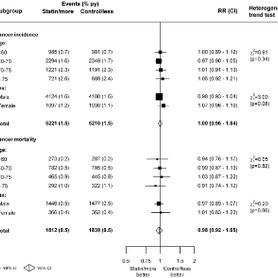
In this meta-analysis of 27 RCT’s, statins reduced overall mortality by 9% in women and 10% in men, per 1mmol/L drop in LDL. They reduced major vascular events by 16% in women and 22% in men, per 1mmol/L drop in LDL. Keep in mind that the average duration of these trials was only 4.9 years, and these were the relative risk reductions that occurred only during that period. (The longer the trial, the larger that you would expect the risk reduction to be.)
——
“Background: Whether statin therapy is as effective in women as in men is debated, especially for primary prevention. We undertook a meta-analysis of statin trials in the Cholesterol Treatment Trialists' (CTT) Collaboration database to compare the effects of statin therapy between women and men.”
“Findings: The proportional reductions per 1·0 mmol/L reduction in LDL cholesterol in major vascular events were similar overall for women (rate ratio [RR] 0·84, 99% CI 0·78–0·91) and men (RR 0·78, 99% CI 0·75–0·81, adjusted p value for heterogeneity by sex=0·33) and also for those women and men at less than 10% predicted 5 year absolute cardiovascular risk (adjusted heterogeneity p=0·11). Likewise, the proportional reductions in major coronary events, coronary revascularisation, and stroke did not differ significantly by sex. No adverse effect on rates of cancer incidence or non-cardiovascular mortality was noted for either sex. These net benefits translated into all-cause mortality reductions with statin therapy for both women (RR 0·91, 99% CI 0·84–0·99) and men (RR 0·90, 99% CI 0·86–0·95; adjusted heterogeneity p=0·43).”
“Interpretation: In men and women at an equivalent risk of cardiovascular disease, statin therapy is of similar effectiveness for the prevention of major vascular events.”