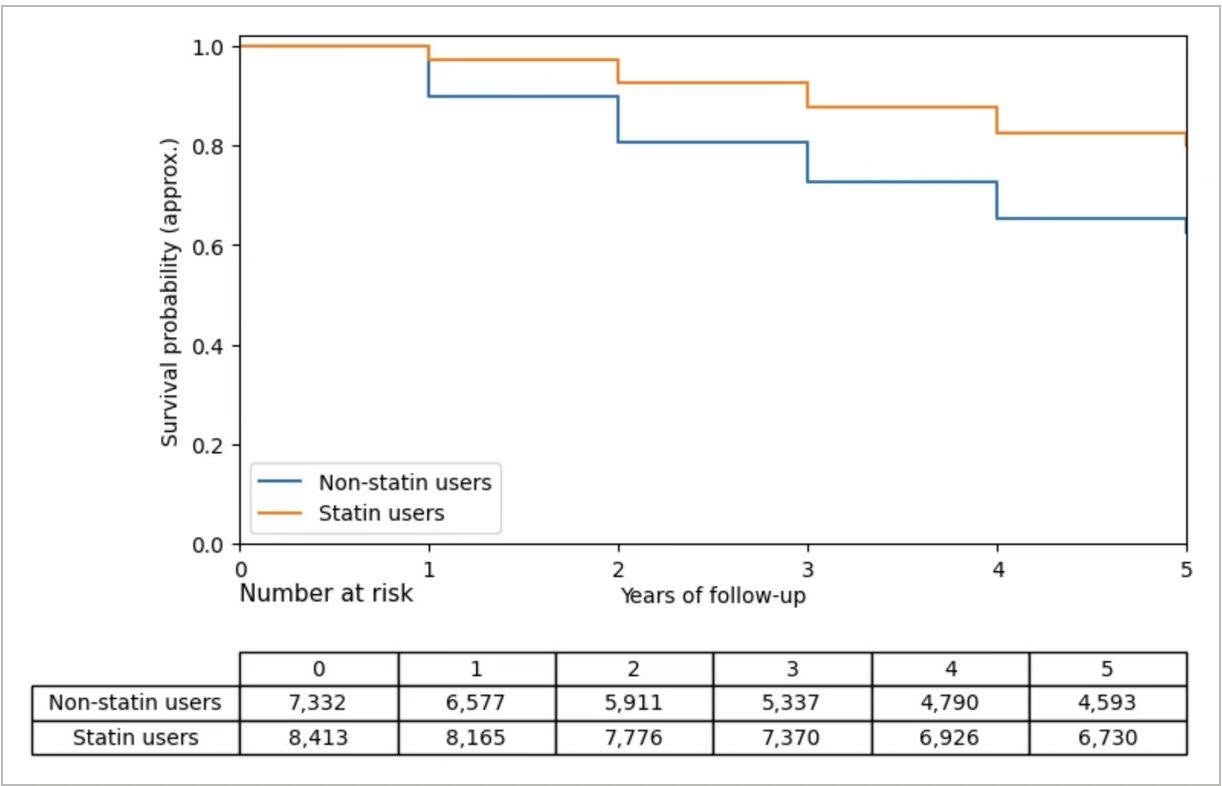
If everyone in the USA took a statin long term, it would cut the number of heart attacks and strokes in half. But over a 5 year period, this would only translate into adding 10-20 days to the average persons lifespan.
Here’s the math:
Statins have been shown to reduce absolute risk of having a heart attack or stroke by anywhere from 1.1% to 4.7% in randomized controlled trials lasting about 5 years.
This is actually very good because the lifetime absolute risk of a heart attack or stroke is only 20% for the average American. So lowering it by 1.1% to 4.7% in only 5 years is a big deal. If you keep this up long term, the average American can reduce their lifetime absolute risk of heart attack or stroke from 20% to 10%. That would cut the number of heart attacks and strokes in the USA in half.
↪ A 1.1-4.7% absolute risk reduction from statins is large against a 20% lifetime risk
So is all of this consistent with the claim that statins would only extend the average person’s life by 10-20 days over a 5 year period?
Yes it is. Here is why.
Because only about 10% of people who have a heart attack or stroke actually die from it. And only 1 in 5 deaths in the USA are from heart attacks and strokes. This means that the reduction in overall deaths would be a factor of 10*5 = 50 less than the reduction in heart attacks and strokes. So you would only prevent somewhere between 1.1%/50=0.022% to and 4.7%/50=0.094% of overall deaths in a 5 year period. That percentage reduction in overall deaths is tiny. It would translate into the average person living only a few more days over that same 5 year period.