The video analyzes multiple studies to try to answer the question of whether glucose spikes (sudden increases in blood sugar) can cause cardiovascular disease. This is a complex topic with nuanced evidence that requires careful examination.
Mechanisms of Action Several mechanisms have been proposed for how glucose spikes could theoretically lead to cardiovascular disease:
- When carbohydrates are consumed, they are broken down into glucose molecules in the digestive tract. These glucose molecules are then absorbed into the bloodstream, causing blood sugar levels to rise.
- High blood glucose can cause glycation, where the glucose molecules bind to proteins in a way that makes the proteins dysfunctional. This can happen to proteins both inside and outside cells. One example is the glycation of hemoglobin, which impairs its ability to carry oxygen.
- When glucose enters cells, if there is an overabundance, it can lead to increased production of reactive oxygen species (ROS) by the mitochondria. These ROS can interact with signaling proteins in a way that triggers inflammation. The signaling proteins enter the cell nucleus and bind to genes that increase expression of pro-inflammatory cytokines like interleukin-6 (IL-6).
- IL-6 recruits more immune cells to the area. Other proteins like ICAM allow the immune cells to aggregate and stay in that location. This leads to inflammation of the blood vessel lining (endothelium) and is part of the atherosclerosis process.
- The ROS produced from high glucose can also reduce levels of nitric oxide, a molecule that helps blood vessels dilate. This impairs the ability of blood vessels to relax, potentially raising blood pressure.
- Glycated proteins can bind to RAGE receptors on cells, triggering intracellular signaling cascades that further increase inflammation and reactive oxygen species. The activation of pathways like MAPK leads to increased expression of many pro-inflammatory cytokines.
However, it's important to note that just because these mechanisms are plausible based on biochemistry, it doesn't necessarily mean glucose spikes will definitely lead to more cardiovascular disease in the real world. That has to be determined by looking at actual clinical data. The acute effects seen in short-term mechanistic studies also may not translate to long-term disease outcomes. More research is needed to conclusively link these mechanisms to cardiovascular disease in humans.
Evidence for Glucose Spikes Causing Heart Disease The video examines several studies, both short-term experiments looking at acute effects as well as long-term observational studies and clinical trials:
Study 291 was a short-term study in 49 overweight adults, including both diabetics and non-diabetics. They consumed either a glucose solution to cause a spike in blood sugar or had their blood sugar clamped at a high level. The glucose spike condition decreased flow-mediated dilation (the ability of arteries to relax) and increased markers of oxidative stress compared to the stable high glucose. This suggests acute glucose spikes have detrimental vascular effects, at least in the short-term. However, the study was small, unblinded, and only looked at proximal endpoints, not clinical disease.
Study 290 examined 32 adults who were either healthy or had insulin resistance. A glucose spike increased pro-inflammatory cytokines like IL-6 compared to saline infusion, and this effect was greater in those with insulin resistance. Again though, this study only looked at short-term effects and can't prove long-term disease risk.
Study 293 was a meta-analysis of 38 observational studies evaluating the link between post-meal glucose levels and cardiovascular disease in over 1,900,000 people without diabetes. Higher post-meal glucose was associated with greater cardiovascular disease risk. However, the studies were observational and didn't tightly control for confounding factors. They mostly used a one-time oral glucose tolerance test to define glucose spikes rather than looking at real-world post-meal spikes. There was also significant heterogeneity between studies, suggesting other hidden variables.
Study 294 prospectively followed 11,000 adults without diabetes for 33 years, stratifying them based on their post-meal glucose response to a one-time test. Those with a higher glucose spike had significantly greater risk of cardiovascular death, even after adjusting for some other risk factors. However, it's still an observational study and can't prove cause-and-effect. The one-time glucose test also may not reflect their usual diet.
Study 287 was a 12-month randomized trial in 161 diabetic adults. One group received a diabetes drug (repaglinide) that reduces post-meal glucose spikes, while the other received a drug (glibenclamide) that doesn't target spikes as much. Atherosclerosis progression was monitored by ultrasound of the carotid arteries. The repaglinide group had less progression of atherosclerosis. However, there was no placebo group, there were baseline differences between groups, and the drugs could have had other effects besides just lowering glucose spikes.
Study 292 also compared diabetes drugs for 12 months in 70 diabetic adults. Nateglinide, which reduces post-meal glucose, led to regression of atherosclerosis compared to progression in the diet-only group. This bolsters the findings of Study 287 but has similar limitations.
Finally, Study 288 was a large randomized trial of acarbose, a drug that inhibits carbohydrate absorption and blunts post-meal glucose spikes, compared to placebo in 1400 adults with impaired glucose tolerance followed for 3 years. Acarbose led to a significant reduction in cardiovascular events. This is higher-quality evidence supporting the link but still not definitive.
Conclusions Overall, the mechanistic and observational data suggesting a link between glucose spikes and cardiovascular disease is compelling but not conclusive. The few clinical trials that have been done, while provocative, have methodological limitations that preclude definitive conclusions.
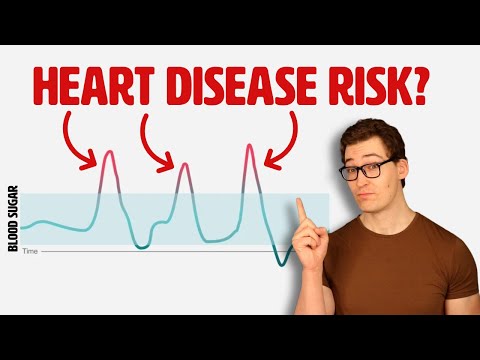 ▶Video · YouTube · PhysionicDo blood sugar spikes cause heart disease? [Study 287-294 Study Analysis]JOIN THE PHYSIONIC INSIDERS [PREMIUM CONTENT] HEALTH AUTONOMY [COURSE] JOIN THE COMMUNITY EMAIL LIST HIRE ME FOR CONSULTING: Created with Biorender CRITIQUES, RULES, AND NOTES - Please do not post summaries of the video in the comments - it damages retention on the video and YouTube is less likely to promote it (these videos cost…youtube.com
Acarbose
- 13.5% average mice life extension (ref), more effective in male mice.
- Mimics low carb diet (lowers glucose, trigs, insulin).
- 50% reduction in Cardio Vascular Disease (CVD) in insulin resistant (ref).
- Reduces PP glucose peak by 66%+ while avoiding sugar crashes (ref).
- Reduces fasting insulin by ~10%, and insulin resistance score by 15-25% (ref, ref).
- Lowers trigs by ~20% in obese (ref); lowers trigs throughout the day by 32% in T2D (ref).
- Makes you feel fuller; aids weight loss.
- Lowers inflammatory markers such as HS-CRP, IL6 etc in T2D (ref, ref).
- Slows cancer growth in Kidney Cancer animal models (ref). Associated with 14% reduced risk of developing any cancer in T2D humans (ref).
- Effects appear additive with Metformin.
- Benefits aren’t immediate but they’re cumulative. They increase over time (initially months, then years).
- Raises serum butyrate in human subjects with impaired glucose tolerance (ref).
- Typical dose: 25-100mg with meals (ref).
 mylongevityjourney.blogspot.comAcarbose13.5% average mice life extension ( ref ), more effective in male mice. Mimics low carb diet (lowers glucose, trigs, insulin). 50% reductio...mylongevityjourney.blogspot.com
SGLT inhibitors for improving Healthspan and lifespan
Paper · Prog Cardiovasc Dis · 2023SGLT inhibitors for improving Healthspan and lifespan.Sodium-glucose cotransporter inhibitor/inhibition (SGLTi), initially approved as a glucose-lowering therapy for type 2 diabetes, is associated with decreased risks for many of the most common conditions of aging, including heart failure, chronic kidney disease, all-cause hospitalization, atrial fibrillation, cancer, gout, emphysema, neurodegenerative disease/dementia, emphysema, non-alcoholic fatty liver disease,…ncbi.nlm.nih.govGLP1-RA Reduced Heart Disease and Deaths
↪ SELECT trial: semaglutide cut major cardiovascular events 20% in obese non-diabetic adults