I learned about this recent study from a random cholesterol-denier video that someone posted in the group.
(I see so much of these kinds of videos online that I usually don’t pay much attention, but this study looked particularly interesting.)
Anyone with insulin resistance and considering a statin should read this study paper, which is the subject of the video:
internationaljournalofcardiology.comLink to internationaljournalofcardiology.cominternationaljournalofcardiology.comThe authors have demonstrated dangers associated with high dense HDL in people who are insulin resistant and at high risk of developing diabetes.
Insulin resistance causes high levels of small dense HDL, and this appears to significantly increase the risk of arterial calcification.
Here is the fascinating part:
The authors demonstrate that statins remove up to 40% of this risk.
So the statin is removing a very large part of a risk that at first glance appears to have very little to do with LDL.
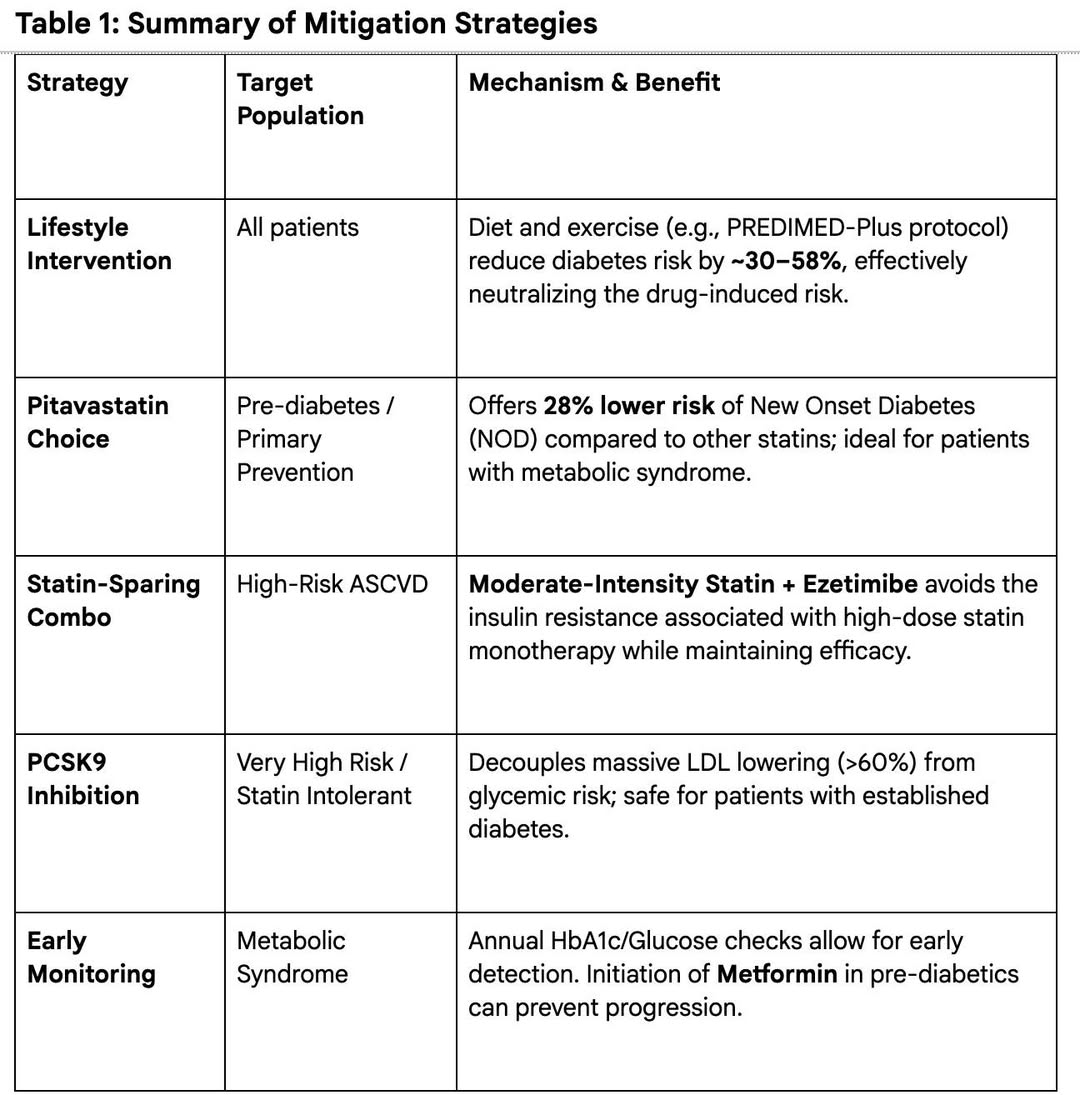
The paper adds to the vast literature demonstrating that the benefits of statins in people with pre-diabetes and diabetes far outweigh the small decrease in insulin sensitivity that they cause. But most importantly, it provides a possible reason WHY— by canceling out risk associated with the small dense HDL caused by insulin resistance.
The other key takeaway from the paper is that high HDL is not always a good thing.
High levels of small dense HDL appear to be a very bad thing!
The authors make a strong case that most people with insulin resistance— and the high levels of small dense HDL that go along with it— should probably be on a statin.
Quoted from the discussion section of the actual paper:
“Statins have multiple effects on the composition and concentration of lipoproteins and are strongly recommended in individuals with diabetes to reduce the risk of cardiovascular events [1]. To the best of our knowledge, this is the first systematic analysis of the interactions between lipid lowering drugs and circulating lipoproteins. Our data suggest that lipid lowering drugs may reduce up to 40 % the occurrence of CACS [arterial calcification] associated with high circulating levels of small HDL. While most of the literature has focused on the association of lipid metabolites with the risk of incident type 2 diabetes [21–24], our study shows that changes in lipid, lipoproteins and lipoprotein lipid content are present already in individuals with pre-diabetes thus representing a marker of cardiovascular risk before the onset of overt diabetes.”
Quoted from the abstract:
“We define a dyslipidaemic profile able to discriminate individuals with either prediabetes or diabetes and coronary subclinical atherosclerosis. We show that concentration and composition of circulating small HDL associate with the occurrence pre-diabetes, diabetes and subclinical coronary atherosclerosis.
We show that treatment with lipid lowering partly modifies the association between small HDL and subclinical coronary atherosclerosis.”
 ▶