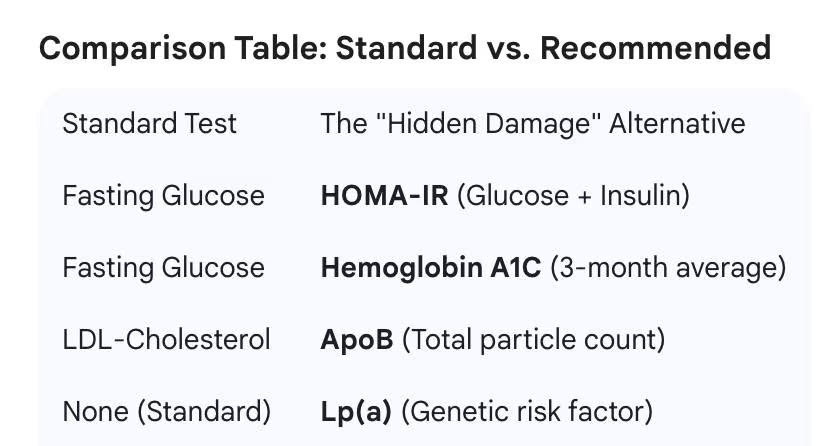
Dr. Gil Carvalho highlights four specific blood tests that can detect "hidden" damage to your metabolic and cardiovascular health long before standard tests (like fasting glucose or LDL) show a problem.
- HOMA-IR (Insulin Resistance)
- What it measures: Your degree of insulin resistance.
- How it works: It isn't a single test but a calculation using your Fasting Glucose and Fasting Insulin.
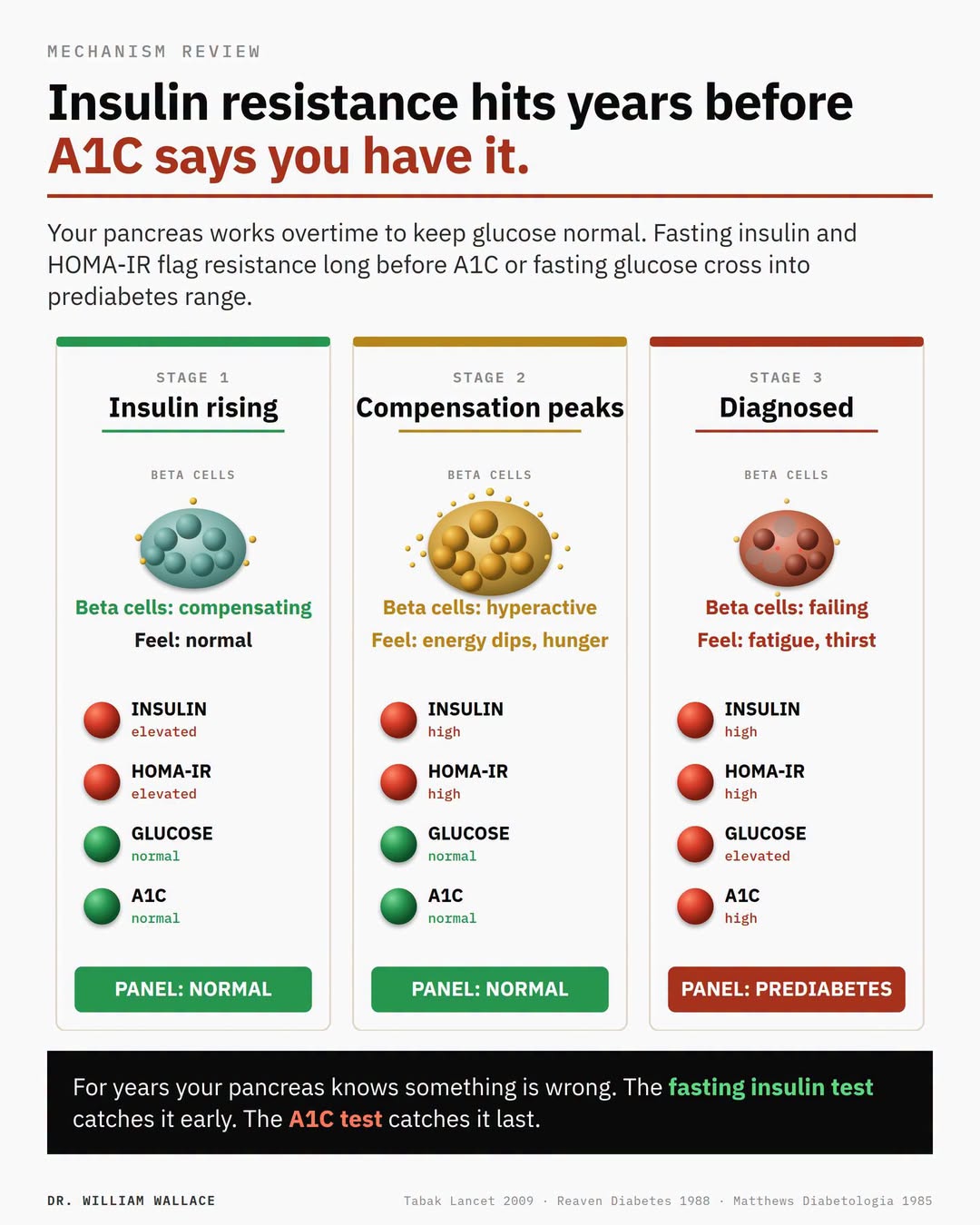
- Why it matters: Your body can keep blood sugar "normal" for 10–15 years by overproducing insulin. HOMA-IR catches the struggle (insulin resistance) before it turns into Type 2 Diabetes.
- Optimal Range: Ideally under 1.0. Over 2.0 indicates insulin resistance, and over 3.0 indicates frank resistance.
- Hemoglobin A1C (HbA1c)
- What it measures: Your average blood sugar over the last three months.
- Why it matters: Unlike a fasting glucose test (which is just a "snapshot"), the A1C shows the "big picture" of how much sugar is actually sticking to and damaging your red blood cells.
- Optimal Range: Under 5.7%. Dr. Carvalho notes that even a slow creep upward (e.g., from 5.1 to 5.5) is a red flag, even if you are still in the "normal" range.
- Lp(a) (Lipoprotein "Little A")
- What it measures: A specific, highly inflammatory, and "sticky" genetic lipoprotein particle.
- Why it matters: This is 90% determined by genetics and does not change much with diet. One in five people have high levels, which significantly increases the risk of heart attack and stroke, even if their other cholesterol numbers look perfect.
- Optimal Range: Generally under 75 nmol/L (nanomoles per liter). You typically only need to test this once in your life.
- ApoB (Apolipoprotein B)
- What it measures: The total number of atherogenic (plaque-causing) particles in your blood.
- Why it matters: Dr. Carvalho calls this the "gold standard" for heart disease risk. Traditional LDL-C tests measure the weight of cholesterol, but ApoB measures the number of dangerous particles. A low LDL can sometimes hide a high, dangerous particle count.
- Optimal Range: Ideally under 100 mg/dL for healthy individuals (even lower for those at high risk, e.g. <80).
Link to the video:
 ▶Video · YouTube · Nutrition Made Simple!4 Blood Tests that Reveal Hidden Damage (& Most Doctors won´t Order)The most dangerous diseases progress silently for years. These tests can reveal them. Connect with me: Animations: Even Topland @toplandmedia Links & Additional Resources: IR timing and damage: Disclaimer: The contents of this video are for informational purposes only and are not intended to be medical advice, diagnosis, or treatment, nor to replace medical…youtube.com