(no text — see the shared post below)
Absolute Risk & Statins
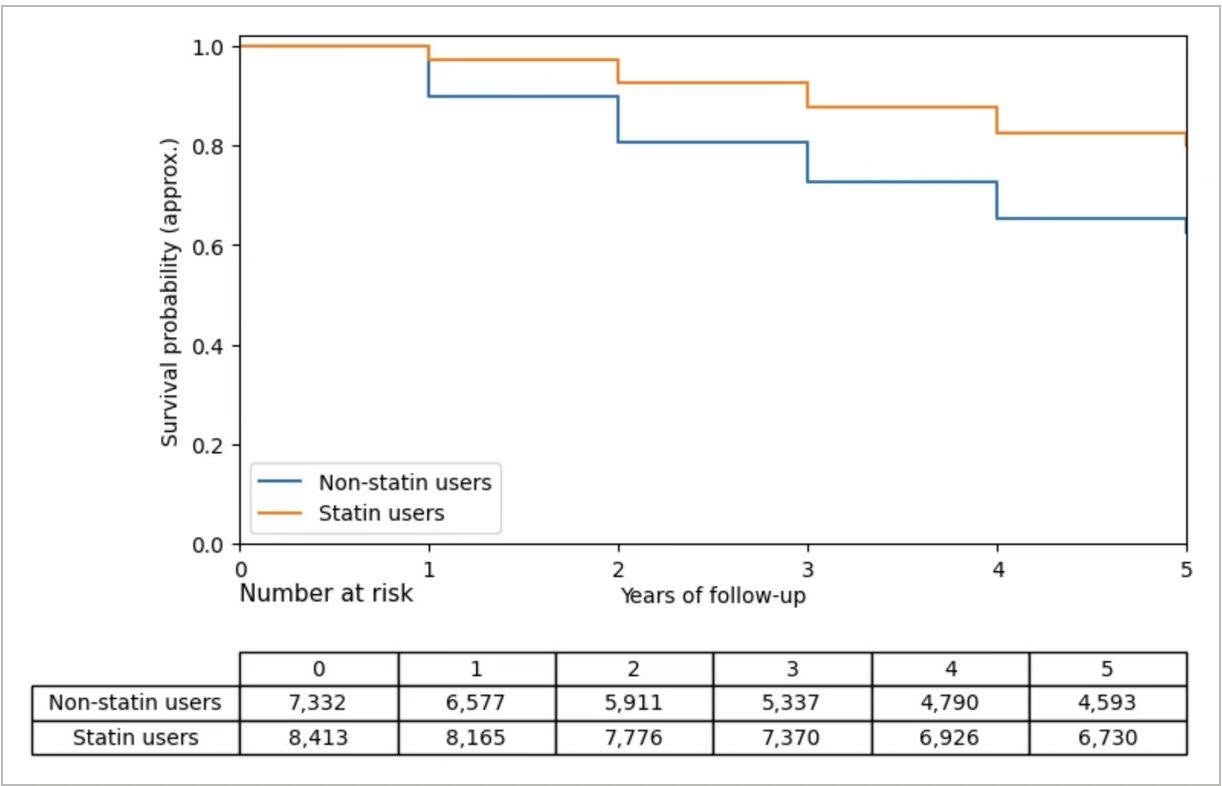
There’s a lot people in these heart disease groups online who are fond of quoting the statistic that many statin trials only show reductions in absolute risk of about 1-2%.
What they are not telling you is this:
- These trials only run for a few years.
- The absolute risk of having a heart attack or stroke is only around 2-5% in just a few years, even for higher risk people.
- So reducing absolute risk by 1-2% during that short timeframe is excellent.
- If you look at trials of diet and exercise, they also only show absolute risk reductions of around 1-2% after a few years. (Again, this is because the absolute risk of having a heart attack or stroke is only around 2-5% in just a few years, even for higher risk people.)
- No matter what you do, you are only going to be able to reduce absolute risk by a few percent in a short number years. That’s because the absolute risk of having a heart attack or stroke in that short time is only a few percent to begin with. You can’t reduce absolute risk less than zero!
- Even a complete CURE for heart disease will only show an absolute risk reduction of 2-5% after a few years! Again, that is because you can’t reduce absolute risk to less than zero.
The picture looks very different in the long term…
Over an entire lifetime, the absolute risk of having a heart attack is around 20%.
(One in five Americans will have a heart attack in their lifetime.)
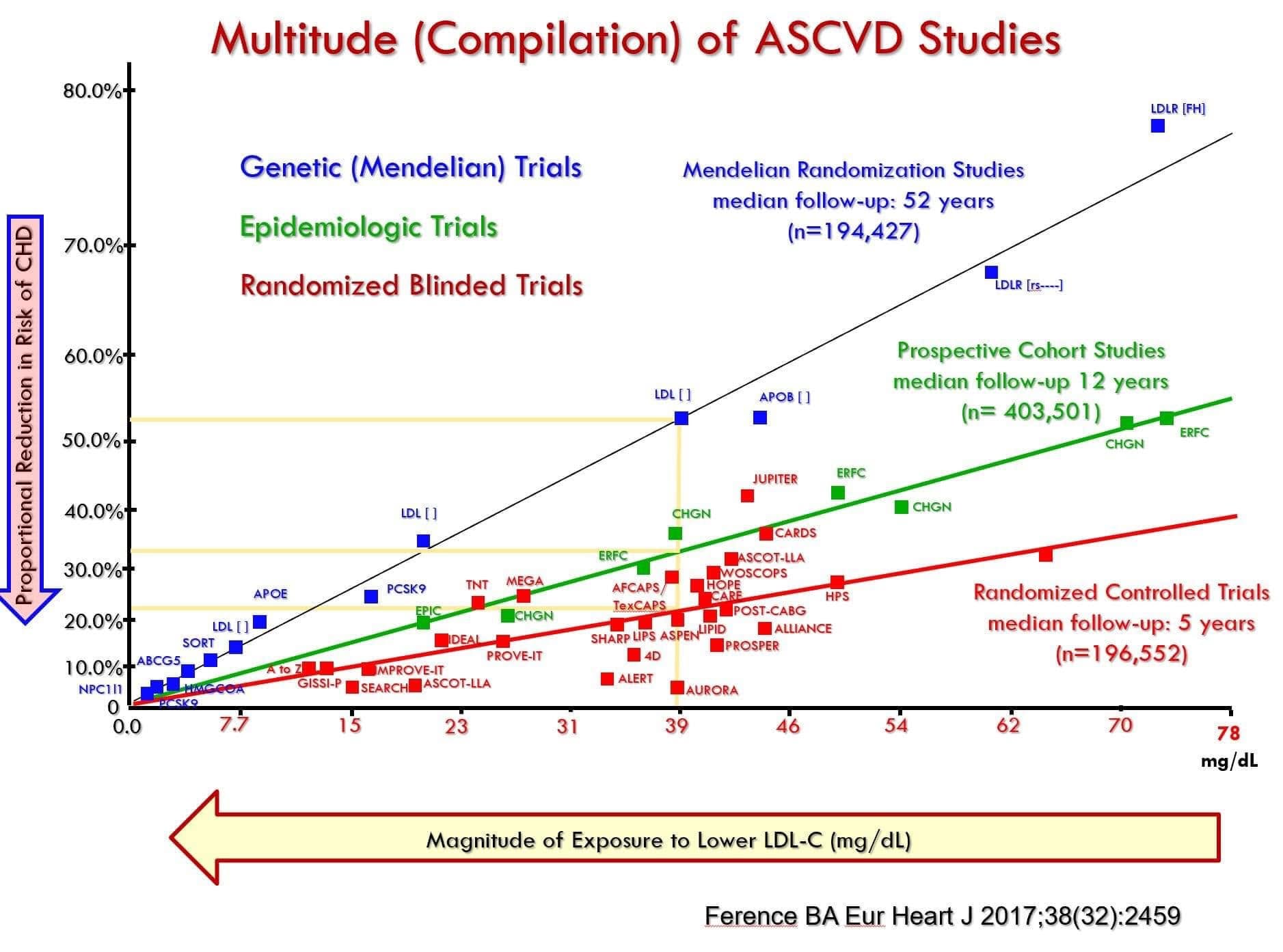
Someone who takes a statin for a large part of their adult life can reduce this absolute risk by as much as 10% or more— just from taking the statin. We know this from both long term prospective cohort studies and Mendelian randomization studies:
↪ LDL down 39 mg/dL: 20%+ fewer heart attacks in RCTs, 30%+ in cohorts, 50%+ genetically
The benefits of statins on absolute risk reduction are CUMULATIVE. During the first few years, the absolute risk reduction is only a few percent. But over the course of a lifetime, it can exceed 10%.
That 10% number is a huge deal when you consider that the lifetime absolute risk of a heart attack itself is only around 20%. Cutting your lifetime risk from 20% to 10% means cutting your chances of a heart attack in HALF!
—————-
Any bias towards quoting relative risk to the general public is probably explained by fear that the general public will misunderstand absolute risk. For example, there is probably a fear that the general public will misunderstand that a 1% absolute risk reduction is just as impressive as a 33% relative risk reduction in a trial lasting only a few years where the absolute risk of having a heart attack is only 3% to begin with. They say the exact same thing. Both are very good results.
I think this fear is very justified given what I see online. Math illiteracy is very real. People do not understand what absolute risk truly means, and are being scammed by quacks and charlatans to think a 1% reduction is bad in my example, when in fact it is very good for a trial lasting only a few years.