Comparative Efficacy of Dietary Macronutrients on Liver Insulin Resistance During Matched Weight Loss
Aug, 2026
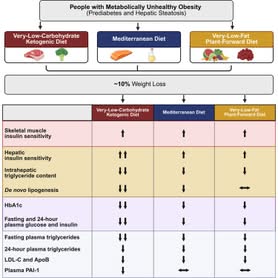
The study, "Effect of diet macronutrient content on the cardiometabolic response to weight loss: A randomized clinical trial" by Petersen et al., investigates how three popular diets with vastly different macronutrient profiles influence metabolic health in individuals with metabolically unhealthy obesity. The core finding is that while a moderate 10% weight loss provides universal benefits for skeletal muscle insulin sensitivity and body composition regardless of the diet, a very-low-carbohydrate ketogenic diet delivered vastly superior improvements in liver metabolic function, intrahepatic fat reduction, and glycemic control compared to Mediterranean and very-low-fat plant-forward diets.
Background and Study Objectives
Obesity is a primary driver of prediabetes, insulin resistance, and metabolic dysfunction-associated steatotic liver disease (MASLD). The standard clinical treatment for these conditions is weight loss achieved through a caloric deficit. However, a major outstanding question in clinical nutrition is whether the specific macronutrient composition of a diet (the ratio of carbohydrates, fats, and proteins) provides unique metabolic benefits independent of the weight loss itself.
Previous randomized trials have struggled to answer this question definitively because participants often achieve unequal amounts of weight loss or fail to strictly adhere to their assigned diets. To eliminate these confounding variables, the researchers conducted a highly controlled feeding trial where all meals were prepared and provided to the participants. The objective was to observe the cardiometabolic effects of a strictly matched ~10% weight loss across three distinct dietary protocols.
Study Design and Methodology
The trial enrolled participants with metabolically unhealthy obesity, defined as having a Body Mass Index (BMI) between 30.0 and 50.0 kg/m2, prediabetes, and hepatic steatosis (liver fat content ≥5%). Out of 55 initial participants, 42 completed the trial (14 per diet group). The participants had an average age of 43.2 years and an average initial BMI of 38.9 kg/m2.
Participants were randomized into three dietary interventions. To ensure absolute adherence, a metabolic kitchen provided all packed-out meals and snacks, and participants were required to log all food consumption (which showed >95% adherence).
The macronutrient breakdowns for the three diets were:
- Very-Low-Carbohydrate Ketogenic Diet: 4% carbohydrates, 73% fat (23% saturated fat), and 23% protein.
- Mediterranean Diet: 50% carbohydrates, 35% fat, and 15% protein.
- Very-Low-Fat Plant-Forward Diet: 70% carbohydrates, 15% fat, and 15% protein.
Participants were kept on a calorie-restricted track until they achieved a 10% weight loss, which took an average of 4.6 to 5.4 months. Once the weight loss target was hit, calories were adjusted to stabilize their weight for 3 to 4 weeks before follow-up metabolic testing was conducted to ensure active weight loss did not skew the results.
Key Numerical Findings and Results
Weight Loss and Body Composition
The researchers successfully achieved uniform weight loss across all cohorts, completely isolating the variable of macronutrient composition.
- The ketogenic group lost 10.4% of their body weight.
- The Mediterranean group lost 10.2% of their body weight.
- The plant-forward group lost 10.1% of their body weight.
- Across all groups, roughly 71% to 75% of the weight lost came directly from fat mass, with no significant statistical difference in fat-free mass (muscle) loss between the three diets.
Insulin Sensitivity (Muscle vs. Liver)
The researchers utilized a highly rigorous hyperinsulinemic-euglycemic clamp procedure combined with isotope tracers to measure insulin sensitivity in specific organs.
- Skeletal Muscle: Weight loss universally increased skeletal muscle insulin sensitivity by approximately 50% across all three groups. The macronutrient composition had no differential impact on how muscle tissue responded to insulin.
- Liver (Hepatic) Sensitivity: The ketogenic diet resulted in a massive two-to-three-fold greater increase in hepatic insulin sensitivity compared to both the Mediterranean and plant-forward diets.
Liver Fat and Hepatic Function
Hepatic steatosis is a major risk factor for cardiovascular disease and liver failure. All groups saw reductions in intrahepatic triglyceride (liver fat) content, but the magnitude varied significantly by diet:
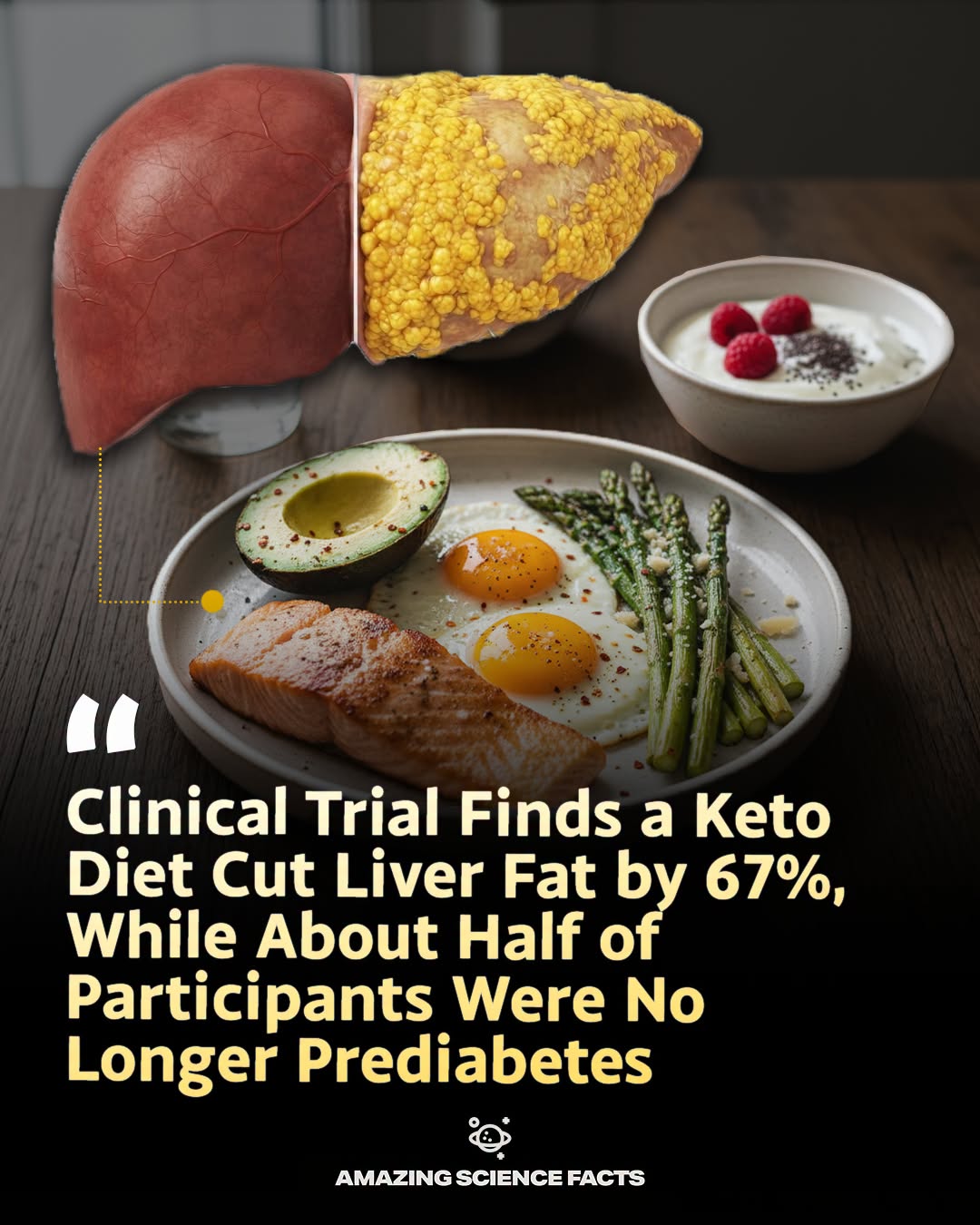
- Ketogenic Diet: Reduced liver fat by 67% (dropping from a baseline of 19.4% to 6.2%).
- Mediterranean Diet: Reduced liver fat by 45% (dropping from 18.1% to 10.3%).
- Plant-Forward Diet: Reduced liver fat by 45% (dropping from 17.7% to 9.6%).
Furthermore, hepatic de novo lipogenesis (the process by which the liver synthesizes new fat from excess carbohydrates) decreased heavily in the ketogenic and Mediterranean groups, but remained unchanged in the very-low-fat plant-forward group. The drop was most profound in the ketogenic cohort.
Glycemic Control, Hormones, and Prediabetes Remission
The trial utilized 24-hour serial blood sampling to track hormone and substrate profiles throughout the day, providing a comprehensive view of metabolic function beyond standard fasting tests.
- Glucose: 24-hour plasma glucose concentrations fell by 20% in the ketogenic group, compared to just 8% in both the Mediterranean and plant-forward groups.
- Insulin: 24-hour plasma insulin levels plummeted by 74% in the ketogenic group. The Mediterranean group saw a 44% drop, and the plant-forward group saw a 27% drop.
- Glucagon: Plasma glucagon (a hormone that promotes fat burning and glucose release) increased by 52% in the ketogenic group, whereas it actually decreased by 32% and 41% in the Mediterranean and plant-forward groups, respectively.
- Prediabetes Remission: The ketogenic diet was far more effective at reversing prediabetes. 50% of participants on the ketogenic diet achieved full remission, compared to 29% on the Mediterranean diet and only 7% on the plant-forward diet. Beta-cell function (insulin secretion rate) did not change in any group.
Blood Lipids and Cardiovascular Markers
A common concern regarding ketogenic diets is their high saturated fat content and potential to negatively impact cholesterol and cardiovascular health. This study provided evidence to the contrary in the context of weight loss:
- Triglycerides: Fasting plasma triglycerides plummeted by 82 mg/dL in the ketogenic group, heavily outperforming the Mediterranean (-41 mg/dL) and plant-forward (-24 mg/dL) diets. Interestingly, the total 24-hour circulating triglyceride concentrations decreased similarly across all groups (between 17% and 23%), largely because the ketogenic group experienced higher post-meal lipid spikes that balanced out their drastically lower fasting levels.
- Cholesterol: Total plasma cholesterol, LDL (bad) cholesterol, and apolipoprotein B concentrations trended downward in all groups with no significant differences between the diets.
- HDL and VLDL: HDL (good) cholesterol trended upward slightly in the ketogenic group while decreasing in the other two. Mean VLDL particle size and large VLDL particle concentrations decreased most significantly in the ketogenic cohort.
- Blood Pressure: Systolic and diastolic blood pressure decreased moderately across all groups (systolic dropped between 5 and 11 mmHg), with no statistical difference based on the diet followed.
Mechanistic Insights
The researchers suggest that the profound improvements in liver health seen in the ketogenic group are driven by the shifting ratios of circulating hormones—specifically, the massive drop in insulin coupled with a sharp rise in glucagon.
Because carbohydrates were restricted to just 4% of daily energy, the ketogenic participants had vastly lower circulating glucose. This lack of glucose reduced the pancreas's need to secrete insulin. Simultaneously, glucagon levels rose to ensure the body maintained baseline energy. This specific high-glucagon, low-insulin environment biologically forces the liver to halt de novo lipogenesis (fat creation) and accelerates the breakdown and oxidation of existing intrahepatic triglycerides (fat burning).
Additionally, the trial showed that sustaining a basal level of nonesterified fatty acids (NEFAs) throughout the day—which happened only in the ketogenic group due to continuous fat burning—did not worsen skeletal muscle insulin resistance, upending some previous metabolic hypotheses.
Safety and Biomarkers
No serious adverse events occurred during the trial, and no participants withdrew due to dietary complications. The ketogenic group actually demonstrated an improvement in estimated glomerular filtration rate (eGFR), an indicator of kidney function, largely due to a drop in cystatin C. Furthermore, urinary 8-isoprostane—a key biomarker for lipid peroxidation and systemic oxidative stress—decreased significantly only in the ketogenic group.
Study Limitations
The authors noted a few key limitations. First, the sample size was relatively small (42 completed participants), meaning minor secondary statistical differences between the diets might have been missed. Second, because all food was carefully prepared and provided, the results demonstrate physiological efficacy rather than real-world effectiveness; achieving this level of strict carbohydrate restriction is notoriously difficult for patients in free-living environments. Finally, the study evaluated the diets during active weight loss and a brief stabilization phase, so it cannot determine if these specific metabolic advantages persist long-term if the diet is used purely for weight maintenance.
Conclusion
The clinical trial showed that dietary macronutrient composition significantly alters the cardiometabolic benefits of weight loss. While losing 10% of body weight is universally beneficial for skeletal muscle sensitivity and fat reduction, implementing a very-low-carbohydrate ketogenic diet supercharged hepatic recovery. By profoundly lowering 24-hour insulin and raising glucagon, the ketogenic diet drove superior reductions in liver fat, reversed prediabetes at higher rates, and improved overall cardiovascular risk markers better than calorie-matched Mediterranean or low-fat diets in populations with metabolically unhealthy obesity.
Paper · Cell Metabolism · 2026Effect of diet macronutrient content on the cardiometabolic response to weight loss: A randomized clinical trialcell.com