I recently learned about this from Gokhan Can.
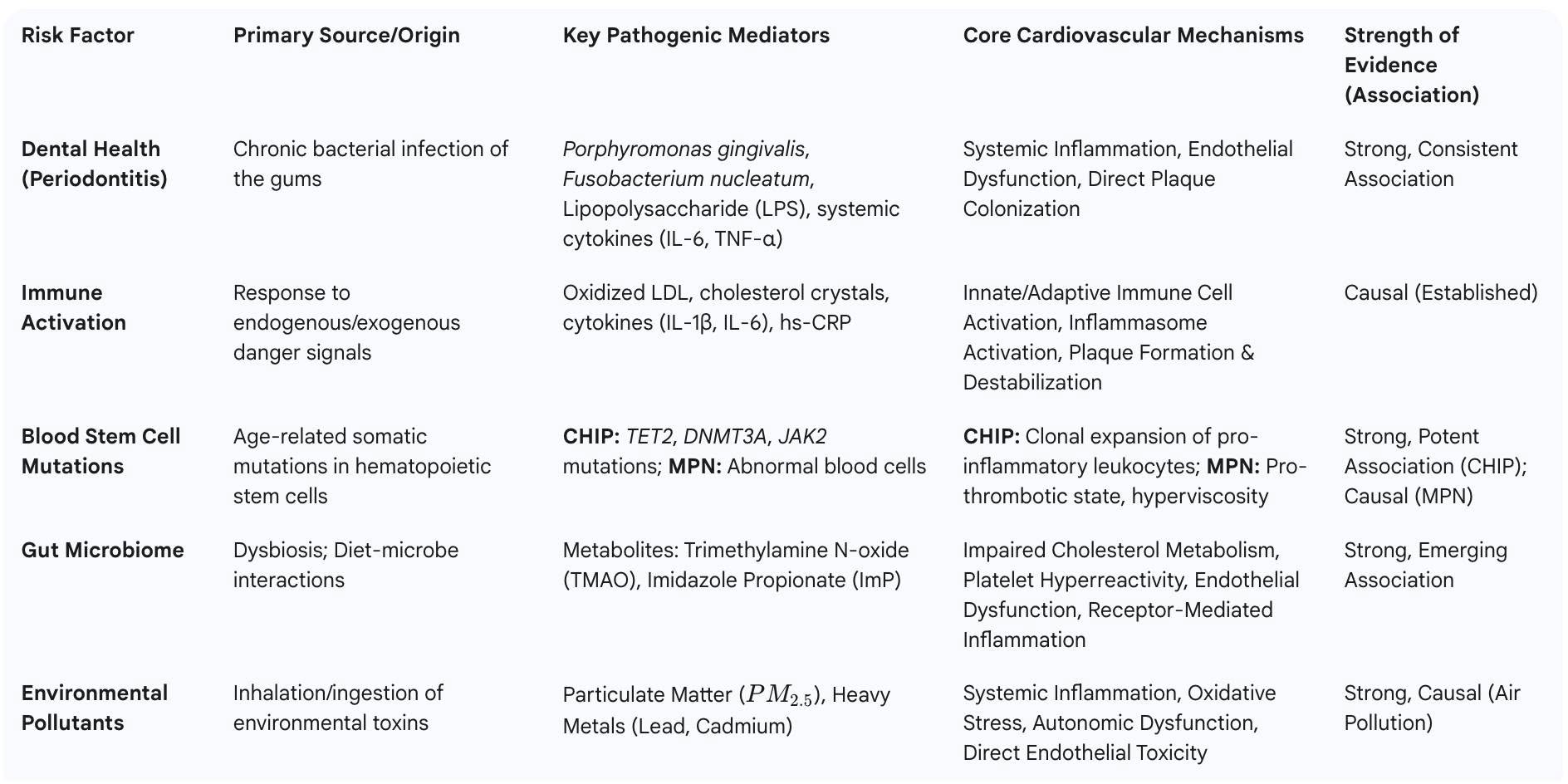
Gradual accumulation of mutations in hematopoietic stem cells (HSC’s) with age may be a major cause of CVD.
These are the stem cells in your bone marrow that make the white blood cells which are involved with forming atherosclerotic plaques. The white blood cells produced by HSC’s with certain accumulated mutations are much more likely to form plaques than normal white blood cells.
These same mutations in HSC’s are also involved with the development of leukemia and lymphoma, connecting the etiology of these diseases with that of heart disease.
Quoted:
“White blood cells, the attack dogs of the immune system, arise from stem cells in the bone marrow. Every day, a few hundred such stem cells produce blood cells that begin dividing rapidly into the 10 billion needed to replace those that have died. Sometimes, by chance, one of those marrow stem cells acquires a mutation, and the white blood cells it produces carry the same mutation.
Some mutations are just markers of past events without any lasting consequence. But others, especially those linked to leukaemia, seem to give stem cells a new ability to accumulate in the marrow. The result is a sort of survival of the fittest, or fastest growing, stem cells in the marrow. The mutated stem cells outlast normal stem cells in the marrow, and their progeny — an increasing percentage of white blood cells — show up in the blood with mutations.
The big surprise came when the researchers looked at the medical records of people with these white blood cell mutations. They had a 54% increase in the chances of dying within the next decade, compared to people without CHIP. And the cause: heart attacks and strokes.
They confirmed that CHIP doubled the risk of a heart attack in typical patients, and increased the risk fourfold in those who had had heart attacks early in life. The condition becomes more likely with age. Up to 20% of people in their 60s have it, and perhaps 50% of those in their 80s.
“This is a totally different type of risk factor than hypertension or hypercholestserolemia or smoking,” Kathiresan said.
“And since it’s a totally different risk factor that works through a different mechanism, it may lead to new treatment opportunities very different from the ones we have for heart disease at present."
But how might mutated white blood cells cause heart disease? One clue intrigued the researchers. Artery-obstructing plaque is filled with white blood cells, smouldering with inflammation and subject to rupture. Perhaps mutated white cells were causing atherosclerosis or accelerating its development.
When the researchers gave mice a bone-marrow transplant containing stem cells with a CHIP mutation they learned more about how a cancer-causing gene can contribute to heart disease. Mutated blood cells began proliferating in the mice, and they developed rapidly growing plaques that were burning with inflammation. It appears that the CHIP mutations cause atherosclerotic plaques in the blood vessels, which contributes inflammation and hardening of the arteries that can trigger heart attacks. It also raises the possibility that CHIP may be involved in other inflammatory diseases, like arthritis.”