Plasma Proteomics Unveils Shared Molecular Pathways Between Heart Failure and Frailty in Late Life
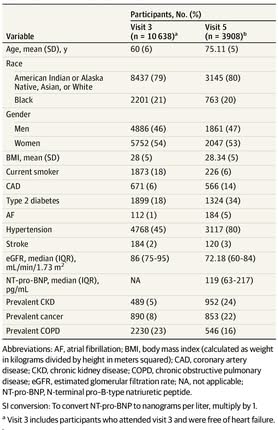
This study used large-scale plasma proteomics to investigate shared molecular pathways linking frailty and heart failure (HF) in late life. Analyzing data from over 10,000 participants in the Atherosclerosis Risk in Communities (ARIC) study, researchers identified 18 proteins that were independently associated with both incident HF and incident frailty, even after adjusting for multiple demographic and cardiovascular risk factors. These proteins were primarily related to pathways involving fibrosis, inflammation, and cell death. Most of the identified proteins were associated with indicators of increased left ventricular stiffness and filling pressure, and had stronger associations with heart failure with preserved ejection fraction (HFpEF) compared to heart failure with reduced ejection fraction (HFrEF).
Mendelian randomization analysis suggested potential causal effects of several proteins, including EFEMP1, FSTL3, TREM1, WFDC1, and GDF15, on both frailty and HF or cardiac dysfunction. The proteins' associations with incident frailty were mainly through connections to reduced gait speed, low physical activity, and decreased grip strength. These findings provide new insights into the shared pathobiology of heart failure and frailty in late life, highlighting potential molecular pathways that could be targeted to mitigate the burden of both conditions. The study's results were replicated in an independent cohort, the Cardiovascular Health Study, lending further support to the findings.