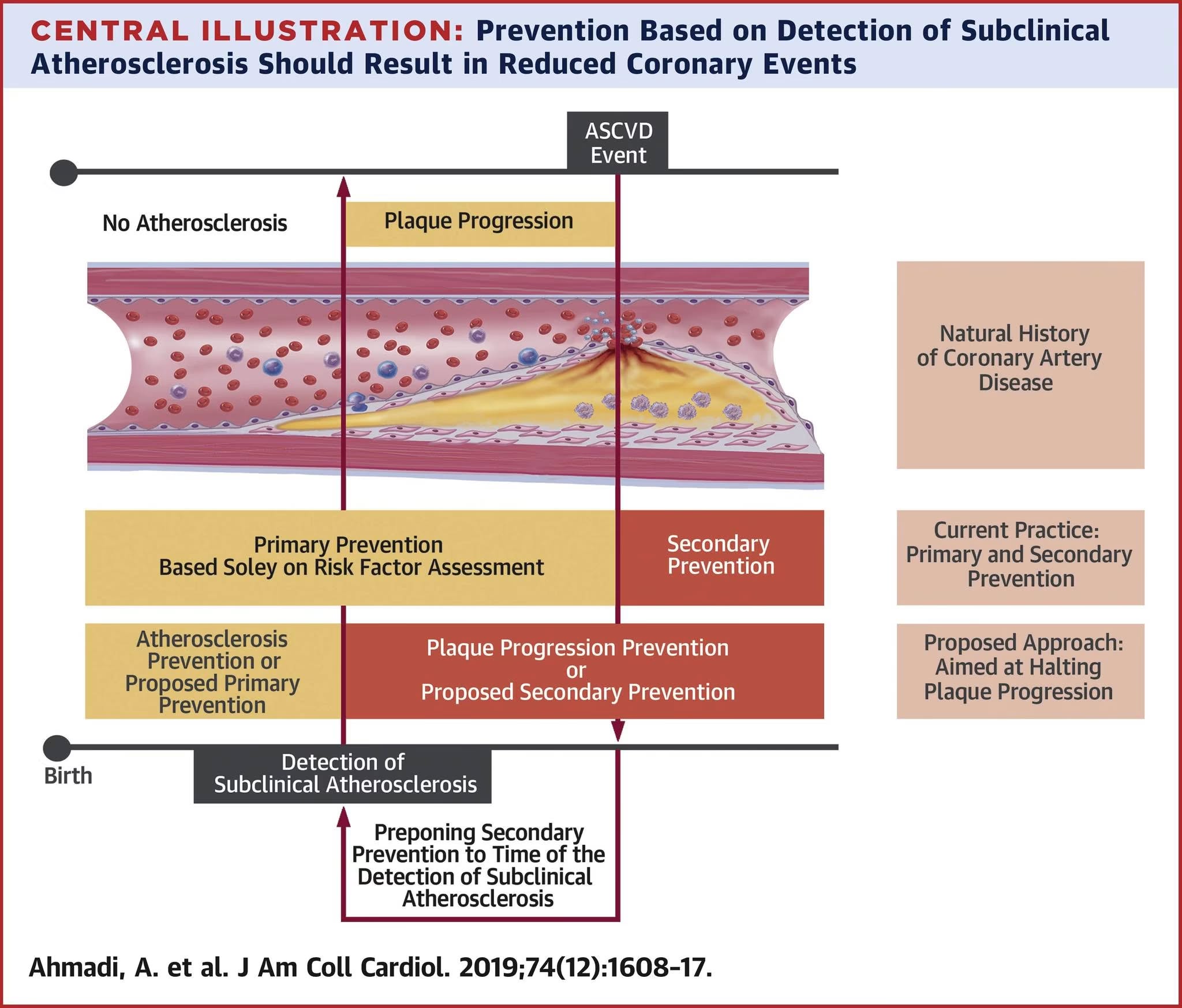
Coronary artery disease (CAD) typically progresses through multiple stages over many decades before causing noticeable symptoms. This gradual development can be divided into four main phases:
1. Early Stage: Soft Plaque Formation
- This stage can begin as early as childhood or young adulthood.
- Fatty deposits (soft plaques) start accumulating in the coronary arteries.
- This process, called atherosclerosis, can continue for many years or even decades without causing symptoms.
- During this time, the arteries may gradually narrow, but blood flow often remains adequate due to the body's ability to compensate.
2. Intermediate Stage: Hard Plaque Development
- Over time, soft plaques can harden and calcify.
- Coronary artery calcification becomes more apparent, which can be detected through imaging studies.
- As plaques grow and harden, they further narrow the arteries, potentially restricting blood flow to the heart muscle.
- Many individuals can still remain asymptomatic at this stage.
3. Advanced Stage: Ischemia
- As the arteries become significantly narrowed, the heart may not receive sufficient blood flow, especially during periods of increased demand (e.g., physical exertion or emotional stress).
- This reduced blood flow, called ischemia, can cause symptoms such as angina (chest pain or discomfort), shortness of breath, or fatigue.
- Some individuals may experience "silent ischemia," where there's reduced blood flow without noticeable symptoms.
- At this stage, CAD becomes more detectable through stress tests and other diagnostic procedures.
4. Overt CAD
- This stage represents the most advanced form of the disease.
- Severe narrowing or complete blockage of coronary arteries can occur.
- Symptoms become more frequent, severe, and may occur even at rest.
- There's an increased risk of major cardiac events such as heart attacks, severe arrhythmias, or heart failure.
- Urgent medical intervention, such as angioplasty, stenting, or bypass surgery, may be necessary.
It's important to note that the transition between these stages is gradual, and the disease can progress differently for each individual. Some people may develop significant CAD without ever experiencing symptoms, while others may have symptoms with relatively mild arterial narrowing.
This "silent" nature of CAD in its early and sometimes even advanced stages underscores the importance of regular health check-ups and a heart-healthy lifestyle, even in the absence of symptoms.