One of the side effects of calorie restriction (CR) diets is loss of muscle, in addition to loss of fat.
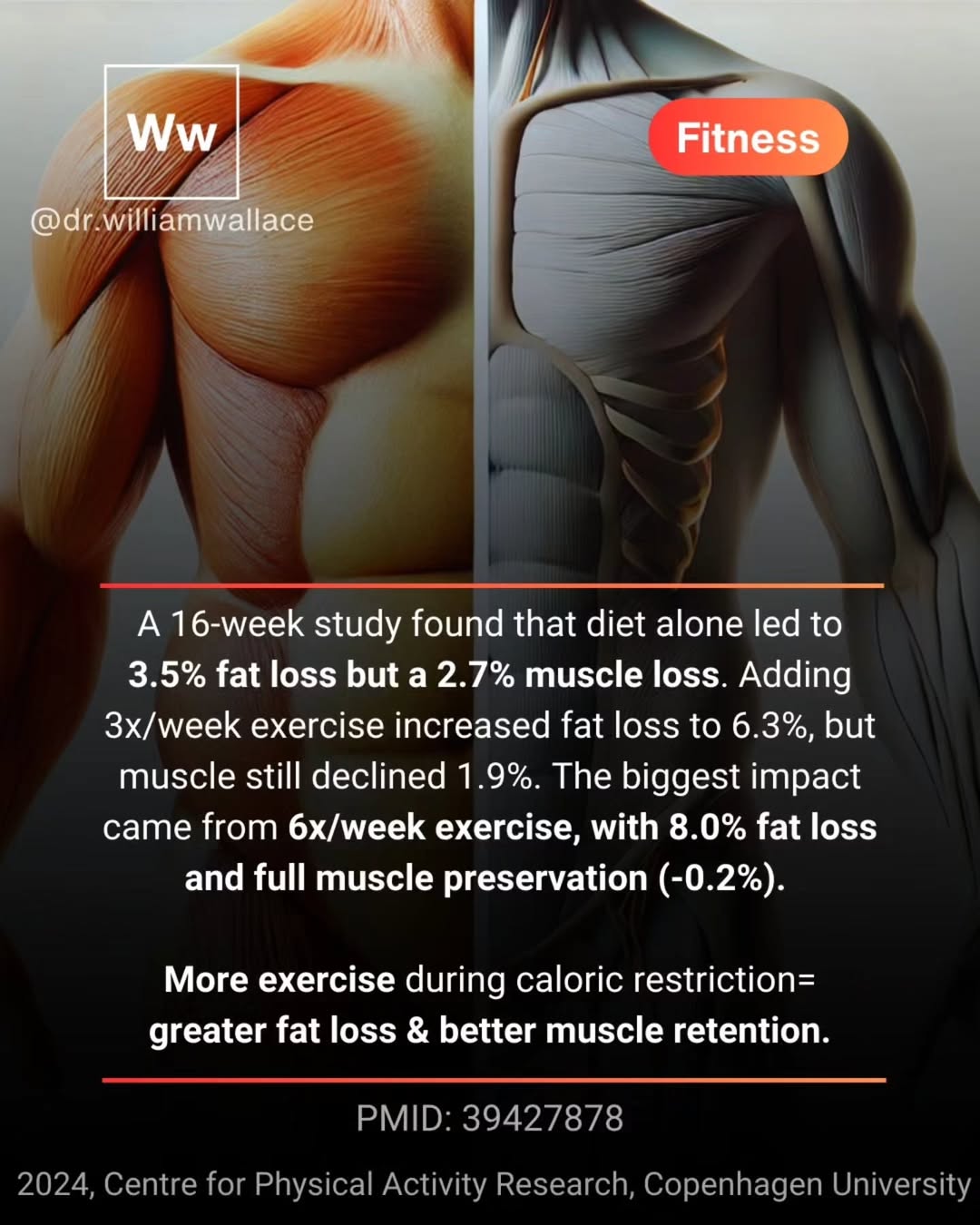
Most of this muscle loss can be prevented by simply doing resistance exercise in combination with the CR.
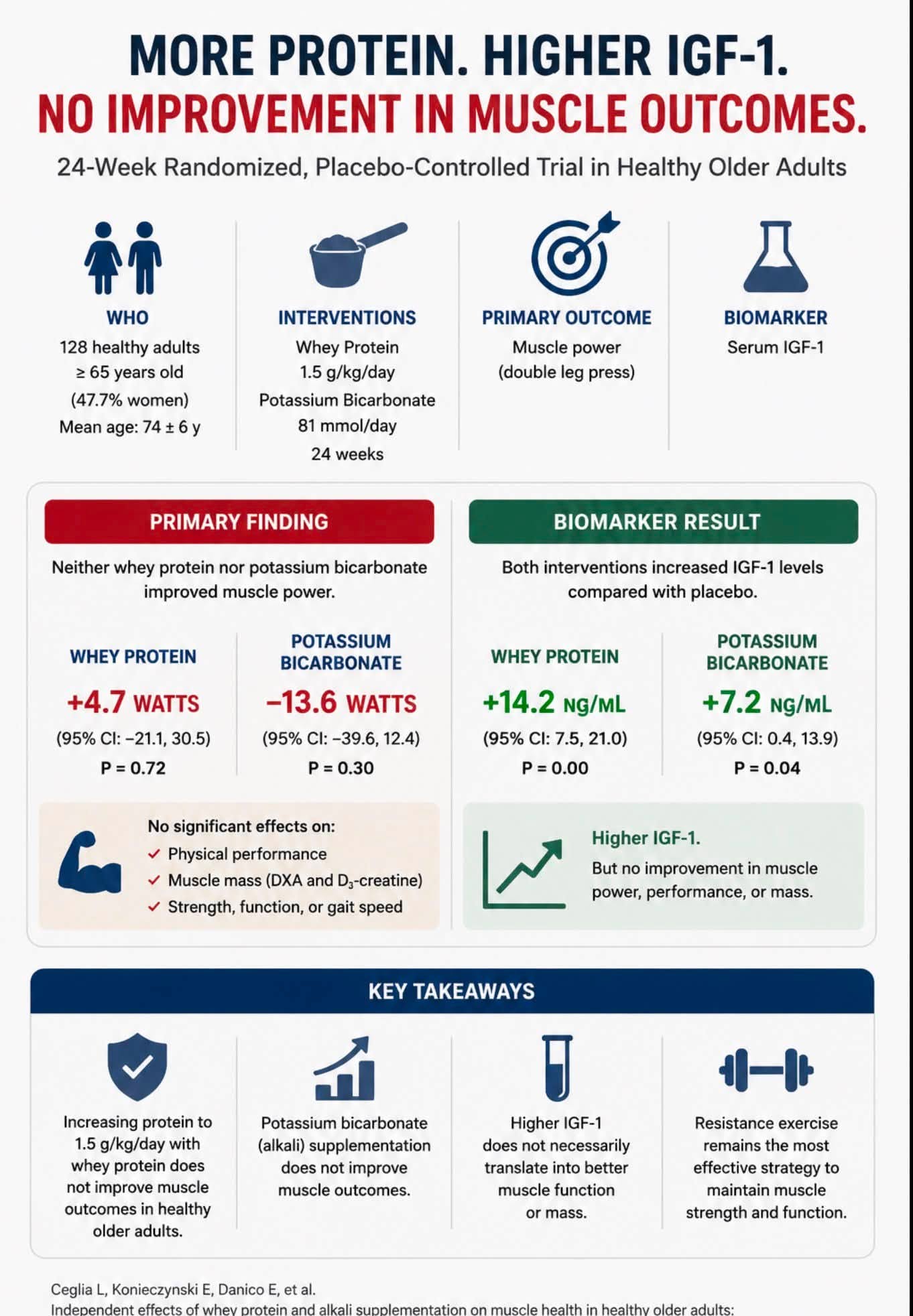
Notice that no increase in protein intake is required to see these results. This is consistent with over 70 RCT’s in humans that have shown that the vast majority of the strength gains from resistance exercise come from the exercise itself, with high protein intake adding only an incremental 5% increase in strength over a 22 week training period :
↪ Meta-analysis of 69 RCTs: protein strength gains plateau at 1.5 g/kg and need lifting
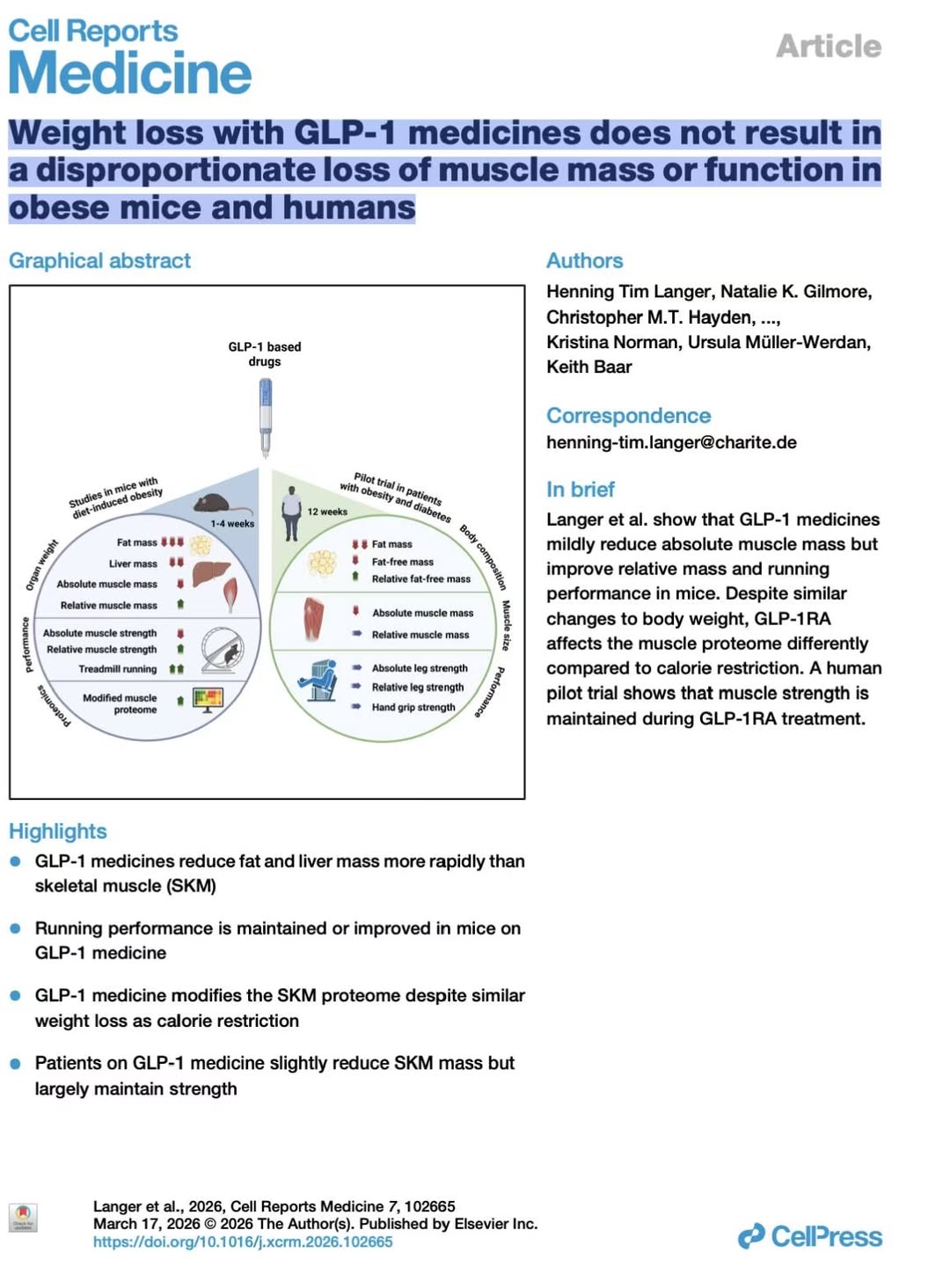
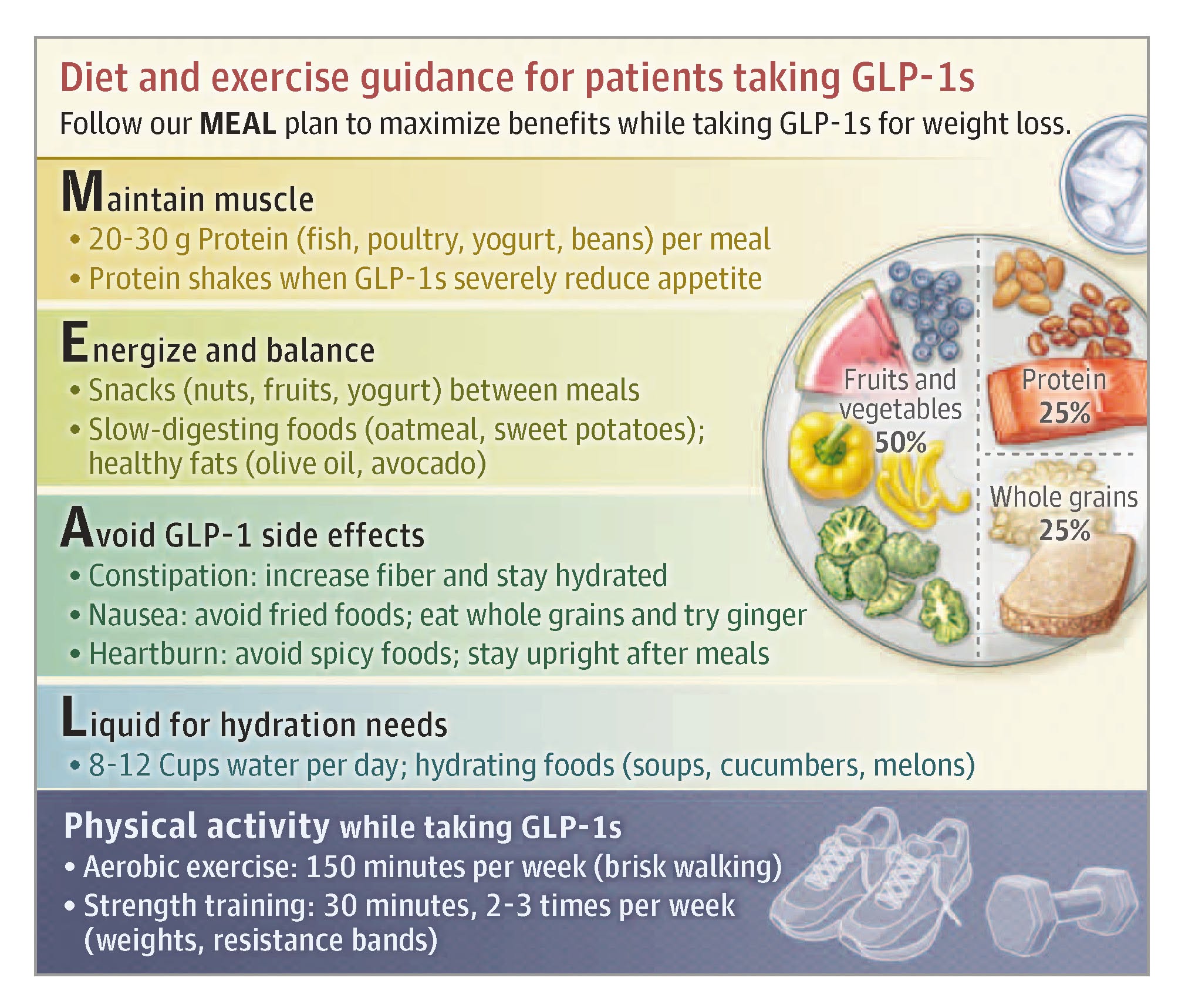
This has major implications for people taking GLP-1 agonists to lose weight. The evidence we have so far is that these drugs cause muscle loss because of the CR that they induce— not because of any particular side effect from the drug. Simply doing resistance exercise in combination with taking the GLP-1 agonist likely prevents most of this loss of muscle, even in the absence of any change in protein intake.
#glp1HD #calorierestrictionHD #resistancetrainingHD #proteinHD #muscleHD
High-dose exercise (6x/week) combined with caloric restriction leads to superior fat loss and fully preserves muscle mass, making it an effective strategy for body composition compared to dieting with less exercise.
A recent 16-week study (PMID: 39427878) looked at how different doses of aerobic + resistance exercise combined with caloric restriction impact fat loss and muscle preservation in individuals with type 2 diabetes.
Study:
- Diet-only group – caloric restriction without exercise
- Moderate Exercise (3x/week) – 2 aerobic sessions (~50 min each) + 1 combined aerobic (30 min) & resistance (30–45 min) session
- High Exercise (6x/week) – 4 aerobic sessions + 2 combined aerobic (30 min) & resistance (30–45 min) sessions
Aerobic training – Stationary cycling, progressively increasing intensity
Resistance training – Progressive overload, 3 sets per major muscle group
Findings:
🔹 Fat Loss:
- Diet-only: 3.5% body fat loss
- Moderate (3x/week): 6.3% body fat loss
- High (6x/week): 8.0% body fat loss
🔹 Visceral Fat Reduction: Greatest in high exercise group (1,786 cm³ loss)
🔹 Muscle Preservation:
- Diet-only: -2.7% fat-free mass loss
- Moderate (3x/week): -1.9% fat-free mass loss
- High (6x/week): Fully preserved muscle mass (-0.2%)
Limitations
🔸 Short-term study (16 weeks).
🔸 Small sample size (82 participants).
🔸 Dietary adherence was self-reported.
🔸 Focused on type 2 diabetes patients and not healthy individuals (i.e., less generalizability).