Strategies for lowering TMAO: Drugs, Diet, Supplements
Trimethylamine N-oxide, or TMAO, is a small metabolite produced through a multi-step process involving diet, gut bacteria, and the liver. It begins with the consumption of foods rich in choline and L-carnitine, such as red meat, egg yolks, and certain fish. Gut microbes metabolize these compounds into trimethylamine (TMA), which is then absorbed and converted by liver enzymes into TMAO. The significance of TMAO lies in its strong association with negative health outcomes; numerous studies have linked chronically elevated levels of TMAO to an increased risk for serious conditions like atherosclerosis (hardening of the arteries), heart attack, stroke, and neurodegenerative diseases, making it a key biomarker for cardiovascular health.
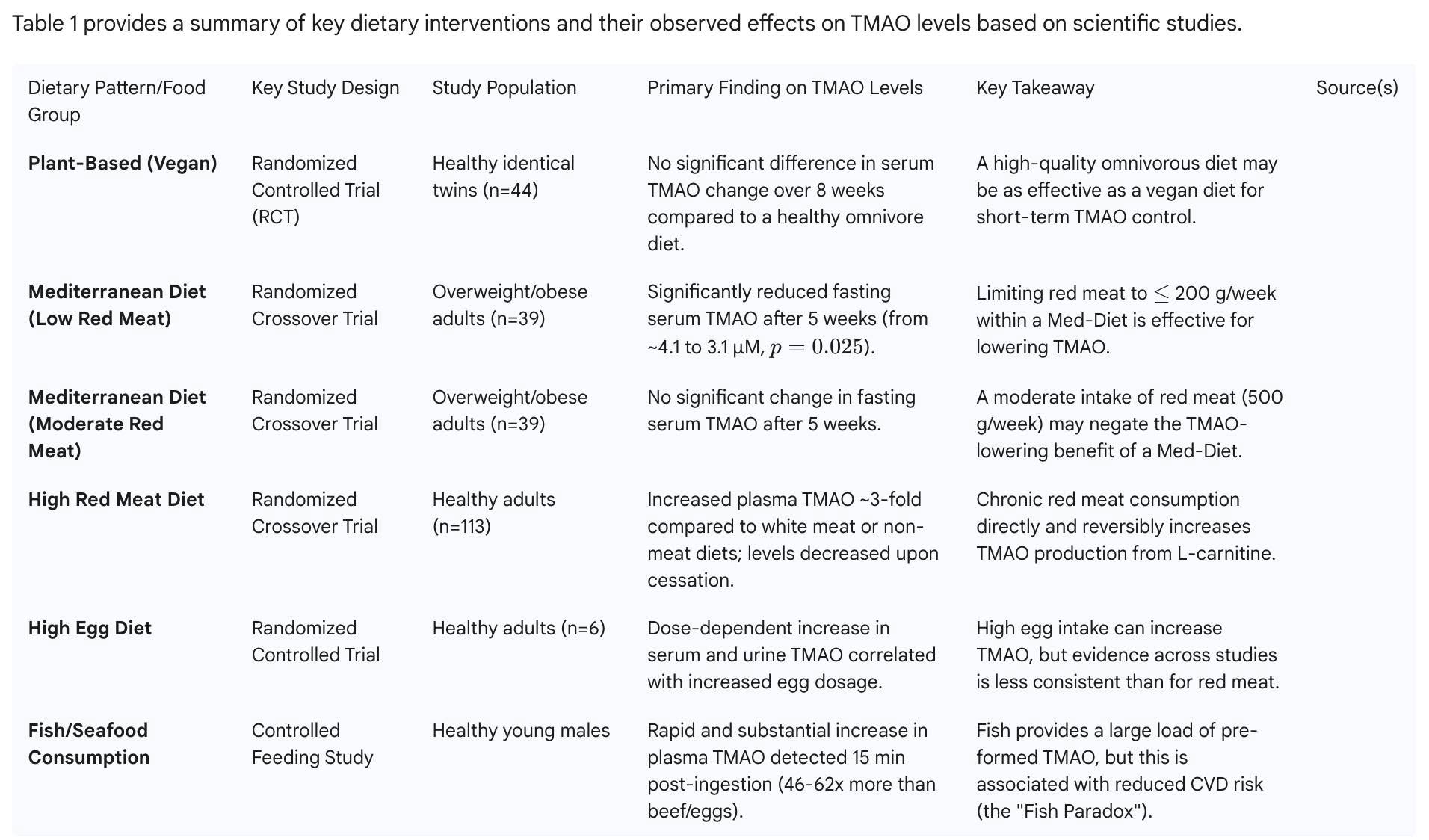
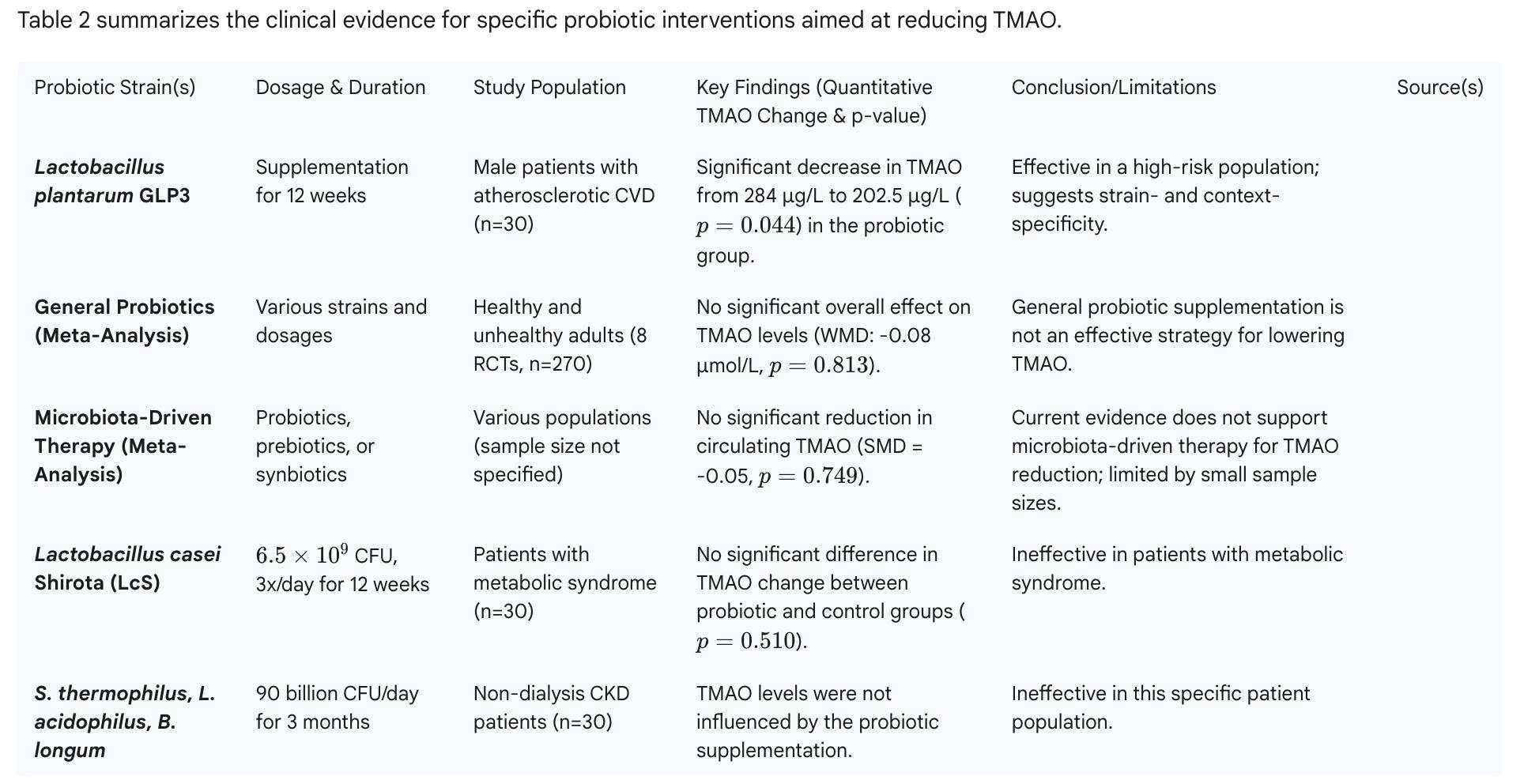
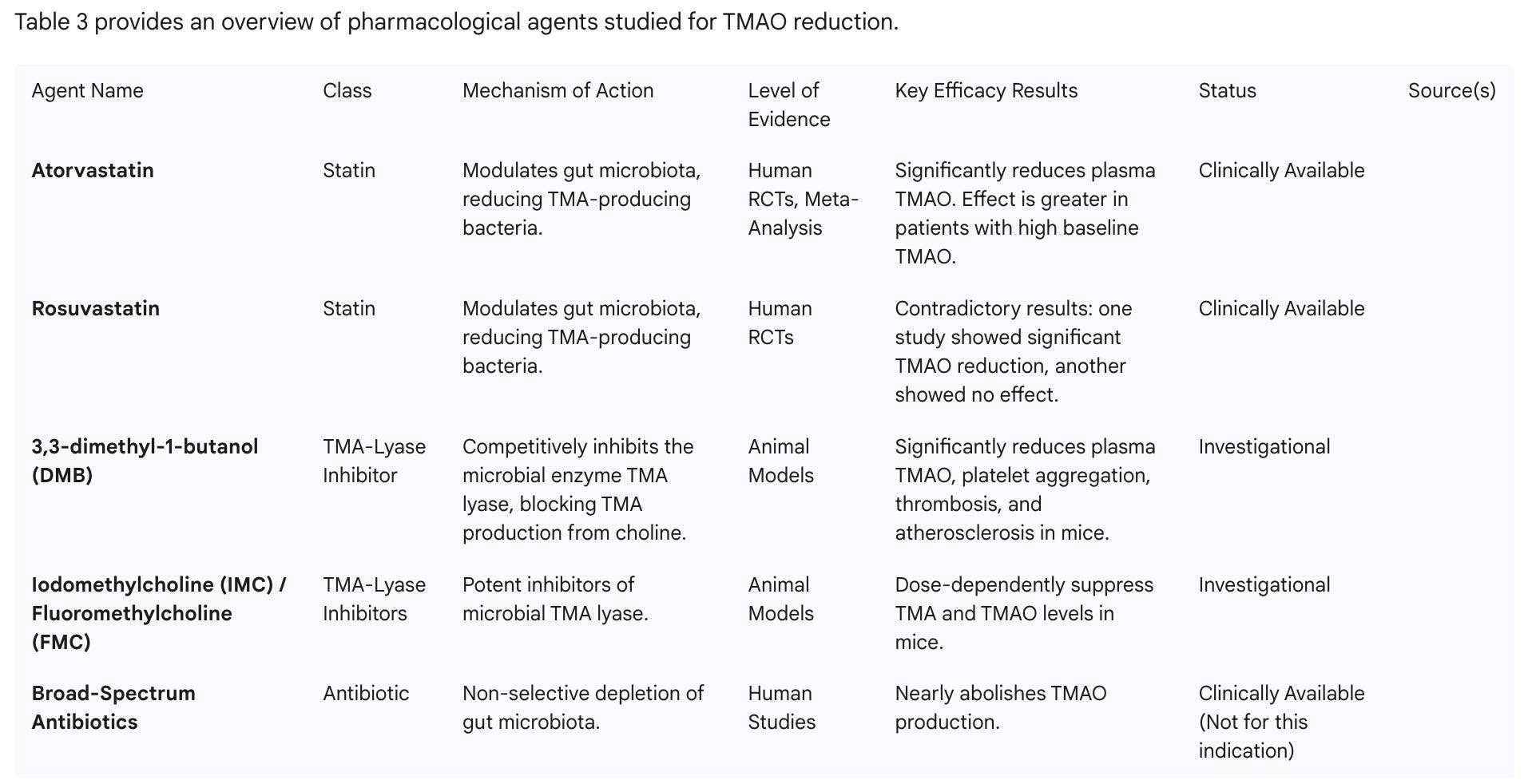
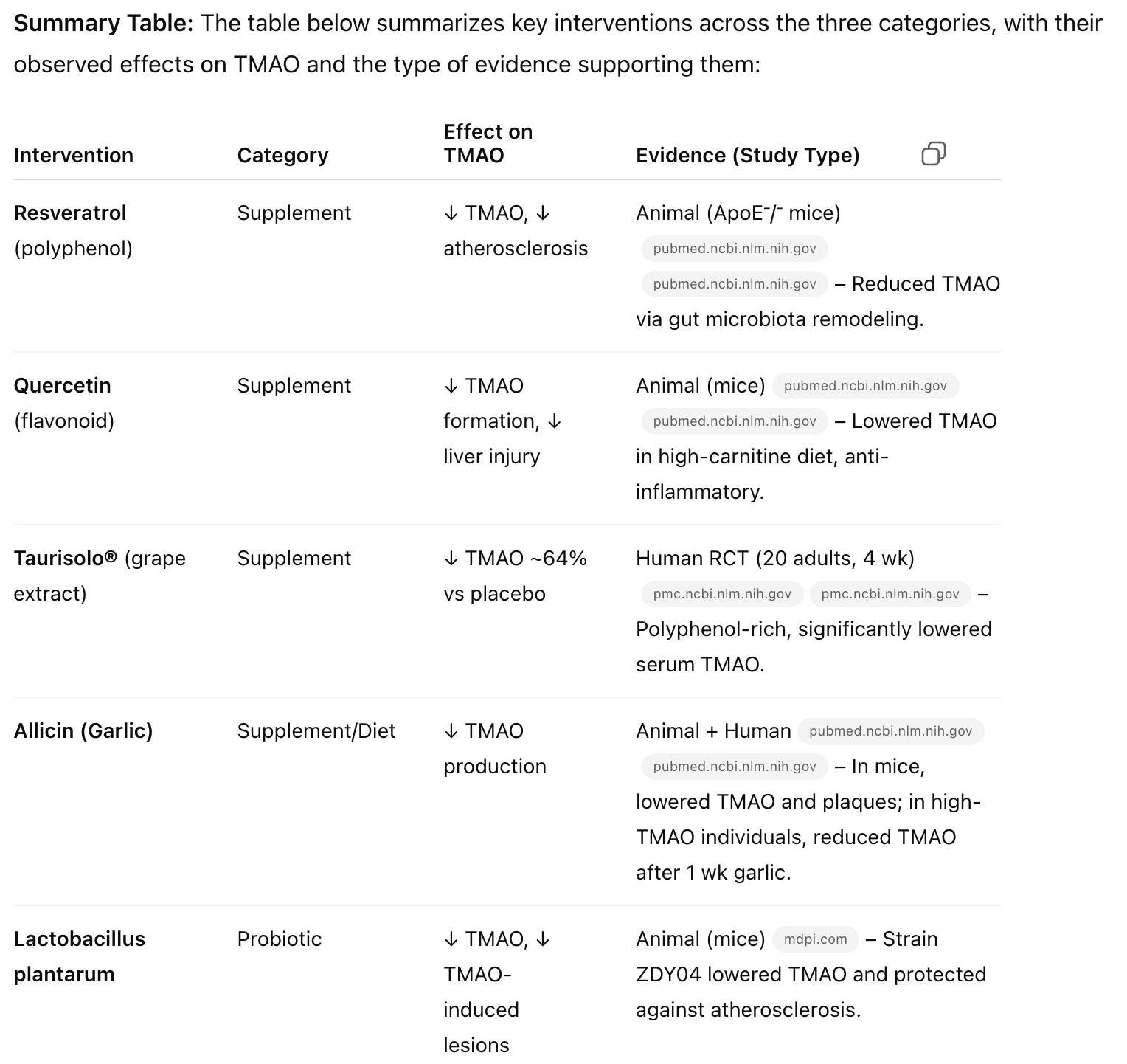
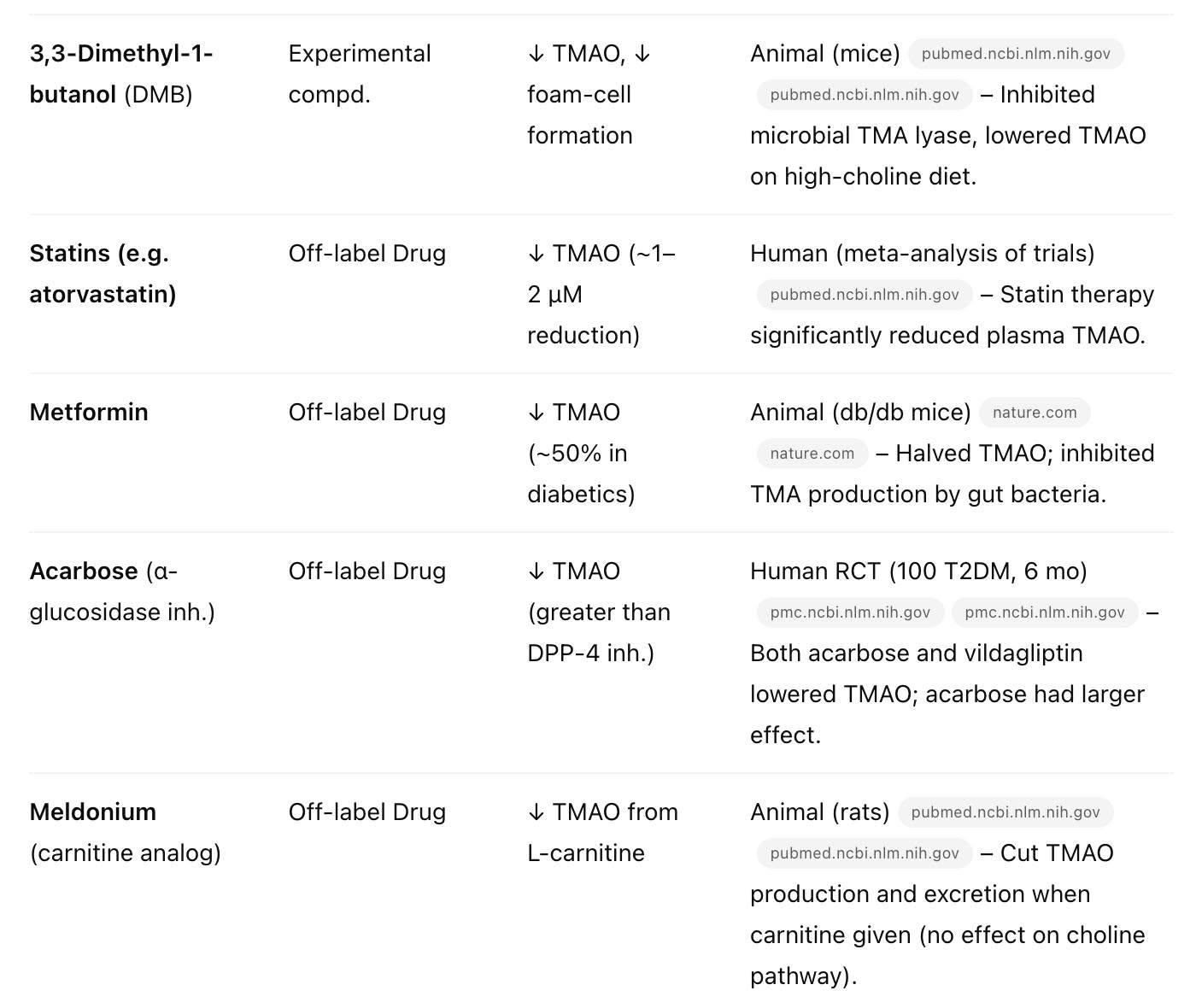
Strategies to lower TMAO levels are multifaceted and primarily target its production pathway. The most impactful approach is through dietary modification, which involves reducing the intake of red meat and egg yolks while adopting a plant-rich, high-fiber diet like the Mediterranean diet. This not only decreases the availability of TMAO precursors but also fosters a gut microbiome less capable of producing TMA. Other interventions summarized in the document include the use of supplements like polyphenols (e.g., resveratrol from grapes) and allicin from garlic, which can inhibit TMA-producing bacteria. Furthermore, certain off-label drugs, such as statins and the diabetes medication metformin, have been shown to incidentally lower TMAO. The document provides a detailed, evidence-based review of these strategies, complete with mechanisms of action, key study findings, and a summary table for quick reference.
My thoughts: TMAO is one way where red meat and gut disbiosis contribute negatively to health. It's not the thing I care most about. But it's good to be aware of it and think about safe ways of reducing it. What triggered this post is a recent article shared which showed that Berberine supplementation lowered TMAO and reduced plaque in a small human trial.
docs.google.comGoogle Docdocs.google.com