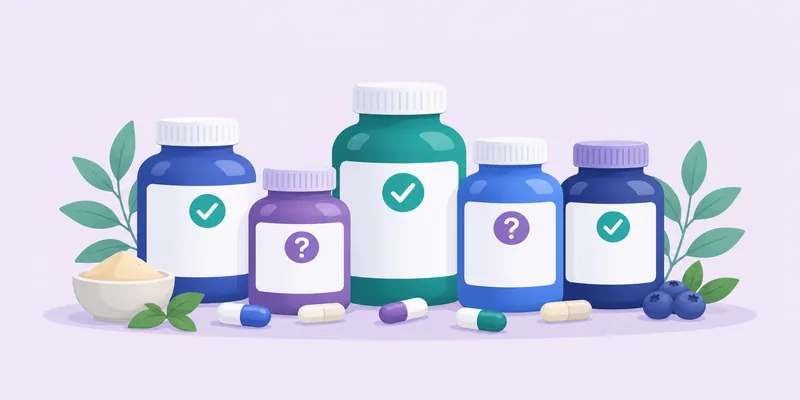
The short answer from the group's posts is that these supplements can lower cholesterol, but modestly, and that no one has shown they prevent heart attacks or strokes. Berberine, a plant compound used in traditional medicine, has the best-documented lipid data in the group's posts and "produces small reductions" in LDL cholesterol, triglycerides and apolipoprotein B (ApoB).1 Red yeast rice also lowers LDL, but it is an unregulated supplement of variable potency.2
The group's admins, Louis Nervegna in particular, are consistent on one point: lowering a blood marker is not the same as preventing disease. Even for berberine, one of the most discussed options, Louis says the LDL effect is "modest in comparison" with PCSK9-inhibiting drugs.3 For red yeast rice he warns that, without large long-running randomized trials, taking it may be "a big gamble, particularly if you are at high risk."2
This article covers berberine (lipids, plaque, mechanism, bioavailability), red yeast rice, citrus bergamot, what the archive does and does not contain about plant sterols and policosanol, and practical points to take to a doctor.
What are "natural statins" and why people ask about them
Statins are prescription drugs that lower LDL cholesterol, the cholesterol carried on particles linked to artery plaque. People who cannot tolerate them, or who prefer a natural route, often ask whether a supplement can do the same job. The group's posts address three such candidates: berberine, red yeast rice and citrus bergamot.325
Note that these are different kinds of things. Red yeast rice contains compounds in the same family as the first statin drug.2 Berberine, by contrast, is a separate compound thought to act partly on PCSK9, a protein that reduces the liver's ability to clear LDL.3
| Berberine | Red yeast rice | Citrus bergamot | |
|---|---|---|---|
| What it is | A plant compound used in traditional medicine for over 3,000 years3 | Contains monacolins, the statin family that includes lovastatin2 | A supplement Joel Kahn has almost all his patients take5 |
| Proposed action | Partly PCSK9 inhibition; mainly acts in the gut34 | Monacolins work together, much like lovastatin2 | Not described in the posts |
| Lipid evidence in the posts | Meta-analysis of 18 trials: small drops in LDL, triglycerides and ApoB1 | Lowers cholesterol; no figures given2 | None; a cardiologist's endorsement5 |
| Outcome trials | None6 | None2 | None |
| Main caution | Stomach side effects and drug interactions1 | Unregulated; unknown monacolin content2 | Material comes from a supplement brand's videos57 |
Berberine
What the lipid trials show
The most useful summary in the archive is a systematic review and meta-analysis of 18 randomized, placebo-controlled trials in 1,788 adults with dyslipidemia (abnormal blood fats). It found berberine was associated with reductions in LDL cholesterol, triglycerides, total cholesterol and ApoB, along with changes in HDL cholesterol.1 The trials generally used roughly 900-1,500 mg per day, although doses and durations varied.1
The quoted conclusion is measured: berberine "produces small reductions in LDL cholesterol, triglycerides, and apolipoprotein B, with potential sex-specific effects on HDL cholesterol," and large trials that assess clinical outcomes are required.1 The same post stresses that the meta-analysis does not establish that 900-1,500 mg is appropriate for everyone, and that berberine can cause gastrointestinal side effects and interact with medications, so a healthcare professional should be involved, particularly for people taking prescription medicines.1 The paper is listed as "Overall and Sex-Specific Effect of Berberine for the Treatment of Dyslipidemia in Adults" (Drugs, 2023), though the post's text and its summary name the journal differently.1
A more recent shared summary reports that in two randomized trials 500 mg of berberine twice daily reduced ApoB, a marker of the number of cholesterol-carrying particles, with a reduction that appeared nearly three times greater in women, although that comparison came from separate trials.6 It adds that berberine has evidence for improving cardiovascular risk factors, but clinical trials are still needed to show whether it prevents actual events.6
The "Berberine Signature" study
The same post describes a newer study in which 84 men received berberine and 92 cardiovascular-related proteins were measured, identifying a pattern called the "Berberine Signature." In thousands of UK Biobank participants, a stronger version of that signature was associated with approximately 13% lower odds of ischemic heart disease.6 The summary itself cautions that those participants were not necessarily taking berberine, so the finding does not prove that berberine supplementation prevents cardiovascular disease.6
Berberine and PCSK9
Louis describes berberine as "a natural way to inhibit PCSK9" that modestly lowers cholesterol in many people, has been used in traditional medicines for over 3,000 years, and is cheap and easy to take orally, unlike the newer PCSK9-inhibiting drugs.3 His framing is careful. He would never discourage a high-risk person from taking PCSK9 drugs, because benefit then far outweighs risk. For primary prevention (preventing a first event) in someone at reasonably low 10-year risk, he says berberine "might be worth considering," while repeating that it is much less effective than those drugs.3
In a separate post on PCSK9 and cardiometabolic aging, Louis notes that many botanical compounds, berberine among them, inhibit PCSK9 as well as drugs do. He cites a GeroScience review that calls PCSK9 inhibition a promising avenue for age-related cardiac and liver changes, and says this is an emerging area of research.8
A small plaque and TMAO study
Louis highlights a small human study in which 21 patients with atherosclerosis took berberine 0.5 g twice daily for 4 months and their plaque score fell by an average of 3.2%, while a comparison group of 12 patients on rosuvastatin plus aspirin, clopidogrel or ticagrelor saw their plaque score rise 1.9%.9 Over the same period, TMA and TMAO fell by 38% and 29% in feces and by 37% and 35% in plasma.9 TMAO (trimethylamine N-oxide) is a gut-bacteria-derived metabolite linked to atherosclerosis, and the proposed mechanism is that berberine acts on the gut bacteria involved in producing it.9
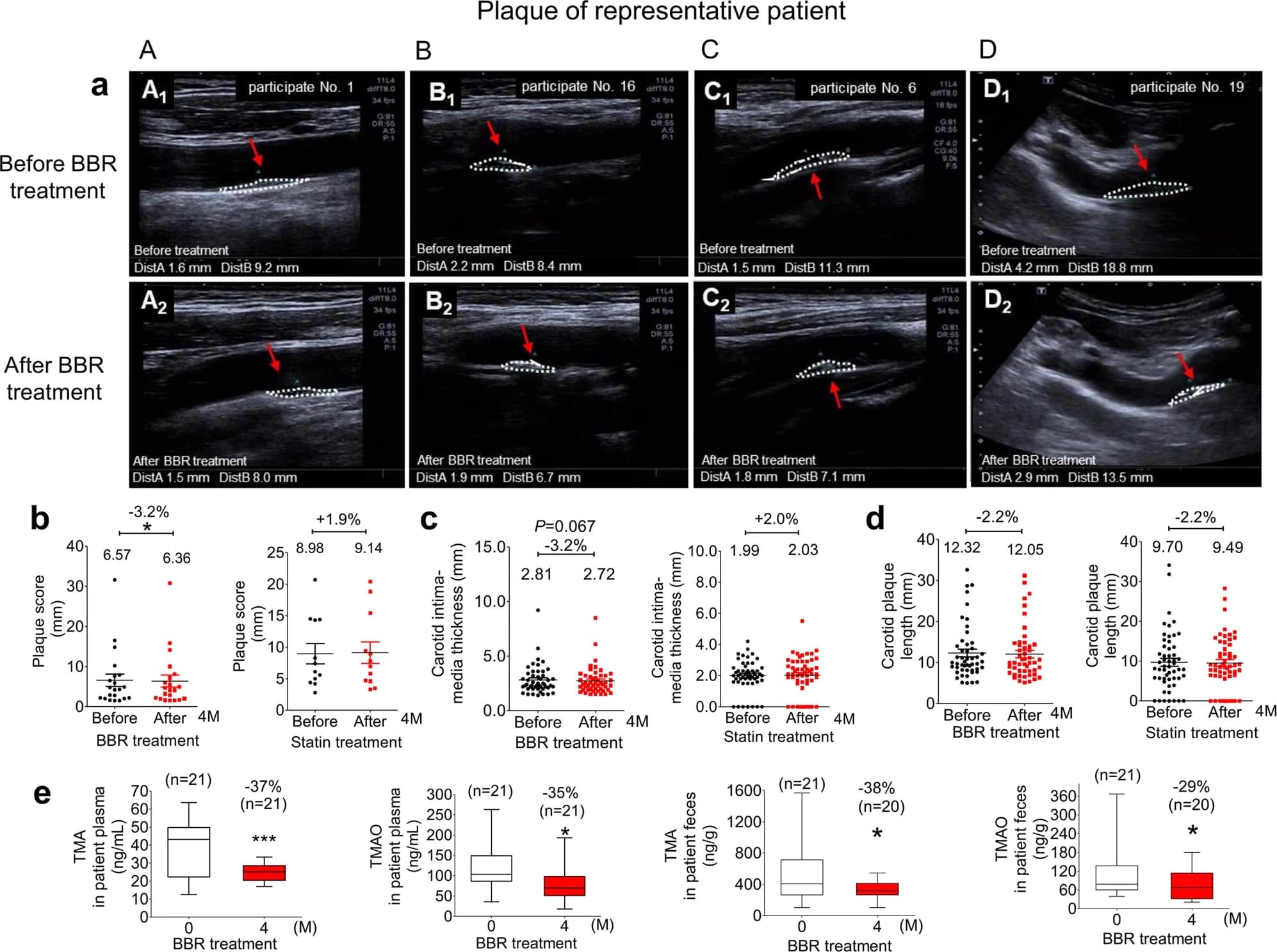
This is a hypothesis-generating result. The study was small, and the comparison group was only 12 patients on different drugs. Gokhan Can says TMAO is not the thing he cares most about, but that it is worth being aware of and, if possible, lowering safely; he mentions this berberine trial as the trigger for his own review of ways to lower TMAO.10 That review points mainly to less red meat and egg yolk, a plant-rich high-fiber Mediterranean-style diet, and supplements such as polyphenols and allicin from garlic.10
How does it work if so little is absorbed?
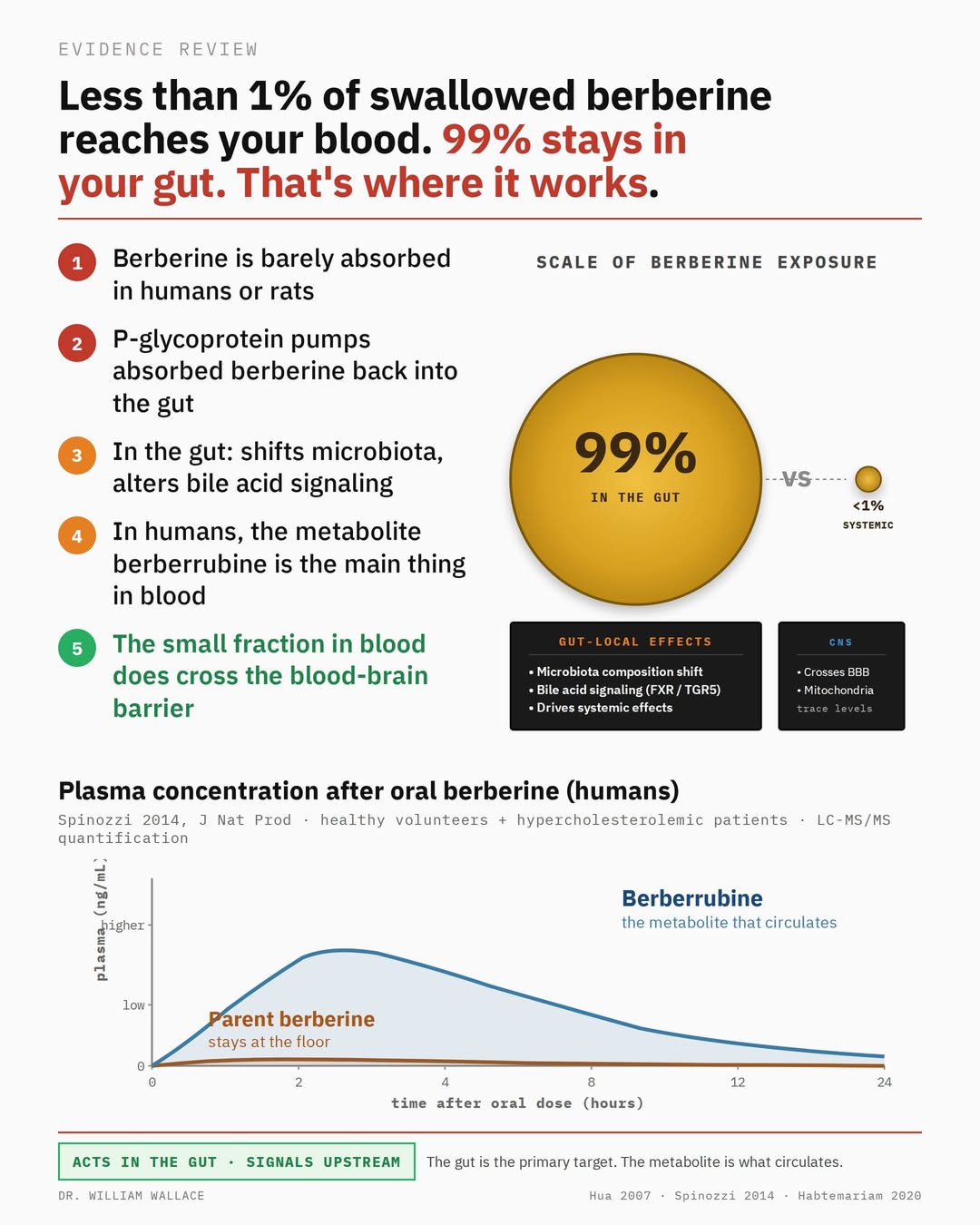
Louis shared a post stating that less than 1% of an oral berberine dose reaches the bloodstream as the parent compound. The post cites human measurements (Spinozzi et al., 2014, J Nat Prod) in healthy volunteers and hypercholesterolemic patients showing that the dominant species in plasma was a metabolite called berberrubine rather than berberine itself.4 Louis concludes that berberine's mechanism is primarily in the gut, and that it works against diabetes by modulating gut bacteria, which makes it very different from metformin.4
This is Louis's interpretation, but it fits with the TMAO study, where the gut was the proposed site of action.9 It also explains the post's puzzle: how a compound so poorly absorbed produces measurable effects on glucose and lipid metabolism.4
Weight and other uses
Louis also shared a Cleveland Clinic article saying early research indicates berberine may help reduce body fat, and that a specialist cautions it may not be the miracle drug people hope for.11 A list of Rhonda Patrick's personal supplements reposted by Gokhan includes 1,000 mg of berberine in the morning for "metabolic support"; the post is a personal regimen with no supporting studies attached, so it is context, not evidence.12
Red yeast rice
Louis wrote a detailed post to correct misunderstandings about red yeast rice versus statins.2 The key points:
- Years ago the FDA forced manufacturers of red yeast rice products sold in the USA to remove lovastatin, also called monacolin K, a naturally occurring statin molecule. US products are now supposed to contain no appreciable lovastatin.2
- Lovastatin was the very first commercially available statin, approved in 1986 as Mevacor. It can still be prescribed, but is used little because it is fairly weak compared with newer statins.2
- Red yeast rice still lowers cholesterol because it contains other compounds in the monacolin family, which Louis says work together as a group in a similar way to lovastatin alone.2
Why anyone would take it
Louis acknowledges that many would argue there is no point if you can simply take a statin, but says this is not entirely true. People value that it is natural (although prescription lovastatin is natural too), and some people who cannot tolerate statins seem to tolerate red yeast rice. He suggests the family of monacolins may cause fewer side effects in some people than a high dose of a single statin molecule, so it might be worth a try for statin-intolerant people or those wanting a lower statin dose, but only after discussing it with a doctor and not on your own.2
The downsides
Louis lists two major ones.2
- Quality control. It is unregulated and sold as a supplement, so a random product bought online may contain an unknown amount of the active monacolins, if any.2
- No outcome trials. There is a lack of large long-running randomized trials proving benefit like those for commercial statins. Even though it lowers LDL, there is no hard randomized-trial proof that it lowers heart attacks and strokes in high-risk people.2
The post links to the NCCIH (National Center for Complementary and Integrative Health) fact sheet on red yeast rice as its source for the FDA action.2 The archive has no numeric LDL-lowering figures for red yeast rice, so this article gives none.
Citrus bergamot
The bergamot content in the archive is thin and comes from a cardiologist's endorsement rather than trial data. Louis noted that cardiologist Joel Kahn has almost all of his patients take citrus bergamot, combined with standard medications as needed.5 In another post Louis says it seems to be safe to combine citrus bergamot with a statin.7
Two cautions apply. First, both posts link to videos hosted by a bergamot supplement brand, so they are promotional and give no trial data.57 Second, "seems to be safe" is Louis's impression, not a result from a study cited in the posts. Anyone considering bergamot alongside a statin would sensibly raise it with their doctor.
Plant sterols, policosanol and what is missing
The question for this article also names plant sterols (phytosterols) and policosanol. The group's posts in this archive contain no trial data on either, so nothing can be said about their size of effect or safety from these sources. The honest conclusion is that this archive does not evaluate them.
Nuances and common misconceptions
- "Natural means safe or equivalent." Lovastatin is itself natural, and red yeast rice works through the same drug family.2 Berberine can cause gastrointestinal side effects and interact with medications.1
- "Red yeast rice is just a weaker statin." It may be tolerated by some who cannot take statins, but it has no outcome trials, and products vary in what they contain.2
- "Berberine works like metformin." Louis argues otherwise: berberine's tiny absorption implies a gut-based mechanism that is very different from metformin's.4
- "Berberine matches PCSK9 drugs." Louis says its LDL lowering is much smaller.3
- "Lower LDL means fewer events, so any LDL-lowering supplement works." The meta-analysis and the shared ApoB summary both stress that outcome trials are still needed.16
- "Supplements are all alike." A review of 884 randomized trials of 27 micronutrients quoted in the group found moderate-to-high quality evidence for some supplements, such as omega-3 reducing cardiovascular mortality (relative risk 0.93), but no effect for vitamins C, D, E and selenium and increased mortality with beta-carotene.13 The quoted summary does not mention berberine, red yeast rice or bergamot.
- "Small positive trials settle it." The group applies the same caution to other plant extracts. For instance, aged garlic extract slowed coronary calcium progression in three small trials, two of which also used co-supplements, and Louis says Centella asiatica findings need larger, higher-quality studies.1415
What this means for you
- Treat berberine, red yeast rice and bergamot as optional, modest add-ons, not replacements for proven treatment.32
- If you are at high risk, Louis says he would never discourage PCSK9 drugs; berberine is discussed mainly for low-risk primary prevention.3
- The group's admins recommend discussing berberine with a healthcare professional, especially if you take prescription medicines, because of possible gastrointestinal effects and interactions.1
- If you cannot tolerate statins, Louis says red yeast rice might be worth a try or a way to lower your statin dose, but only with your doctor's involvement.2
- Product quality matters for red yeast rice: with an unregulated supplement you may not know how much active ingredient you are getting.2
- Check results with a blood test (LDL, ApoB) rather than assuming the supplement works, since the lipid effect of berberine is described as small.16
- Do not read endorsements as evidence: the bergamot material is a cardiologist's practice habit shared through a supplement brand's videos.57
Frequently asked questions
How much does berberine lower LDL?
The meta-analysis calls it a "small reduction" across 18 trials at roughly 900-1,500 mg/day, and the posts quoted here give no single LDL number.1 Louis calls the effect modest compared with PCSK9 drugs.3
Does berberine prevent heart attacks?
Not shown. Clinical trials are still needed to establish whether it prevents actual cardiovascular events.61
Is red yeast rice the same as a statin?
It contains naturally occurring monacolins, the family that includes lovastatin, the first statin drug. US products are supposed to contain no appreciable lovastatin, yet still lower cholesterol through the other monacolins.2
Can I take bergamot with my statin?
Louis says it seems safe, based on a video by Joel Kahn that is hosted by a bergamot brand. No data accompany the claim, so check with your doctor.7
Why does berberine work if so little is absorbed?
Under 1% of the parent compound reaches the bloodstream, and Louis concludes that it acts mainly in the gut, for example on gut bacteria.4 One small study found lower TMAO and a smaller plaque score with berberine, consistent with a gut-based mechanism.9