PLAQUE REDUCTION
Summary
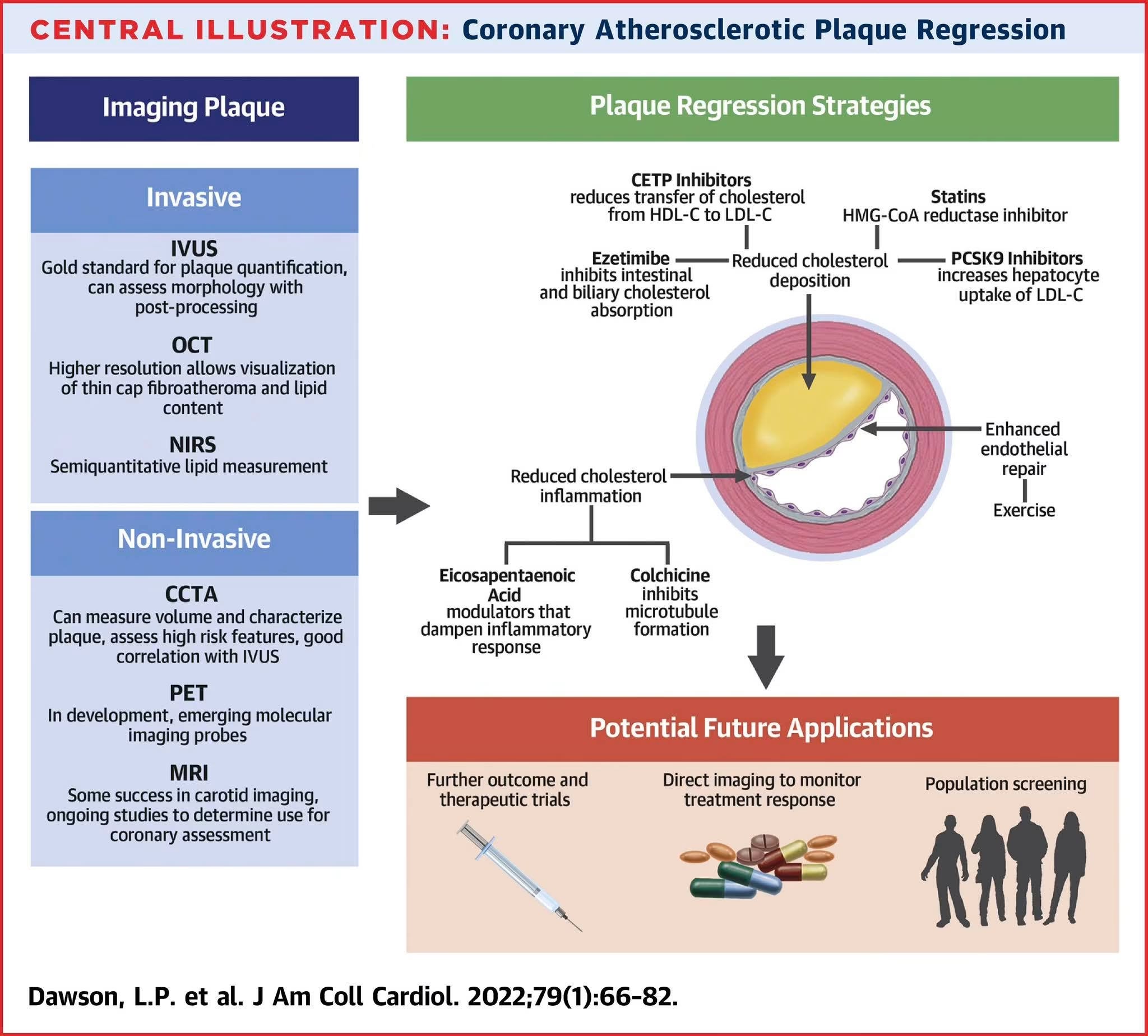
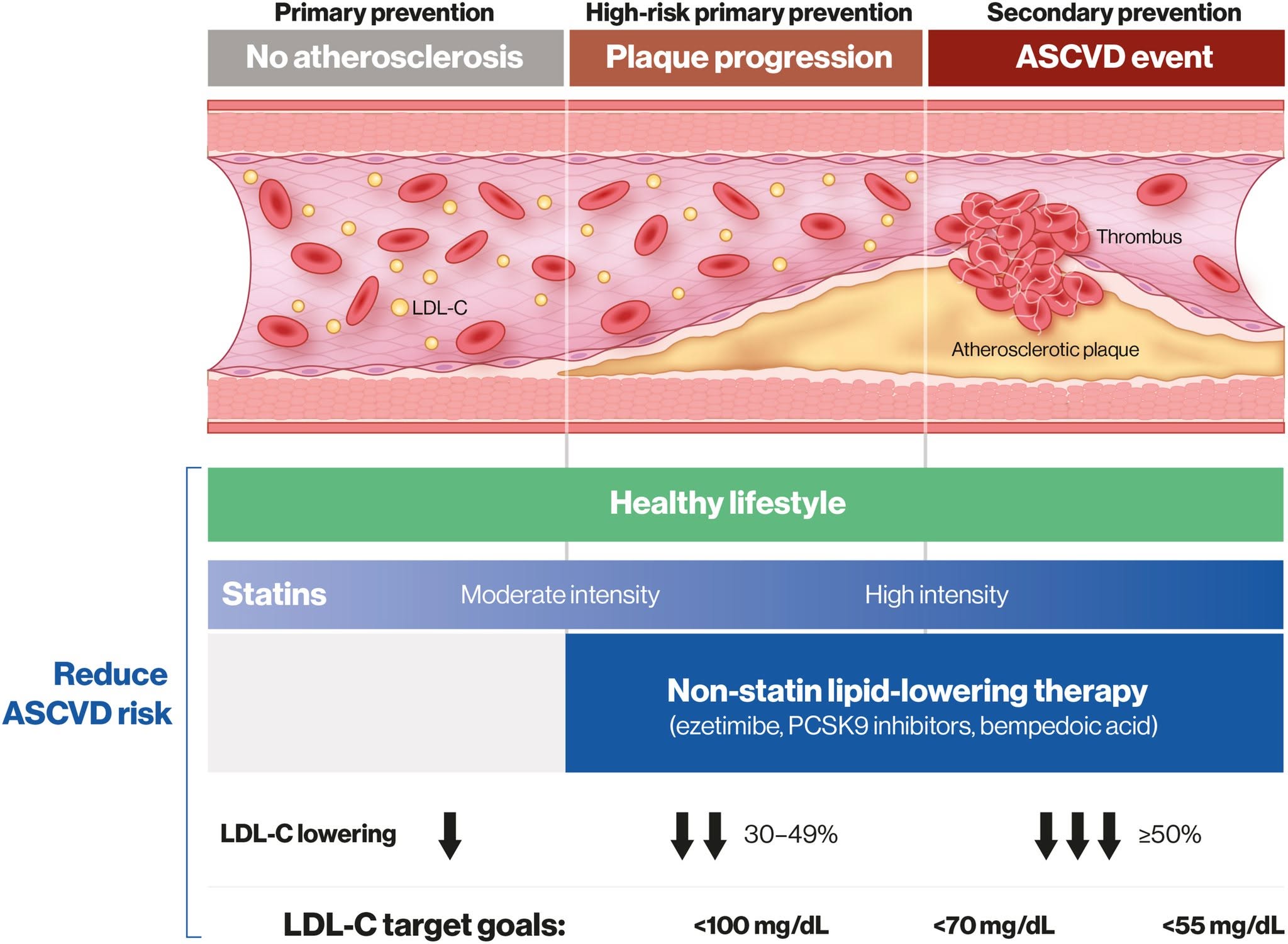
- The interventions with the strongest evidence for regressing or stabilizing atherosclerotic plaque are statins, PCSK9 inhibitors, and ezetimibe, with a high-dose omega-3 fatty acid (EPA) and pioglitazone having fairly good data as well.
- Colchicine, aged garlic extract, Centella asiatica, pine bark extract, nattokinase, and a plant-based diet are promising but need further study in rigorous RCTs with sensitive plaque imaging.
- The evidence for exercise, L-arginine, vitamin K2, and some traditional Chinese medicines remains unclear or quite limited at this time.
Statins - HELPFUL
Statins have been shown in multiple studies to lead to atherosclerotic plaque regression, with reductions in total atheroma volume ranging from 0-20%. High-intensity statins like atorvastatin and rosuvastatin appear more effective than lower doses. Statins also stabilize plaque by increasing fibrous tissue and reducing lipid content. The evidence from numerous randomized controlled trials (RCTs) like ASTEROID, SATURN, REVERSAL, and JAPAN-ACS is robust.
PCSK9 inhibitors - HELPFUL
The GLAGOV trial demonstrated a 2.9% reduction in total atheroma volume with evolocumab over 76 weeks, while the ODYSSEY J-IVUS trial showed a non-significant reduction with alirocumab over 36 weeks. Other trials like IBIS-4 and PRECISE-IVUS also found plaque regression when adding PCSK9 inhibitors to statins. The evidence from several well-designed RCTs supports the efficacy of PCSK9 inhibitors for plaque reduction.
Ezetimibe - HELPFUL
At least six IVUS trials have shown numerically greater plaque regression when adding ezetimibe to optimal medical therapy, with reductions in total atheroma volume ranging from -2.9% to -13.9%. However, not all trials reached statistical significance. The evidence from multiple RCTs suggests ezetimibe likely contributes to plaque regression when combined with statins.
High-dose omega-3/EPA - LIKELY HELPFUL
The EVAPORATE trial revealed markedly greater plaque regression with icosapent ethyl (IPE) at 4g/day over 18 months. Other trials like CHERRY found greater regression with EPA, along with increased fibrous volume, decreased lipid volume, and greater fibrous cap thickness. Higher EPA/AA ratios are associated with more stable plaque features. While the evidence is promising, more large-scale trials are needed to confirm EPA's benefits for plaque.
Colchicine - LIKELY HELPFUL
One open-label CCTA study showed colchicine 0.5mg/day reduced low-attenuation plaque volume compared to optimal medical therapy alone over 12 months. However, total atheroma volume changes were similar. Given limited imaging data, further RCTs are required to validate colchicine's effects on plaque, despite promising clinical outcome data.
Pioglitazone - LIKELY HELPFUL
The PERISCOPE trial showed a reduction in percent atheroma volume (PAV) with pioglitazone versus glimepiride over 18 months in diabetes patients. Several other small studies have found regression or favorable changes in plaque composition with pioglitazone. While encouraging, the evidence is mostly limited to patients with diabetes or impaired glucose tolerance.
Centella Asiatica and French Maritime Pine Bark - LIKELY HELPFUL
A few studies involving several hundred patients have shown these extracts may reduce plaque progression, improve plaque stability, and decrease arterial calcifications compared to placebo over 1-4 years of treatment. However, the evidence base consists of a handful of moderately sized trials, indicating a need for further research.
Aged Garlic Extract - LIKELY HELPFUL
Multiple placebo-controlled RCTs have demonstrated that aged garlic extract (AGE) reduces the progression of coronary artery calcium and carotid intima-media thickness in heart disease patients or those at high risk. A couple studies combined AGE with other nutrients. While promising, more studies using AGE alone and assessing plaque volume would strengthen the evidence.
Plant-based diet - LIKELY HELPFUL
The Ornish Lifestyle Heart Trial prescribed a very low-fat vegetarian diet and showed reductions in coronary artery narrowing at 1 and 5 years. The DISCO-CT trial found greater reductions in noncalcified plaque but no change in total plaque volume. A couple other small studies suggest benefits, but evidence for plaque regression from diet alone remains limited overall. Larger studies with more robust plaque imaging are needed.
Nattokinase - MIXED EVIDENCE
One large retrospective study found that nattokinase at 10,800 FU/day for 12 months significantly reduced carotid atherosclerosis progression and improved lipid profiles compared to no treatment in hyperlipidemic patients. A lower dose was ineffective. This single study provides preliminary evidence for nattokinase but requires validation in prospective RCTs.
Exercise - MIXED EVIDENCE
While exercise-based cardiac rehabilitation clearly reduces CV events, IVUS studies have not consistently found significant plaque regression compared to control. One study did see regression in high-volume walkers. Observational data linking exercise to plaque changes are limited. More RCTs with sensitive imaging techniques could help clarify the impact of exercise on plaque.
L-Arginine - MIXED EVIDENCE
One small RCT found reduced coronary calcium progression when adding L-arginine to garlic extract and other therapies, but L-arginine's isolated effect is unclear. Another RCT found no impact on carotid IMT. Evidence for plaque benefits is very limited.
Vitamin K2 - MIXED EVIDENCE
RCT evidence that vitamin K2 reduces coronary calcification is currently lacking, with one trial showing no effect in aortic stenosis and another having no control group. Existing data are mixed and inconclusive.
Tongxinluo
This traditional Chinese medicine was associated with plaque regression and fewer cardiac events in one large study. However, well-designed RCTs in diverse populations are lacking to validate these findings.
Lumbrokinase
One Chinese RCT found lumbrokinase reduced plaque volume and carotid IMT compared to placebo in stroke patients. While encouraging, this single trial requires replication before drawing strong conclusions about efficacy.
Detailed blog post with references to individual studies: