HD-OPM Archive

Most popular posts 201–300

  1. YELLOW trials: intensive rosuvastatin cut lipid-core plaque within 7-8 weeks

    Aug 15, 2026 · Louis Nervegna ♥ 16 · 💬 19 Plaque, CAC & CT angiography

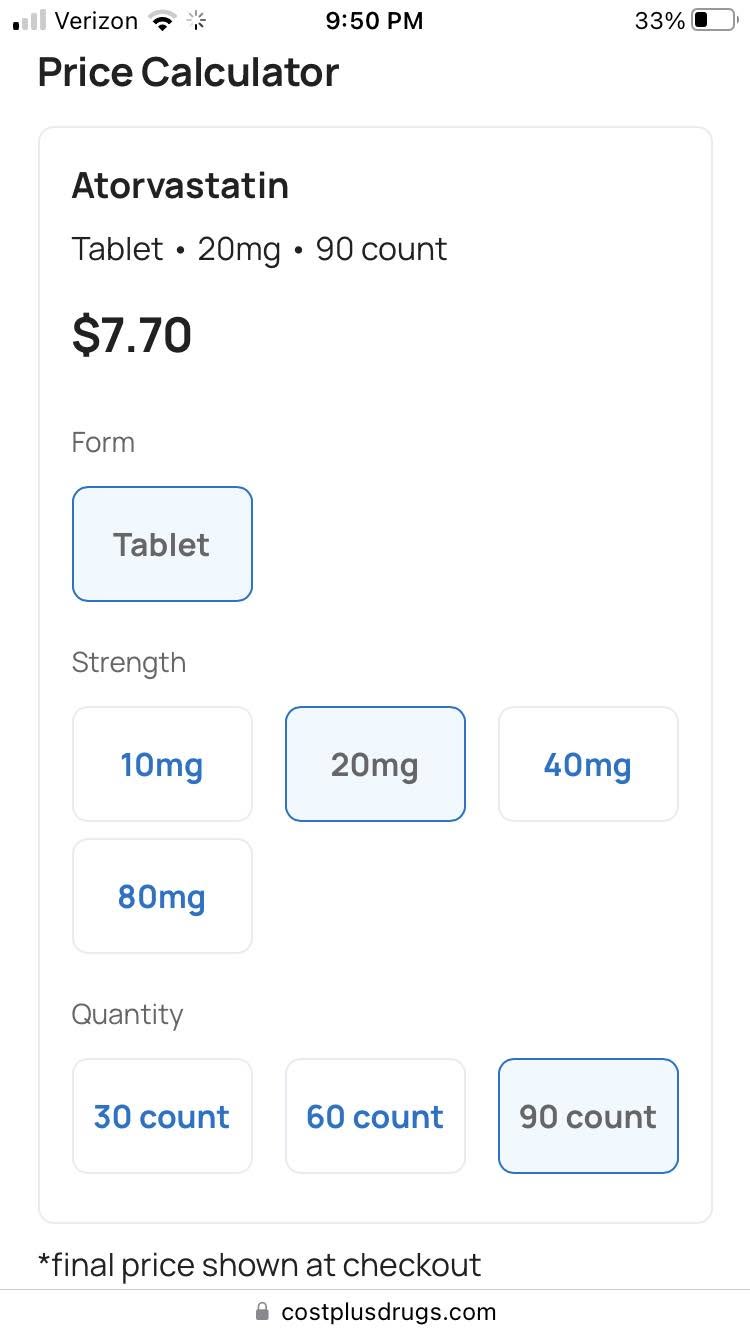
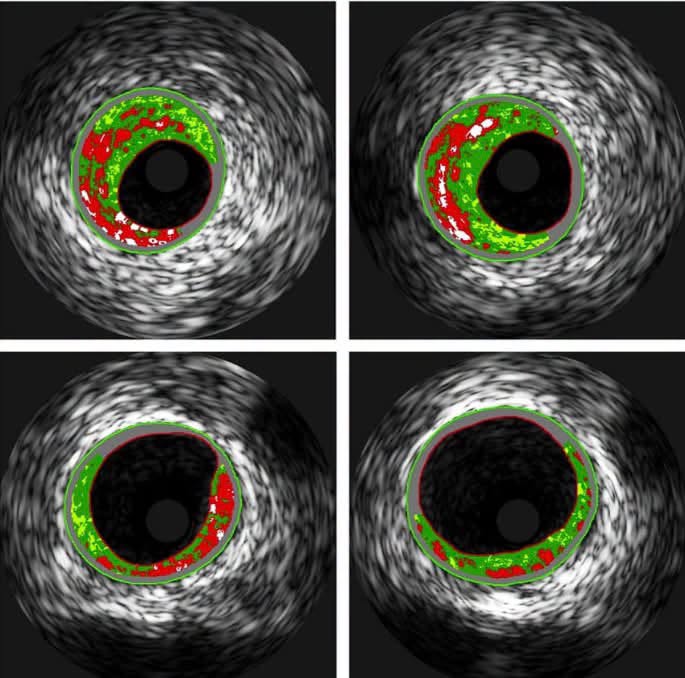
    The YELLOW study found that short-term intensive lipid lowering with rosuvastatin reduced lipid-core burden (yellow plaque) in coronary lesions in as little as 7-8 weeks, stabilizing vulnerable plaque rather than shrinking blockages. YELLOW III added the PCSK9 inhibitor evolocumab to statins with greater improvement in plaque composition. Generic rosuvastatin costs under $10/month.

  2. Centenarians' higher LDL reflects survivorship bias, not a benefit of high LDL

    Oct 15, 2025 · Louis Nervegna ♥ 8 · 💬 36 LDL, ApoB & lipid panel

    Louis explains that centenarians tend to have higher LDL simply because higher LDL is common in the general population; they reach 100 because of protective genes that let them survive despite high LDL. Low LDL is uncommon in Western countries, genetics is the main determinant of reaching 100, and low LDL may delay cardiovascular death but will not by itself get someone to 100.

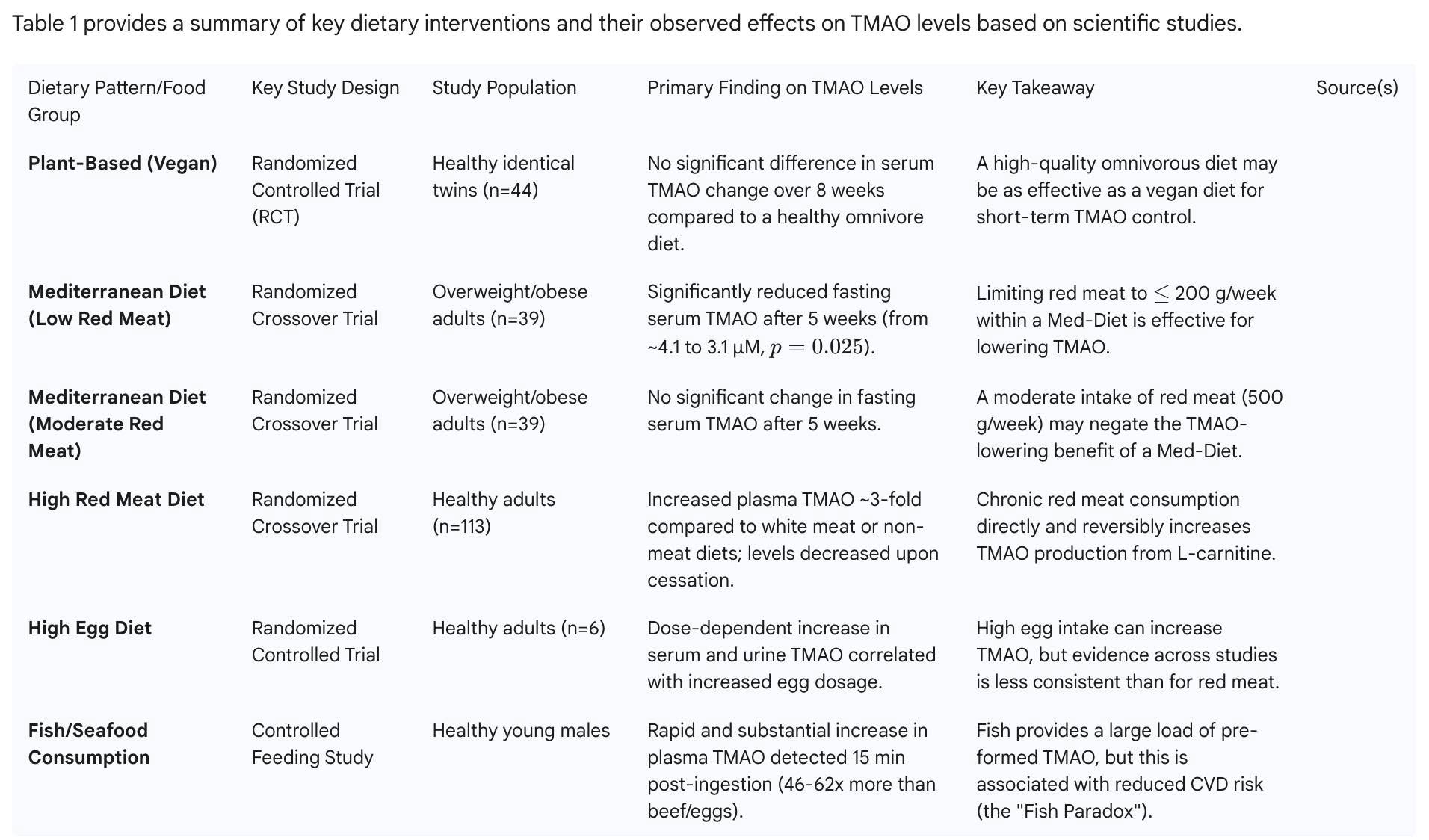
  3. Strategies for lowering TMAO: diet, supplements and repurposed drugs

    Aug 29, 2025 · Gokhan Can ♥ 22 · 💬 18 ↩ 1 Gut microbiome

    A written review of how TMAO forms from choline and carnitine via gut bacteria and the liver, and how to lower it. It points to less red meat and egg yolk, a fiber-rich Mediterranean-style diet, polyphenols and allicin, and statins and metformin. Gokhan says TMAO is not his top concern but worth knowing; he mentions a small human berberine trial that lowered TMAO and plaque.

  4. Tricaprin supplement reversed atherosclerosis in two patients with TGCV

    Jan 09, 2025 · Gokhan Can ♥ 18 · 💬 22 Supplements & vitamins

    Osaka University research in the European Heart Journal reported that tricaprin, a dietary supplement that promotes lipid breakdown in heart muscle cells, reversed atherosclerotic lesions and relieved chest pain in two diabetic patients with TGCV. This condition involves triglyceride deposits and resists standard treatment. Only two patients were reported.

  5. Ancel Keys' 1975 Mediterranean diet book: plants, olive oil, fish, little red meat

    Jan 19, 2025 · Louis Nervegna ♥ 17 · 💬 23 ↩ 5 Mediterranean, DASH, MIND & plant-forward diets

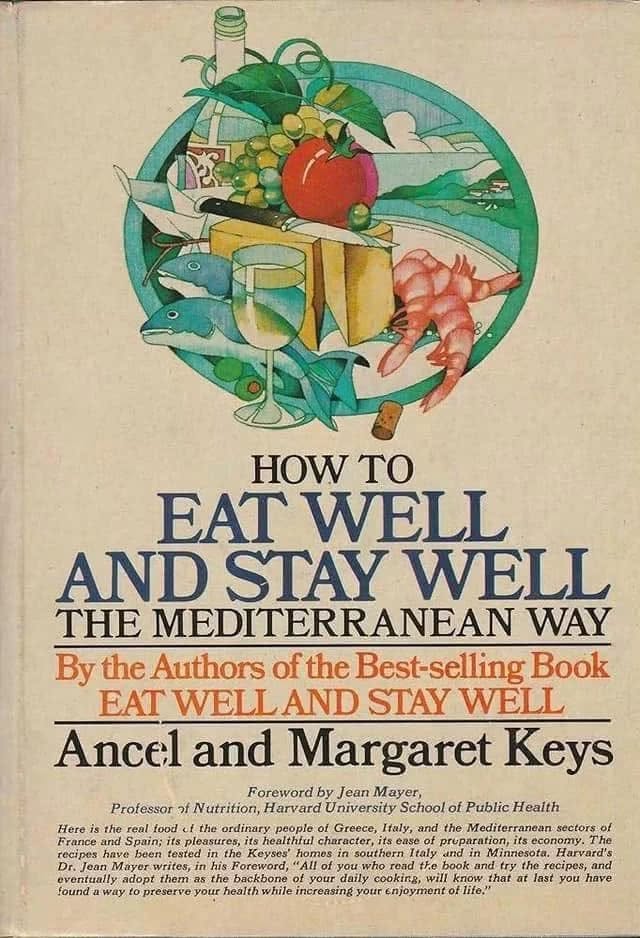
    Follow-up to the longevity post, summarizing (via a ChatGPT summary by Pankaj Kapahi) the diet Ancel and Margaret Keys described in their 1975 book. It emphasizes vegetables, legumes, whole grains, nuts, extra virgin olive oil as the main fat, fish, limited red meat and modest dairy, herbs instead of salt, fruit for dessert and wine in moderation. The Keys also stressed activity and shared meals. Louis also notes the 7 Countries scientists' longevity (3 of 18 reached 100).

  6. Vitamin K2 slows coronary calcium mainly in severe calcification; event benefit unproven

    Dec 02, 2025 · Gokhan Can ♥ 18 · 💬 16 ↩ 1 Supplements & vitamins

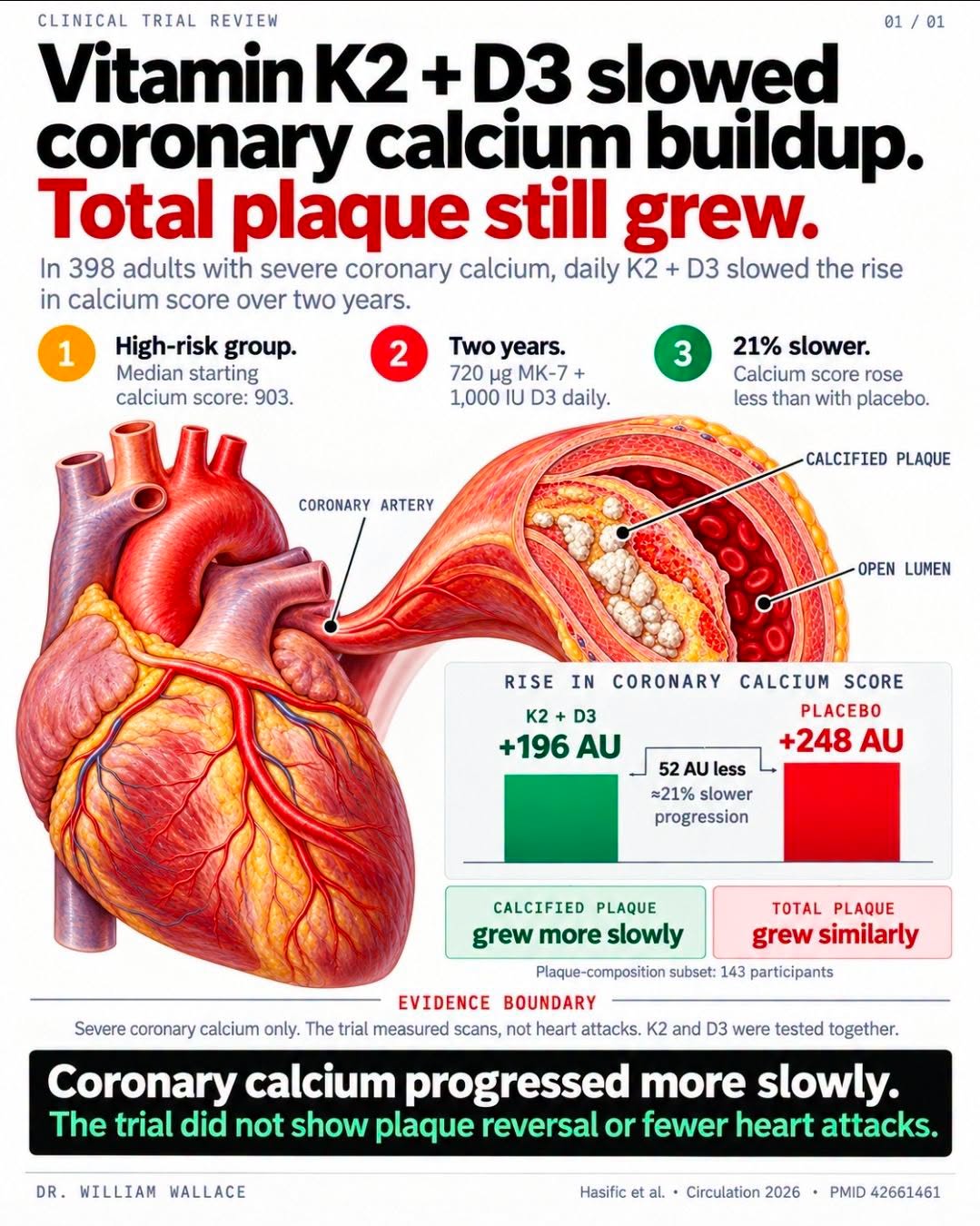
    Review of vitamin K2 (with or without vitamin D) and CAC. A 2023 meta-analysis of 14 RCTs (n=1,533) found a -17.3 Agatston units/year pooled difference. The largest RCT (389 men, 720 ug MK-7 + 1000 IU D vs placebo for 2 years) missed significance overall but slowed CAC at baseline CAC >=400; some CKD trials were null. Not yet a standard therapy.

  7. Harvard cohorts: plant protein linked to lower CVD and total mortality over 30 years

    Sep 16, 2026 · Louis Nervegna ♥ 19 · 💬 15 Protein

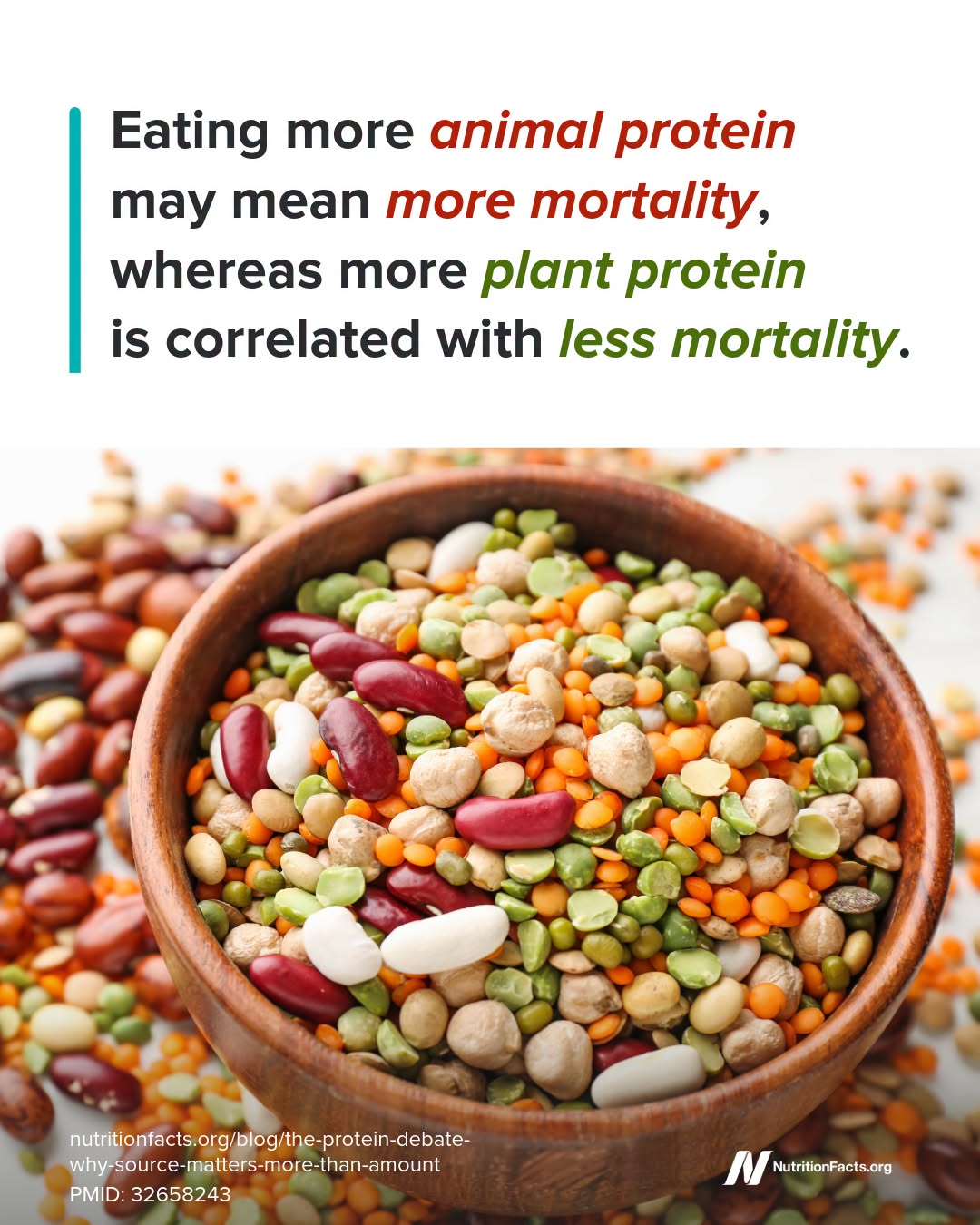
    Louis summarizes Harvard Nurses' Health Study and Health Professionals Follow-up Study findings that higher plant protein intake is strongly associated with lower CVD and all-cause mortality over 30 years, whereas animal protein is not, driven by red and processed meat. Seafood and yogurt look favorable. The shared text cites a Rotterdam Study plus meta-analysis of protein intake and mortality.

  8. CORDIOPREV: Mediterranean diet shrank carotid plaque and cut recurrent events about 25%

    Mar 28, 2024 · Louis Nervegna ♥ 17 · 💬 13 ↩ 27 Mediterranean, DASH, MIND & plant-forward diets

    Louis summarizes CORDIOPREV, an RCT of 1002 coronary patients comparing a Mediterranean diet rich in extra virgin olive oil with a low-fat diet. The Mediterranean diet reduced carotid intima-media thickness at 5 and 7 years while the low-fat diet showed no change, and also lowered carotid plaque height. He also cites roughly 25% fewer recurrent major cardiovascular events over 7 years, with benefits seen despite statin treatment and mean LDL-C below 90.
  9. Dietary fiber as a longevity intervention: 15-30% lower mortality at 25-29 g/day

    Dec 28, 2025 · Gokhan Can ♥ 23 · 💬 12 Carbs, fiber, sugar & whole grains

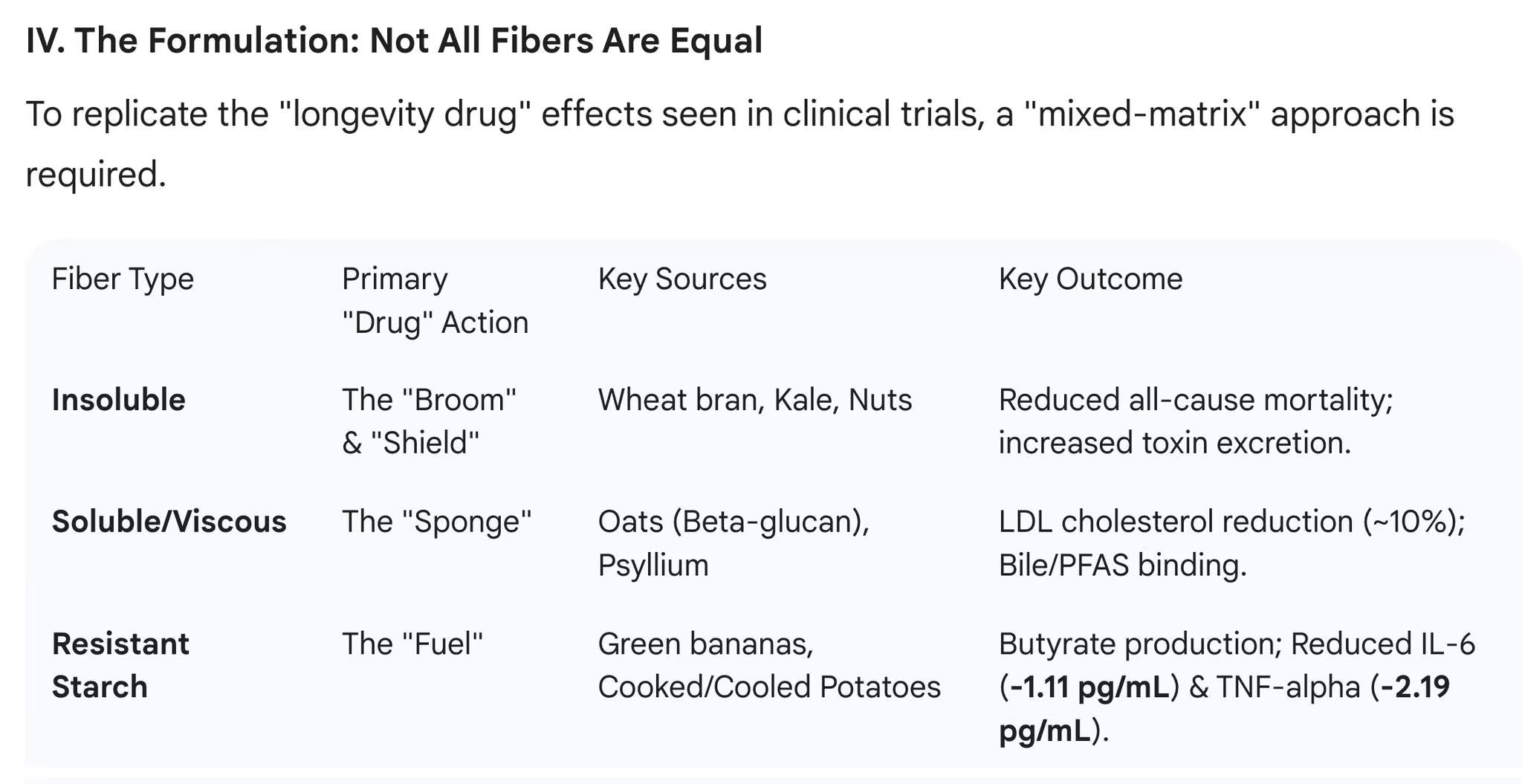
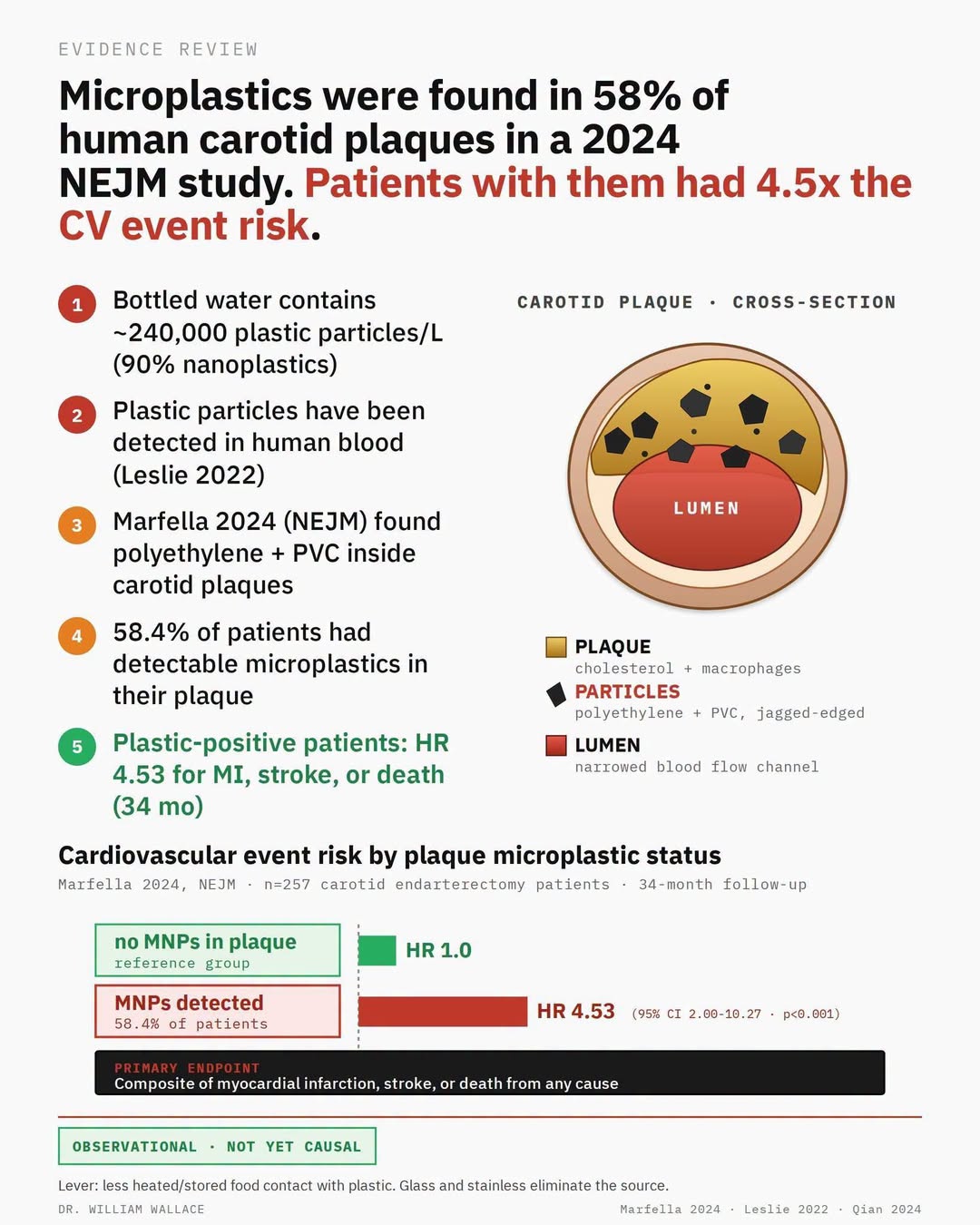
    Long summary arguing fiber is a bioactive longevity tool. The WHO-commissioned Reynolds 2019 meta-analysis found 15-30% lower all-cause mortality at 25-29 g/day, with benefits continuing per extra 8 g; newer NHANES data suggest diminishing returns past ~30 g/day. It describes mechanisms including butyrate-driven epigenetic effects and gut barrier reinforcement against toxins such as microplastics.

  10. FLOWPROMOTE: LDL near 40 mg/dL on statin plus ezetimibe cut total plaque 21% in 18 months

    Oct 31, 2026 · Louis Nervegna ♥ 25 · 💬 11 Plaque, CAC & CT angiography

    Louis highlights the randomized FLOWPROMOTE trial in 104 statin-naive patients with coronary artery disease, scanned by CT angiography at baseline, 9 and 18 months. Rosuvastatin 40 mg plus ezetimibe 10 mg lowered LDL-C to 42.5 mg/dL versus 69.5 mg/dL with atorvastatin 40 mg and reduced total plaque volume by about 21%. The shared write-up frames this as evidence that coronary atherosclerosis can be reversed with intensive lipid lowering.

  11. Six strategies shown to regress plaque in human randomized trials

    Feb 27, 2025 · Louis Nervegna ♥ 27 · 💬 10 ↩ 3 Plaque, CAC & CT angiography

    Louis lists strategies with RCT evidence for plaque regression: major weight loss, a Mediterranean or DASH diet, LDL-lowering drugs, colchicine, exercise and high-dose EPA. He notes six RCTs show diet can regress plaque and that Ornish's results resembled PREDIMED and CORDIOPREV, while Esselstyn's data are not from RCTs.

  12. Keto/Atkins diet raised methylglyoxal 1.67-fold in 2-4 weeks, a glycation precursor

    Sep 23, 2024 · Louis Nervegna ♥ 16 · 💬 23 Low-carb, keto & carnivore

    Louis argues that ketogenic diets increase methylglyoxal, a precursor of advanced glycation end products linked to diabetes, heart disease, Alzheimer's and aging. He cites a 2005 study of Atkins dieters in which methylglyoxal rose 1.67-fold by 14-28 days and 2.12-fold in those in ketosis. He says claims that keto protects against glycation should be viewed with suspicion; the study measured markers, not outcomes.

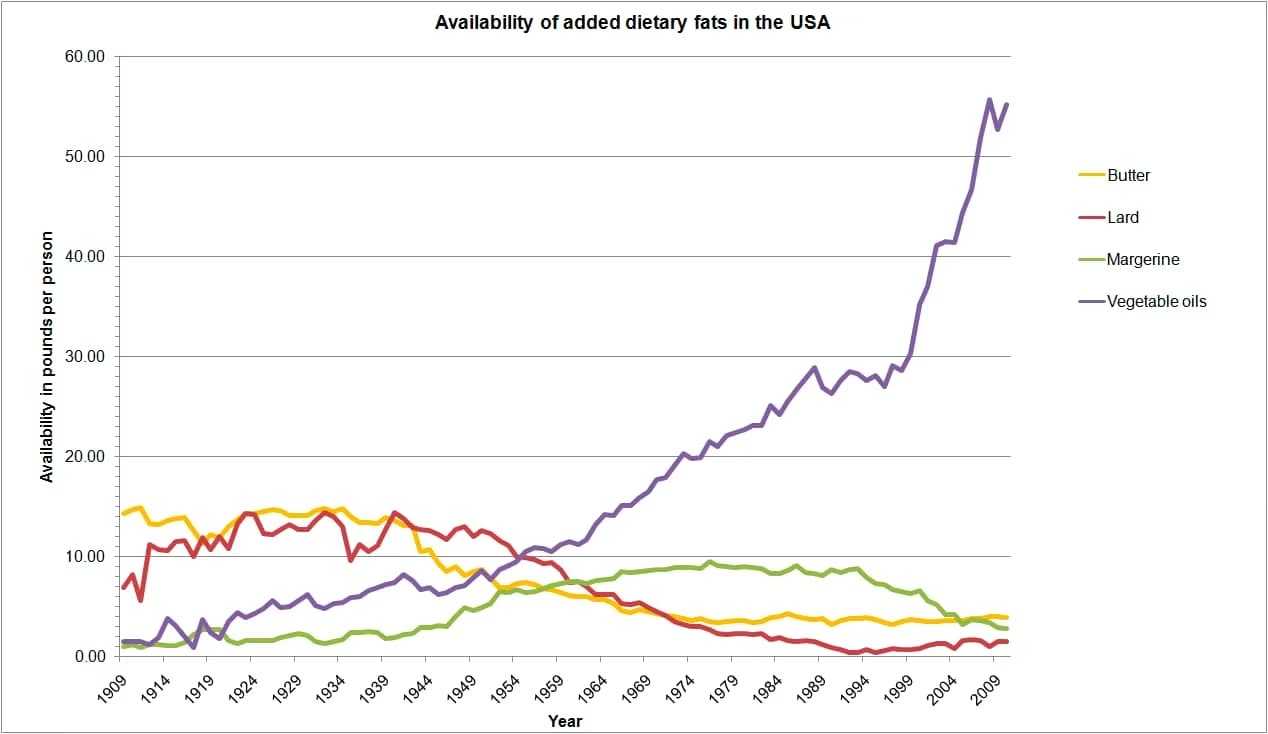
  13. Seed oil intake rose 5x since 1950 while US heart disease death rates fell over 4x

    Nov 27, 2024 · Louis Nervegna ♥ 18 · 💬 30 Fats & oils (saturated fat, seed oils, omega-6, olive oil)

    Louis argues that since 1950 vegetable oil consumption has risen about 5x and butter and lard intake has fallen 2-3x, while heart disease death rates fell by over 4x and life expectancy rose from 60 to 78. He presents the raw unadjusted correlation as evidence against claims that seed oils drive heart disease. It is an ecological correlation, not a controlled test.

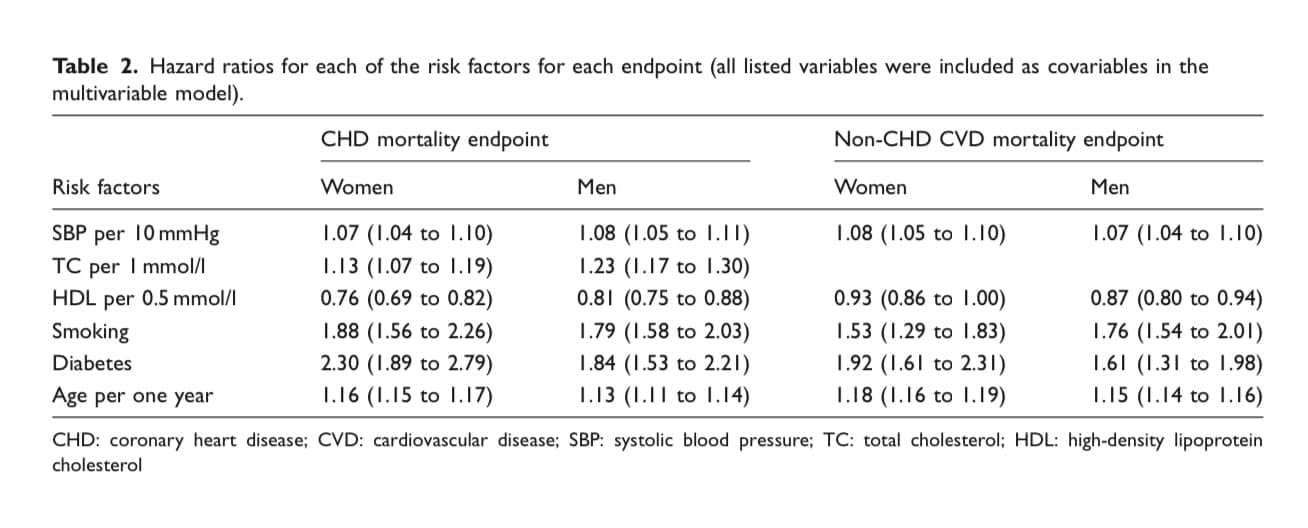
  14. Age raises CVD death risk about 19.5x from 65 to 85, far above diabetes or smoking

    Dec 18, 2023 · Louis Nervegna ♥ 13 · 💬 20 ↩ 5 Cardiovascular disease: the big picture

    Louis compares hazard ratios from the SCORE O.P. risk model for people over 65. A hazard ratio of 1.16 per year of age compounds to about 19.5x higher CVD death risk between 65 and 85, far larger than diabetes, smoking, high blood pressure or LDL. The numbers used are for women; men are similar. (The post also writes this as 19,500%, which is a mislabel of 19.5x.)

  15. Does a CAC scan change outcomes? Two 2026 randomized trials say not for the average person

    Sep 04, 2026 · Louis Nervegna ♥ 8 · 💬 31 Plaque, CAC & CT angiography

    Louis asks whether CAC scanning changes whether you have a heart attack; for some it is a wake-up call, but for the average person it does not seem to change outcomes. The shared text cites a Danish trial of 30,000 men (no reduction in death, MI or stroke at seven years, more serious bleeding) and the US CorCal trial of nearly 6,000 people (same event rates as a risk calculator).

  16. 18 large RCTs plus cohort and Mendelian data show a straight-line LDL to heart attack link

    Sep 06, 2024 · Louis Nervegna ♥ 15 · 💬 17 ↩ 1 LDL, ApoB & lipid panel

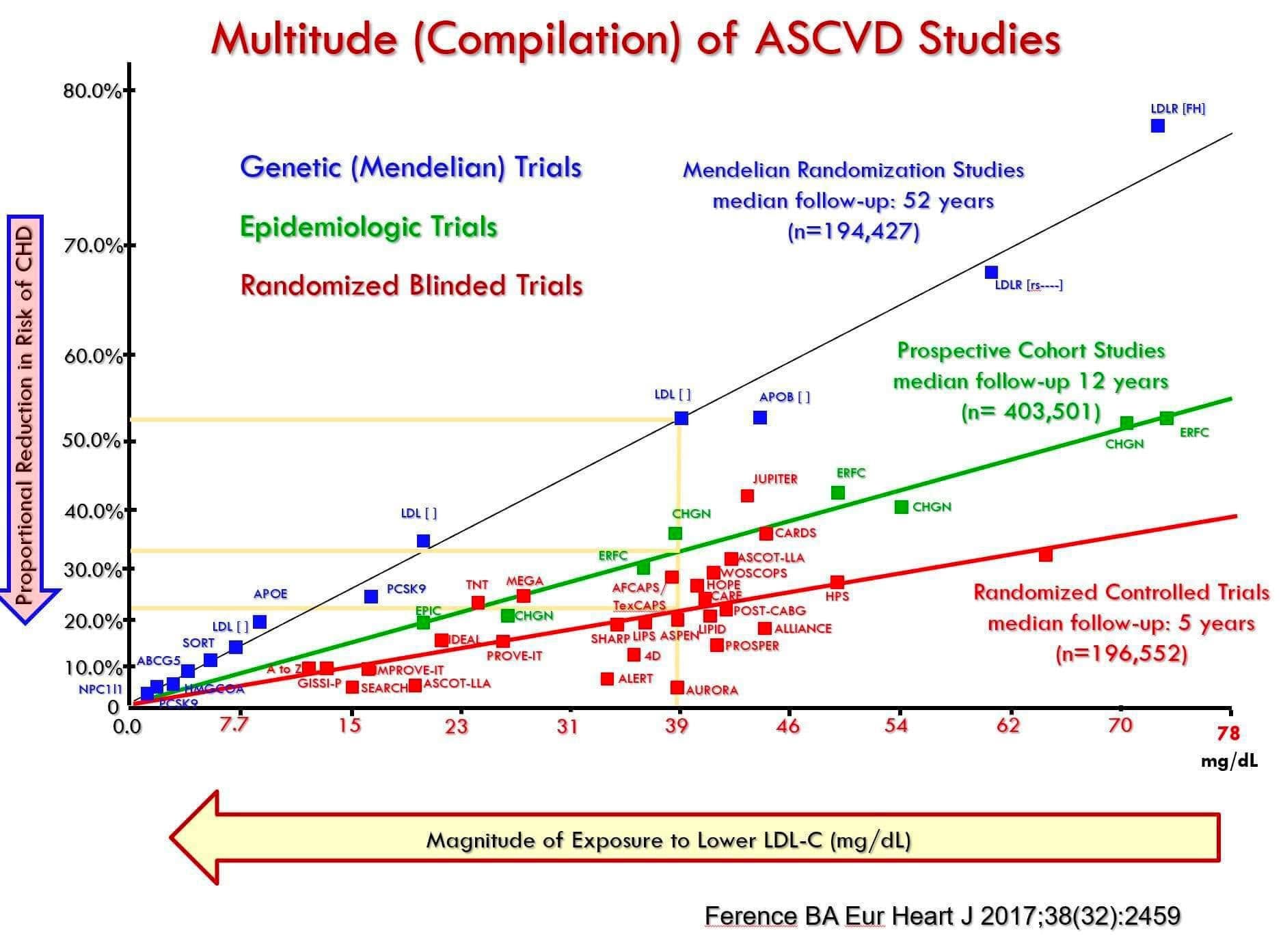
    Louis presents a chart of 18 large, long-running RCTs in which lowering LDL reduced heart attack and stroke risk. Prospective cohorts (about 12 years) and Mendelian randomization studies (about 52 years) show the same linear relationship, with steeper slope the longer the exposure. The axes show change in LDL and percentage change in risk, not absolute values.

  17. Eight human feeding studies on canola oil show no sign of inflammation

    Sep 05, 2024 · Louis Nervegna ♥ 15 · 💬 23 Fats & oils (saturated fat, seed oils, omega-6, olive oil)

    Louis shares a literature search by Physionic that found eight controlled human feeding studies testing whether canola oil is inflammatory. After reading them, Louis says there is no evidence of inflammation, and if anything the opposite, so the claim is unfounded. He prefers olive oil himself and urges fact-checking influencers.

  18. Only lipophilic statins like atorvastatin enter the brain; PCSK9 drugs and ezetimibe don't

    Oct 18, 2025 · Louis Nervegna ♥ 25 · 💬 10 Brain health & dementia

    Louis explains the blood-brain barrier and cholesterol: the brain makes its own cholesterol separately from blood, so non-statin LDL drugs and hydrophilic statins like rosuvastatin have little brain effect. Lipophilic statins do enter the brain, with promising observational data against Alzheimer's, and a 20,000-person atorvastatin trial is under way. Two prior trials showed statins do not worsen existing Alzheimer's, and midlife high LDL is a leading modifiable dementia risk (2024 Lancet Commission, about 7% of US cases per Louis).

  19. Keto-CTA: LMHR group's 0.8% plaque volume rise exceeded that of typical Western cohorts

    Apr 08, 2025 · Louis Nervegna ♥ 18 · 💬 14 Plaque, CAC & CT angiography

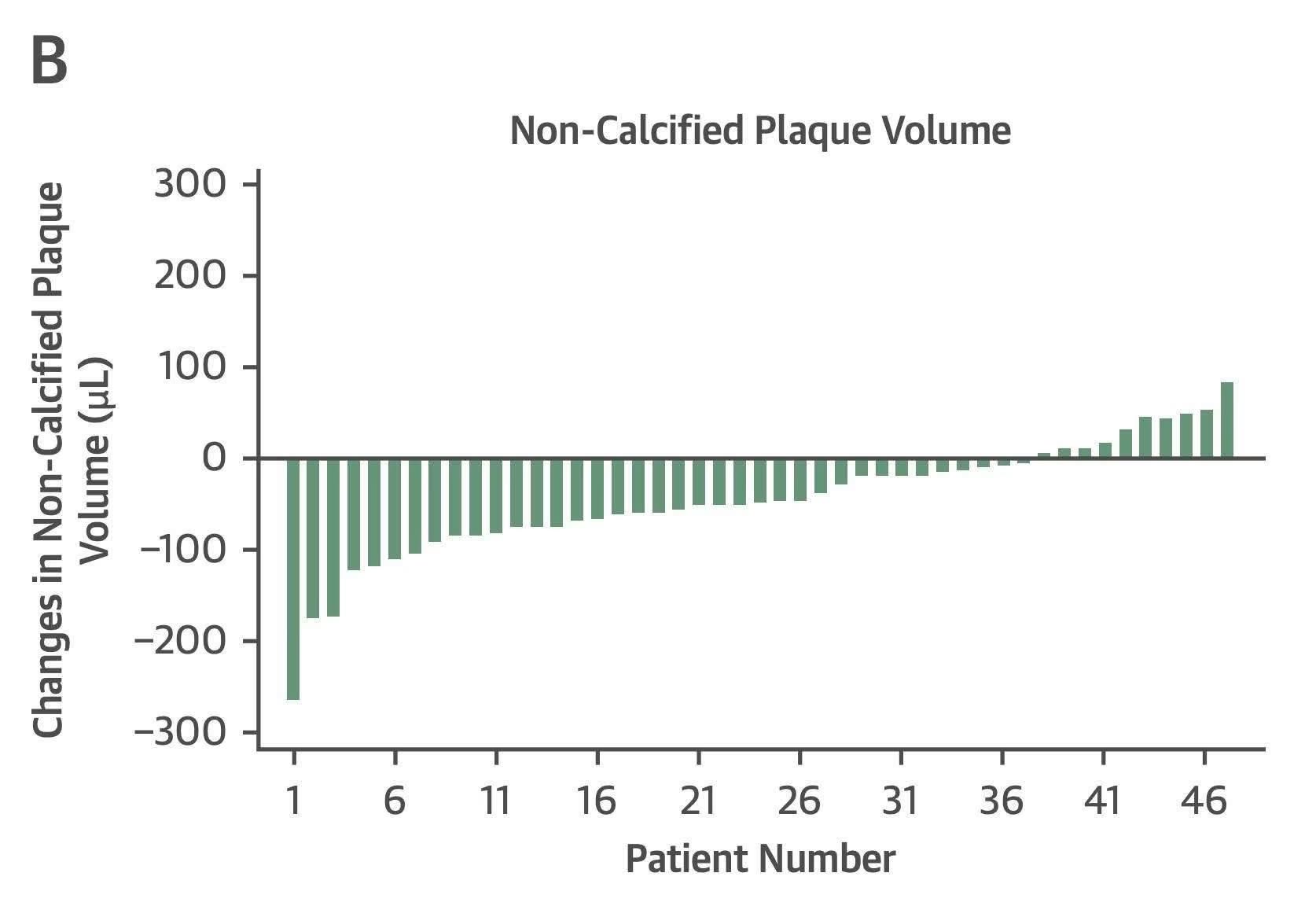
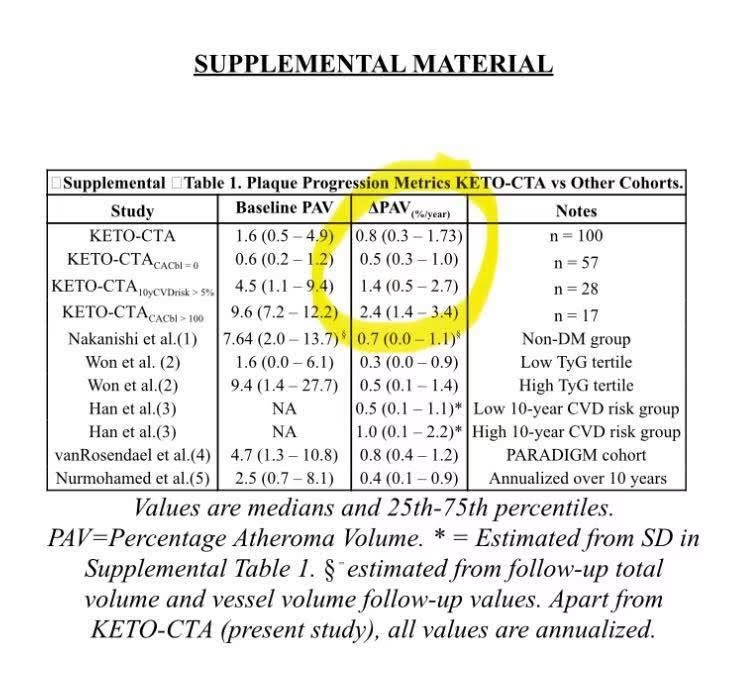
    Louis expresses disappointment in the LMHR prospective cohort study, in which lean, metabolically healthy keto dieters with very high LDL had total plaque volume rise 0.8% in a year. He cites the paper's supplemental table, which he says shows other Western cohorts progressing less, and notes that no participant showed NCPV regression and that those with the most baseline plaque progressed the most.

  20. What to try for statin muscle pain: lower dose, other statins, non-statins; beware nocebo

    Feb 17, 2025 · Louis Nervegna ♥ 14 · 💬 18 Statins

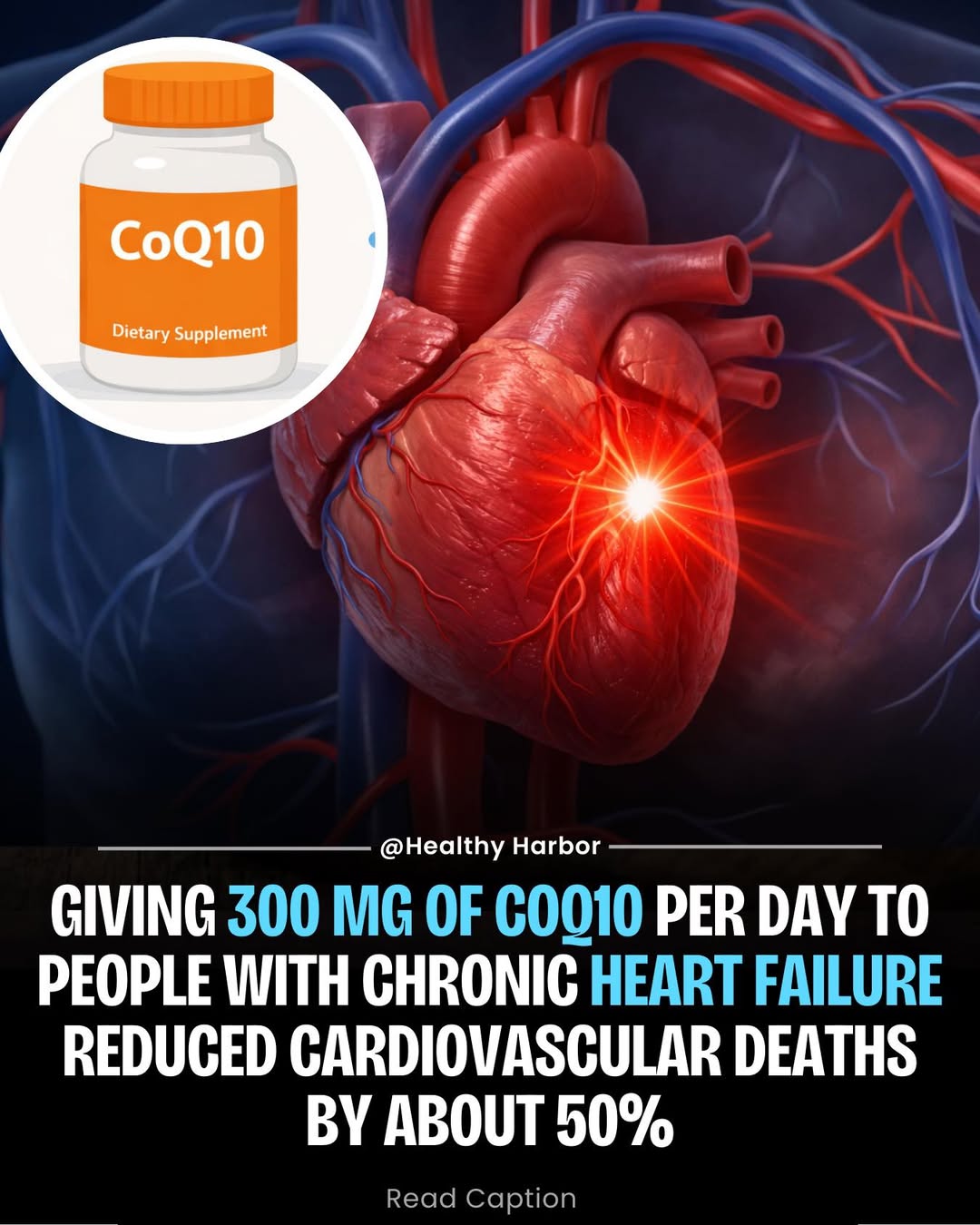
    Louis explains that statin muscle pain is often genetic, linked to HMG-CoA reductase gene variants, so CoQ10 usually fails though it is harmless. Practical steps include lowering the dose, switching statins (pitavastatin or pravastatin often tolerated) or using non-statin drugs, while recognizing that much reported muscle pain may be nocebo.

  21. Cocoa compound theobromine linked to slower biological aging in two European cohorts

    Dec 17, 2025 · Louis Nervegna ♥ 20 · 💬 17 Nuts, fish, coffee, tea, cocoa & other foods

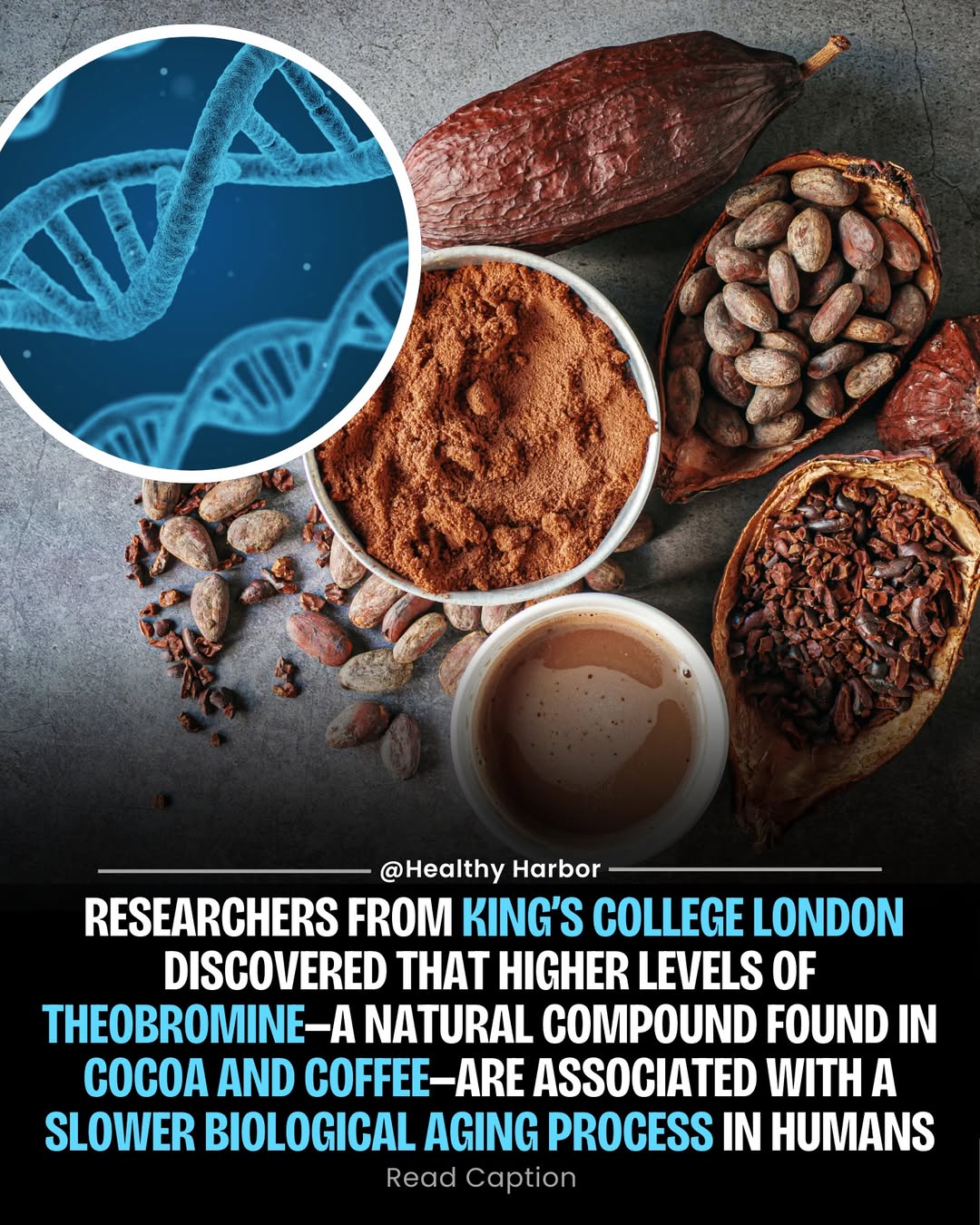
    Louis shares a twin-study (observational) from King's College London linking blood theobromine to biologically younger DNA methylation and telomere profiles in 1,600+ people from TwinsUK and KORA. He suggests it may partly explain the roughly 30% CVD mortality reduction in the COSMOS cocoa trial; the researchers caution against eating chocolate as a longevity shortcut.

  22. Replacing 10 g/day of butter with plant oils linked to 17% lower mortality

    Oct 15, 2025 · Louis Nervegna ♥ 19 · 💬 13 Fats & oils (saturated fat, seed oils, omega-6, olive oil)

    Louis shares Harvard research on 221,054 people from the Nurses' Health Studies I and II and the Health Professionals Follow-Up Study, published in JAMA Internal Medicine. Higher plant-oil intake (especially soybean, canola, olive) was linked to lower total, cancer and cardiovascular mortality, while butter was linked to higher total and cancer mortality; a modeled swap of 10 g butter for plant oils lowered mortality by 17%.

  23. Rush study: more than 1 egg per week linked to 47% lower Alzheimer's dementia risk

    Mar 13, 2025 · Louis Nervegna ♥ 19 · 💬 13 ↩ 1 Meat, eggs & dairy

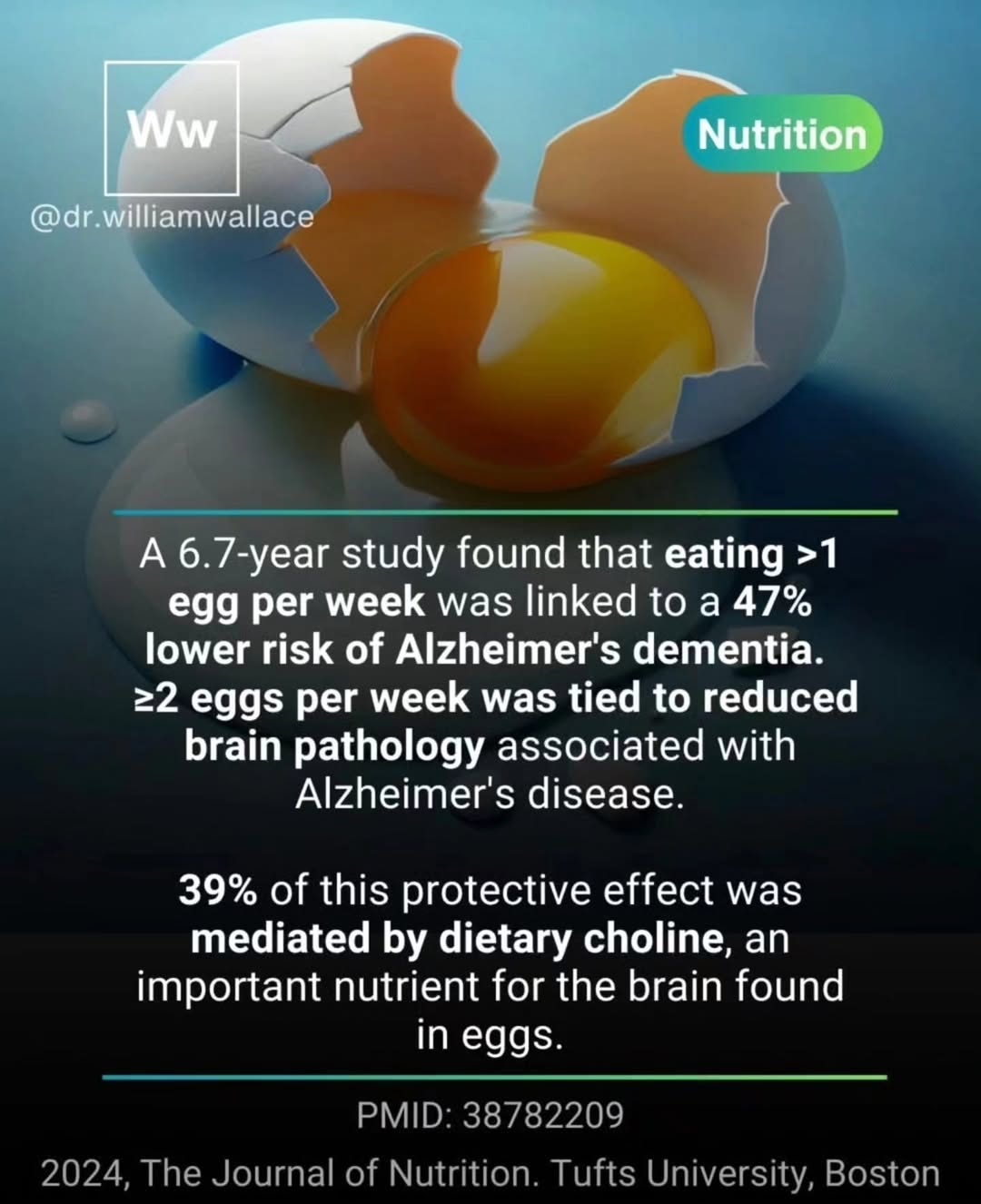
    Louis shares a summary of a 6.7-year Journal of Nutrition study of 1,024 older adults (about 81 years) finding that eating more than one egg per week was associated with 47% lower Alzheimer's dementia risk, with choline explaining 39% of the effect. He notes the egg choline form (phosphatidylcholine) does not raise TMAO. The study is observational with self-reported diet.
  24. MESA: high Lp(a) raised CVD risk only when hsCRP was 2 mg/L or higher

    Jul 12, 2024 · Louis Nervegna ♥ 16 · 💬 12 ↩ 4 Lp(a)

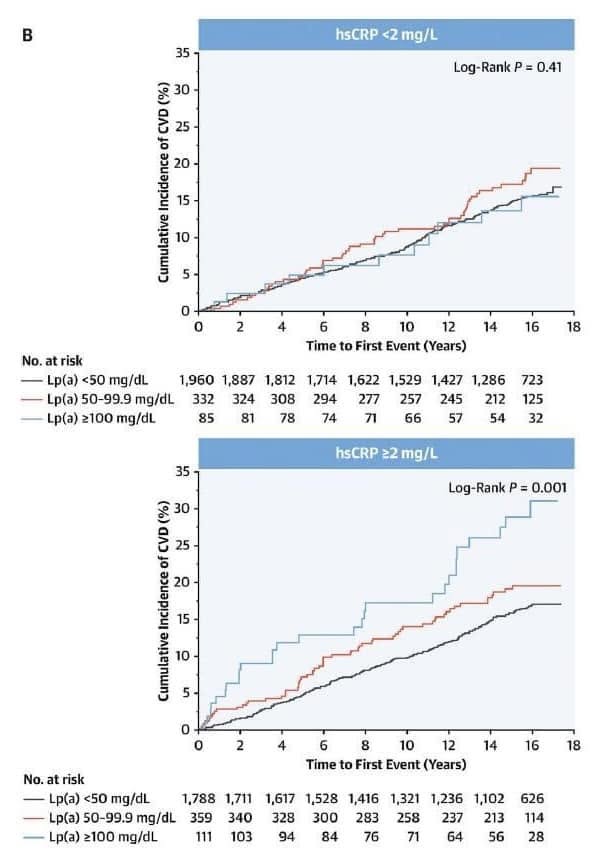
    In MESA (mean follow-up 13.6 years, 684 CVD events), high Lp(a) conferred no significant risk when hsCRP was below 2 mg/L. With hsCRP of at least 2, Lp(a) of 50-99.9 mg/dL had HR 1.36 and 100 or more had HR 2.09. Participants were lower-risk, averaged age 62, so applicability to others is unclear.

  25. Ezetimibe beyond statins: fewer events, no mortality gain in trials, registry benefits

    Nov 07, 2024 · Gokhan Can ♥ 11 · 💬 22 PCSK9, ezetimibe & newer drugs

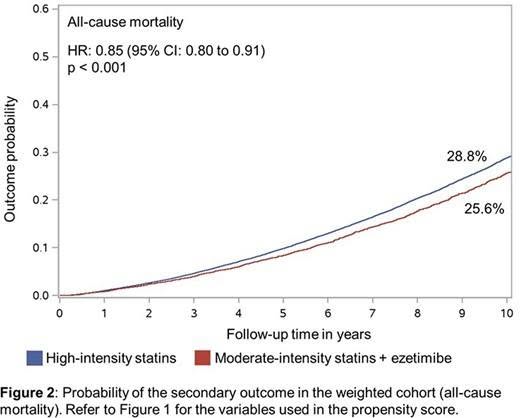
    Evidence digest on ezetimibe. A meta-analysis of 15 RCTs (123,785 patients) found add-on lipid lowering cut cardiovascular events 19% versus statins alone but did not improve all-cause mortality. Other data show moderate statin plus ezetimibe matches high-intensity statins, and registry studies hint at lower mortality, with strong LDL-target attainment.
  26. Baby aspirin may be worth considering for people with high Lp(a)
    Jul 13, 2025 · Louis Nervegna ♥ 25 · 💬 13 Lp(a)

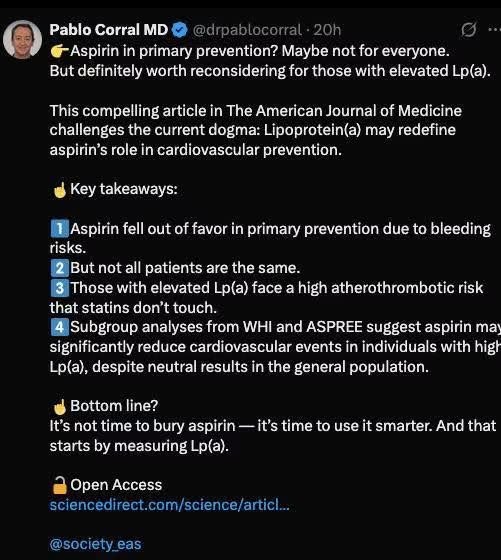
    Louis suggests low-dose aspirin is worth considering in people with elevated Lp(a), linking a physician's post and a 2025 review on the aspirin prevention conundrum. The referenced material argues Lp(a) may redefine aspirin's role in primary prevention.

  27. Pomegranate juice and heart health: CIMT, blood pressure and ACE evidence reviewed

    Jan 15, 2025 · Gokhan Can ♥ 15 · 💬 16 Nuts, fish, coffee, tea, cocoa & other foods

    A review of pomegranate juice and cardiovascular disease credits its polyphenols (ellagitannins, punicalagins, anthocyanins). It cites a study where juice for up to a year reduced carotid intima-media thickness by up to 35% in carotid stenosis patients while controls rose 10%, and a meta-analysis of 8 RCTs showing lower blood pressure.

  28. Can fasting reverse plaque? Autophagy makes it plausible but evidence is indirect

    Jun 29, 2026 · Louis Nervegna ♥ 23 · 💬 14 Fasting & meal timing

    Louis argues there is biological plausibility that fasting could clear damaged arterial tissue via autophagy, linking earlier posts. He cites the 2010 DIRECT-Carotid trial showing large weight loss can regress carotid atherosclerosis, and a shared post on a Nature Metabolism 7-day fast study in 12 people with a day-3 shift in about 1,000 proteins. Direct evidence for plaque reversal by fasting is anecdotal.

  29. Unfiltered coffee raised LDL 9-14% in a 24-week trial; paper filtering removes the cause

    Aug 15, 2026 · Louis Nervegna ♥ 13 · 💬 18 Nuts, fish, coffee, tea, cocoa & other foods

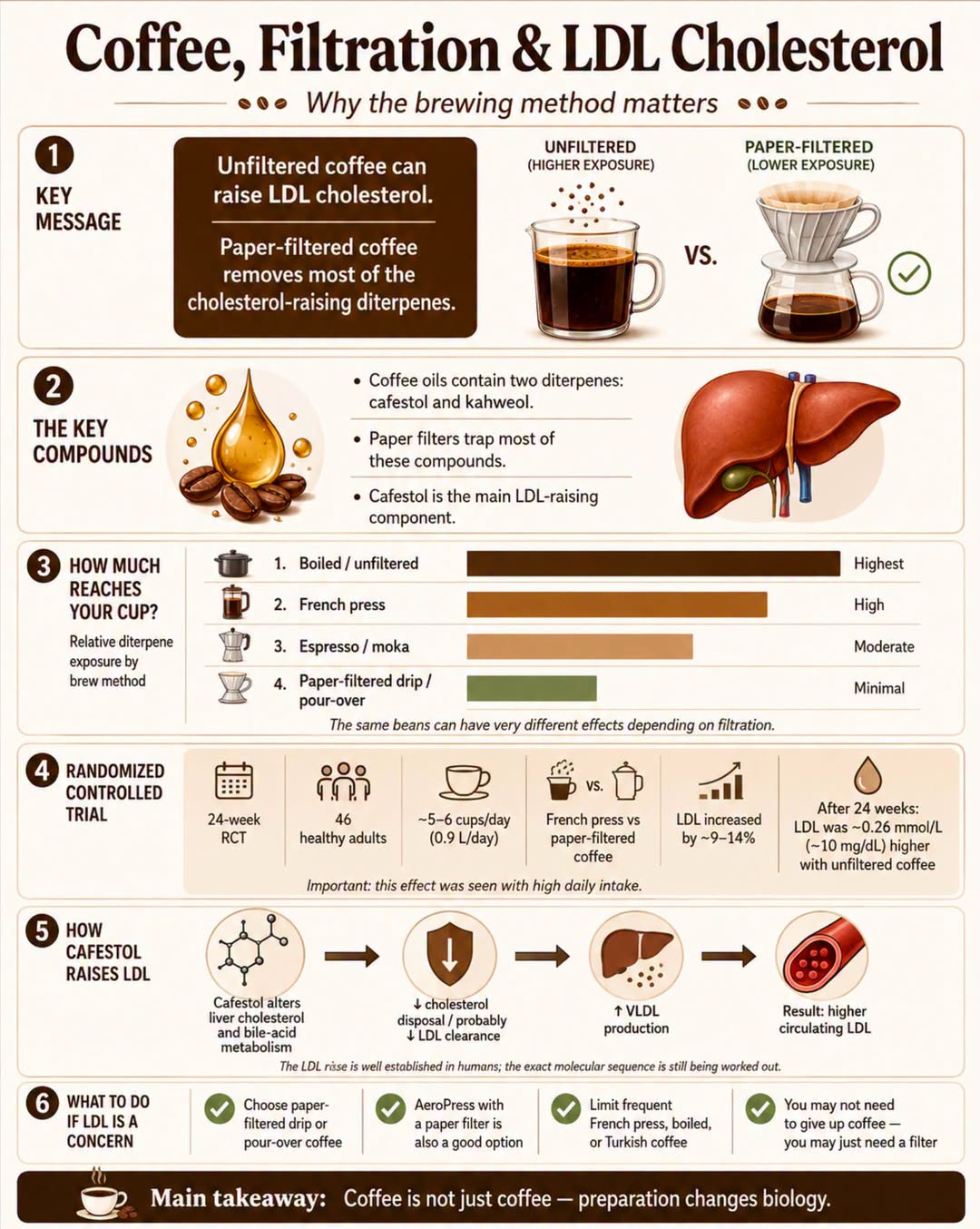
    Coffee's diterpenes cafestol and kahweol raise LDL. In a 24-week randomized trial of 46 healthy adults drinking about 0.9 L/day, French-press coffee raised LDL about 0.26 mmol/L (~10 mg/dL) more than paper-filtered coffee. French press, boiled, Turkish, moka and espresso keep more diterpenes; paper filters remove most.

  30. Free book 'Eat, Drink, and Be Healthy' recommended for the Mediterranean diet

    Sep 27, 2024 · Louis Nervegna ♥ 21 · 💬 15 ↩ 9 Mediterranean, DASH, MIND & plant-forward diets

    Louis recommends the Harvard Medical School guide 'Eat, Drink, and Be Healthy' as the best lay book on the Mediterranean diet and links a free PDF. He quotes it saying good eating plus healthy weight, exercise and not smoking can prevent 80% of heart attacks, 90% of type 2 diabetes and 70% of colorectal cancer. He notes the diet can be adapted to low-carb, Mexican, Asian and other versions.

  31. PROVE IT-TIMI 22: atorvastatin 80 mg early after a heart attack cut 30-day events 28%

    Jul 31, 2024 · Louis Nervegna ♥ 21 · 💬 11 Statins

    The post explains why high-intensity atorvastatin is started right after a heart attack: in PROVE IT-TIMI 22, 30-day death/MI/rehospitalization was lower with atorvastatin 80 mg than pravastatin 40 mg. The rapid effect is attributed to pleiotropic effects (anti-inflammatory, plaque and endothelial stabilization), though LDL lowering itself may contribute.

  32. Medical schools push back on seed-oil myths; pooled cohorts link omega-6 to lower risk

    Jun 18, 2025 · Louis Nervegna ♥ 12 · 💬 26 Fats & oils (saturated fat, seed oils, omega-6, olive oil)

    Louis says major medical and public health schools are countering influencer claims about seed oils. He notes a 2019 pooled analysis of 30 prospective cohorts found higher blood omega-6 (linoleic acid) predicted lower risk of heart disease and diabetes over 2.5 to 30 years, and points to earlier group posts.

  33. Each daily yogurt serving linked to 14% lower CVD mortality in a 17-cohort meta-analysis

    Feb 16, 2025 · Gokhan Can ♥ 19 · 💬 12 Meat, eggs & dairy

    A systematic review and dose-response meta-analysis of 17 cohort studies (896,871 participants) found higher yogurt intake was associated with lower all-cause and cardiovascular mortality, with the largest benefit around 0.5 servings per day and no clear further gain above that. No significant association was seen with cancer mortality. As an observational analysis, it shows association, not causation.